

EXPERIENCED PERSONAL INJURY ATTORNEYS













Illinois Interstate 94 Truck Accident Lawyers
Experienced Semi Injury Attorneys
Interstate 94 is a major transportation corridor connecting Chicago and its surrounding communities with destinations throughout the Midwest. Commercial trucks use this interstate to transport freight, deliver goods, and connect businesses with regional and national distribution networks. However, when a fully loaded tractor-trailer collides with a passenger vehicle, the consequences can be devastating.
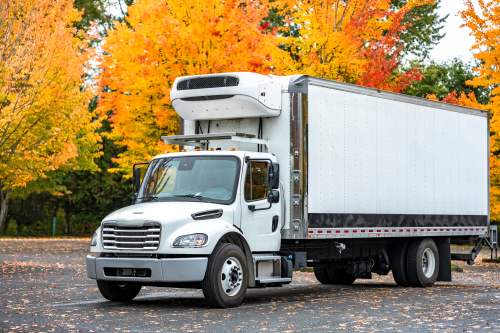
Truck accidents on I-94 can cause catastrophic injuries, including traumatic brain injuries, spinal cord damage, broken bones, internal bleeding, and wrongful death. Congested traffic, sudden braking, unsafe lane changes, driver fatigue, adverse weather, and improperly maintained commercial vehicles can all contribute to serious collisions. When a truck driver, trucking company, maintenance provider, or another responsible party acts negligently, injured victims may have grounds to pursue compensation under Illinois law.
At John J. Malm & Associates, we understand the challenges that follow a serious truck accident. Victims may face extensive medical treatment, lost income, prolonged rehabilitation, and uncertainty about how to hold the responsible parties accountable. Understanding the risks associated with Interstate 94, the causes of commercial truck collisions, and the legal options available after a crash can help injured individuals make informed decisions.
Understanding the Risks of Truck Accidents on Interstate 94
Interstate 94 serves as an important transportation route through the Chicago metropolitan area. In Illinois, portions of the interstate connect with the Dan Ryan Expressway, the Kennedy Expressway, and other heavily traveled roads. The route carries passenger vehicles, commercial tractor-trailers, delivery trucks, and other vehicles through densely populated urban areas and major freight corridors.
The combination of commercial traffic and heavy congestion creates conditions in which a single mistake can trigger a serious collision. A truck driver who fails to recognize slowing traffic may be unable to stop before striking a passenger vehicle. A tractor-trailer changing lanes without checking its blind spots may force another driver off the roadway. During winter weather, reduced traction and longer stopping distances can make these hazards even more dangerous.
According to IDOT’s 2024 Crash Facts and Statistics report, Illinois recorded 20,733 large-truck crashes in 2024. Those crashes included 122 fatal crashes, 3,265 injury crashes, and 142 fatalities among people involved. National data also illustrate the severity of truck collisions. The National Highway Traffic Safety Administration (NHTSA) reported that 5,472 people died in crashes involving large trucks in 2023, with an estimated 153,452 people injured. Approximately 70% of those killed were occupants of vehicles other than the large trucks involved.
Common Causes of Interstate 94 Truck Accidents
Truck accidents rarely have a single universal cause. Investigators must examine the driver’s conduct, the trucking company’s practices, the vehicle’s mechanical condition, roadway conditions, and the sequence of events leading to the collision. Common causes of trucking crashes on I94 include:
Driver Fatigue and Hours-of-Service Violations
Commercial truck drivers may travel long distances under demanding delivery schedules. Fatigue can impair reaction time, judgment, attention, and the ability to recognize hazards. A fatigued driver may drift between lanes, fail to notice stopped traffic, or respond too slowly to a sudden change in road conditions.
Federal hours-of-service regulations generally limit property-carrying commercial drivers to 11 hours of driving after 10 consecutive hours off duty, subject to additional restrictions and exceptions. The rules also generally prohibit driving beyond the 14-hour driving window after coming on duty. Electronic logging devices and other records may help investigators determine whether a driver complied with applicable requirements.
Distracted Driving
Truck drivers must monitor traffic, mirrors, navigation systems, road signs, and changing roadway conditions. Distractions involving mobile phones, dispatch devices, electronic systems, eating, or other activities can divert attention at critical moments.
On a crowded stretch of I-94, even a brief distraction can prevent a driver from recognizing that vehicles ahead have slowed or stopped. Evidence such as electronic data, witness statements, dashcam recordings, and legally obtainable phone records may help establish whether distraction contributed to a collision.
Speeding and Following Too Closely
Large commercial trucks require substantial stopping distance, particularly when heavily loaded. Excessive speed reduces the time available to react and increases the force involved in a collision.
Following too closely creates another major hazard. When traffic suddenly slows near an interchange, construction zone, or bottleneck, a truck driver who has not maintained a safe following distance may be unable to stop in time.
Unsafe Lane Changes and Blind Spots
Large trucks have substantial blind spots along both sides, directly behind the trailer, and immediately in front of the cab. Although passenger vehicle drivers should avoid remaining in these areas, truck operators must also use mirrors, signal appropriately, and verify that a lane change can be completed safely. Unsafe merging, failure to check blind spots, and abrupt lane changes can cause sideswipe collisions, loss-of-control crashes, and multi-vehicle accidents.
Improper Cargo Loading and Shifting Freight
Commercial truck cargo must be properly secured and distributed. Improper loading can affect a truck’s stability, braking, and handling. Shifting cargo can cause a driver to lose control, while inadequately secured materials may fall from a trailer and strike nearby vehicles. Cargo-related investigations may involve the trucking company, a shipper, a loading contractor, or another party responsible for securing the freight.
Mechanical Failures and Inadequate Maintenance
Brake defects, tire failures, steering problems, defective lighting, and other mechanical issues can contribute to devastating truck crashes. Federal motor carrier regulations require covered carriers to systematically inspect, repair, and maintain commercial motor vehicles under their control. When a carrier fails to address a known defect or neglects required maintenance, records may help establish whether that failure contributed to the collision.
Weather and Roadway Conditions
Rain, snow, ice, fog, and reduced visibility can create dangerous conditions along I-94. Bridges and elevated roadway sections may become slippery, while blowing snow can reduce visibility. During winter storms, trucks may struggle to slow or maneuver safely when pavement conditions deteriorate.
Weather alone does not establish negligence. However, drivers and trucking companies must respond reasonably to foreseeable hazards, which may include reducing speed, increasing following distance, or delaying travel when conditions become unsafe.
Particularly Dangerous Areas and Conditions Along I-94
The risks associated with truck accidents can vary depending on the specific stretch of interstate, traffic patterns, and surrounding road network. In the Chicago area, drivers may encounter sudden slowdowns, complex interchanges, lane restrictions, and closely spaced entrance and exit ramps. Some of the most dangerous areas for truck accidents on I-94 are:
The Kennedy Expressway and Downtown Chicago
The Kennedy Expressway portion of the I-90/I-94 corridor carries substantial commuter and commercial traffic. IDOT has described the Kennedy Expressway as serving more than 275,000 motorists daily in connection with its bridge rehabilitation project. Construction, lane restrictions, and merging traffic can create conditions that require drivers to adjust speed and following distance. Truck crashes in this area may involve:
- Rear-end collisions in congested traffic.
- Sideswipe accidents during lane changes.
- Collisions near entrance and exit ramps.
- Sudden braking near construction zones.
- Debris or unsecured cargo striking nearby vehicles.
The Dan Ryan Expressway
The Dan Ryan portion of I-94 carries traffic through Chicago’s South Side and connects with other major transportation routes. Heavy traffic, closely spaced interchanges, and changing lane configurations can make safe vehicle operation particularly important.
In October 2025, Illinois State Police investigated a fatal incident on southbound I-94 near 29th Street after a large piece of metal believed to have come from a semi-trailer struck a passenger vehicle’s windshield. The incident illustrates how unsecured or detached truck components can endanger people even when a truck does not directly collide with another vehicle.
Construction and Work Zones
Construction zones can create abrupt traffic shifts, narrowed lanes, temporary barriers, and queues of stopped vehicles. IDOT warns motorists that conditions in work zones can change quickly and emphasizes reduced speeds, attention, and adequate space around heavy vehicles. Potential hazards include:
- Trucks entering a narrowed lane without sufficient clearance.
- Rear-end collisions at the end of a traffic queue.
- Failure to observe temporary speed limits.
- Inadequate warning of stopped traffic.
- Debris or equipment entering active travel lanes.
When a crash occurs in a work zone, investigators may need to examine not only driver conduct but also traffic control, warning signs, construction planning, and any applicable duties of contractors or public entities.
Common Types of I-94 Truck Accidents
Commercial truck collisions can take several forms, each creating different hazards and evidentiary questions, including:
- Rear-end collisions: A truck strikes a vehicle that has slowed or stopped. Investigators may examine speed, following distance, braking performance, driver attention, and traffic conditions.
- Jackknife accidents: A truck’s trailer swings out of alignment with the tractor, potentially blocking multiple lanes. Road conditions, braking, speed, cargo distribution, and driver actions may be relevant.
- Rollover accidents: A truck tips onto its side or roof, sometimes spilling cargo across the roadway. Excessive speed on a curve, shifting cargo, mechanical defects, or abrupt maneuvers may contribute.
- Underride collisions: A smaller vehicle slides beneath a truck’s trailer. These crashes can cause devastating injuries, and the circumstances may require examination of trailer guards, vehicle compatibility, and applicable safety requirements.
- Blind spot and sideswipe crashes: A truck changes lanes or merges into another vehicle’s path. Mirror use, signaling, lane positioning, and available visibility may be important.
- Cargo-related crashes: Loose freight, falling materials, or detached equipment strikes another vehicle. These cases may require evidence concerning cargo securement, loading practices, trailer maintenance, and inspection procedures.
Injuries Caused by Interstate 94 Truck Accidents
Because commercial trucks are substantially larger and heavier than passenger vehicles, collisions can expose occupants of smaller vehicles to severe forces. Even when a victim survives the initial crash, the resulting injuries may require extensive treatment and long-term support. Common injuries include:
- Traumatic brain injuries: Concussions and more serious brain injuries can affect memory, concentration, mood, balance, and the ability to work.
- Spinal cord injuries: Damage to the spinal cord may result in chronic pain, reduced mobility, paralysis, or permanent disability.
- Broken bones: Fractures involving the pelvis, legs, arms, ribs, or facial bones may require surgery and rehabilitation.
- Internal injuries: Damage to organs or internal bleeding may not be immediately apparent after a collision.
- Burns and lacerations: Fires, shattered glass, and vehicle deformation can cause serious wounds and permanent scarring.
- Psychological injuries: Survivors may experience anxiety, sleep disturbances, or post-traumatic stress symptoms following a severe crash.
Anyone involved in a serious truck accident should seek prompt medical evaluation. Some injuries worsen over time, and documenting symptoms early can help support appropriate treatment.
What to Do After an I-94 Truck Accident
The steps taken after a crash can protect your health and help preserve evidence.
- Call 911 when appropriate. Report the collision and request emergency medical assistance if anyone is injured.
- Get medical attention. Follow medical recommendations even if symptoms initially seem minor.
- Report the collision. Cooperate with responding officers and provide accurate information about what you observed.
- Preserve available evidence. If safe, photograph vehicle damage, road conditions, skid marks, debris, truck identification numbers, and the surrounding scene.
- Identify witnesses. Obtain contact information from people who saw the crash.
- Save relevant documents. Keep medical records, bills, repair estimates, insurance correspondence, and proof of lost wages.
- Avoid speculation. Do not guess about the cause of the collision or make unsupported statements about fault.
- Be cautious with insurance communications. Consider consulting an attorney before giving a recorded statement to an opposing insurer or accepting a settlement that may not account for future losses.
- Seek legal advice promptly. Early investigation can help preserve electronic vehicle data, driver logs, maintenance records, cargo documents, and video evidence.
How Truck Accident Claims Are Investigated
Truck accident cases often require a more extensive investigation than ordinary car accident claims. The driver may not be the only party whose conduct contributed to the collision. Depending on the facts, potentially responsible parties may include:
- The truck driver.
- The motor carrier or trucking company.
- A vehicle maintenance or repair provider.
- A cargo owner, shipper, or loading contractor.
- A truck or component manufacturer.
- A construction contractor or public entity, when its conduct contributed to the crash.
Evidence may include police reports, photographs, witness statements, electronic control module data, event data recorder information, electronic logging device records, driver qualification files, inspection reports, maintenance histories, dispatch communications, and cargo securement records.
A preservation letter can notify relevant parties that evidence should not be destroyed. When necessary, an attorney may pursue formal discovery, expert inspections, and other legal procedures to obtain evidence that is not voluntarily provided. The purpose is to reconstruct the crash, determine whether any party breached a legal duty, and establish whether that breach caused the injuries and losses.
Compensation Available After an Illinois Truck Accident
An injured person may be entitled to compensation when another party’s negligence caused the collision. The amount and types of damages depend on the evidence, the severity of the injuries, the applicable law, and the circumstances of the claim. Potential damages may include:
- Reasonable and necessary medical expenses.
- Anticipated future medical treatment and rehabilitation.
- Lost wages and reduced future earning capacity.
- Pain and suffering.
- Disability and loss of normal life.
- Disfigurement and emotional distress, when legally recoverable.
Frequently Asked Questions About I-94 Truck Accidents
What causes most truck accidents on Interstate 94?
Potential causes include driver fatigue, distraction, speeding, unsafe lane changes, following too closely, mechanical failures, improperly secured cargo, and hazardous road conditions. The cause of a particular crash must be determined from the evidence.
Who can be held liable for an I-94 truck accident?
Depending on the facts, liability may extend to a truck driver, trucking company, maintenance provider, cargo-loading contractor, manufacturer, or another responsible party. An investigation is necessary to identify the parties whose conduct contributed to the collision.
What if the truck driver leaves the scene?
Report the incident to law enforcement and provide any available identifying information, including the truck’s company name, trailer number, license plate, and direction of travel. Dashcam footage and witness accounts may be especially valuable. Depending on the circumstances and available coverage, other avenues of compensation may also warrant investigation.
Can I pursue compensation if I was partly responsible for the crash?
Potentially. Illinois’s comparative negligence rules may permit recovery when the plaintiff’s fault does not exceed 50%, with damages reduced according to the plaintiff’s percentage of fault. The outcome depends on the evidence and applicable law.
What if cargo or a piece of the truck struck my vehicle?
A claim may be possible if negligent loading, inadequate cargo securement, defective equipment, or improper maintenance caused the object to detach. Photographs, video footage, physical evidence, and inspection records can help establish where the object came from and who may be responsible.
How much is an I-94 truck accident claim worth?
There is no fixed value for a truck accident claim. Relevant factors include injury severity, medical expenses, future treatment needs, lost income, disability, pain and suffering, available insurance coverage, and the strength of the evidence. A reliable assessment requires a case-specific investigation.
Should I speak with the trucking company’s insurance adjuster?
You should provide required information honestly, but be cautious about giving a recorded statement or accepting an early settlement before the full extent of your injuries is understood. Consider obtaining legal advice before agreeing to terms that could affect your ability to recover compensation.
Speak the Top Illinois Truck Accident Lawyers at John J. Malm & Associates
An Interstate 94 truck accident can change a person’s life in seconds. Victims may face serious injuries, overwhelming medical expenses, lost income, and uncertainty about their future. When negligence by a truck driver, trucking company, or another responsible party contributes to a collision, a thorough investigation may be essential to protecting the victim’s rights.
John J. Malm & Associates represents injured individuals and families in serious personal injury matters. Our firm brings more than 95 years of combined litigation experience to the representation of people facing the consequences of serious accidents. We understand the importance of preserving evidence, investigating the conduct of potentially responsible parties, documenting losses, and pursuing accountability when the facts support a claim.
If you or someone you love was injured in a truck accident on Interstate 94, contact John J. Malm & Associates for a free consultation. We can discuss the circumstances of the crash, explain your legal options, and help you understand the steps that may be available to pursue compensation.