

EXPERIENCED PERSONAL INJURY ATTORNEYS



Illinois Amusement Park Accident Lawyers
Experienced Attorneys for Victims Injured on Roller Coasters and at Trampoline Parks
Amusement parks are designed to provide excitement, entertainment, and memorable experiences for families. But when a roller coaster malfunctions, a safety restraint fails, or an attraction is operated negligently, a day of fun can turn into a life-changing tragedy. Serious amusement park accidents can cause traumatic brain injuries, spinal cord damage, broken bones, permanent disabilities, and death.
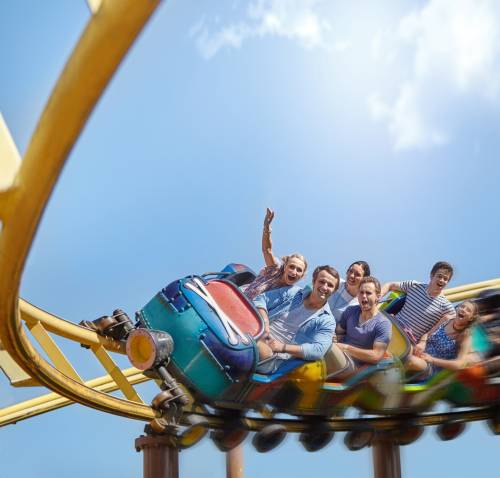
A fatal roller coaster accident at Six Flags Over Georgia on October 12, 2026, has renewed public attention on amusement ride safety. According to the Associated Press, 42-year-old Hassan Jihad Ibn Kariem died after being ejected from the Goliath roller coaster, and other riders were injured. Authorities began investigating the incident, and several similar rides were temporarily closed as a precaution. The precise cause of the accident and any legal responsibility must be determined through the investigation.
Although this tragedy occurred in Georgia, it raises important questions for Illinois residents who visit amusement parks, traveling carnivals, water parks, fairs, and other attractions. When an accident occurs, who may be legally responsible? Can an injured visitor sue an amusement park? What rights do families have after a fatal accident?
At John J. Malm & Associates, we understand that serious injury and wrongful death claims require careful investigation, strong evidence, and a thorough understanding of Illinois personal injury law. Understanding the potential sources of liability is an important first step toward protecting an injured person’s rights.
As Naperville injury attorney John J. Malm explains: “When a serious amusement ride accident occurs, finding out what went wrong is only the beginning. A thorough investigation must determine whether the harm could have been prevented and who should be held accountable under the law.”
How Common Are Amusement Park Injuries?
Although serious amusement ride injuries are relatively uncommon compared with the enormous number of rides taken each year, the consequences can be devastating. The International Association of Amusement Parks and Attractions (IAAPA) reports that North American fixed-site amusement facilities collectively accommodate hundreds of millions of guests and more than a billion rides annually. Its safety information estimates that the chance of sustaining a serious injury on a fixed-site amusement park ride in the United States is approximately one in 15.5 million rides.
The U.S. Consumer Product Safety Commission (CPSC) operates the National Electronic Injury Surveillance System, which uses emergency department data from a representative sample of U.S. hospitals to estimate injuries associated with consumer products. The agency explains that these estimates help identify injury patterns and potential product safety concerns. However, its general injury surveillance system should not be mistaken for a complete count of every injury involving fixed-site amusement park rides. Amusement ride accidents can occur in several ways, including:
- Mechanical failures: A component breaks, a restraint malfunctions, or a ride system does not operate as intended.
- Inadequate maintenance: Worn, damaged, or defective equipment is not properly repaired or replaced.
- Operator errors: Employees fail to follow required procedures, conduct safety checks, or respond appropriately to a developing hazard.
- Inadequate warnings: Riders are not properly informed about height, weight, health, or other restrictions relevant to safe participation.
- Unsafe premises: Poorly maintained walkways, platforms, stairs, or loading areas cause falls and other injuries.
Identifying the actual cause is essential to determining whether an injured visitor has a viable legal claim.
Who Can Be Held Liable for an Amusement Park Accident in Illinois?
Liability depends on the circumstances of the accident, the parties involved, and the evidence establishing negligence or another legally recognized basis for recovery. More than one party may bear responsibility. Parties that can be held liable include:
1. The Amusement Park or Ride Operator
An amusement park generally must exercise reasonable care under the circumstances to protect visitors from foreseeable harm. Depending on the facts, this duty may include maintaining reasonably safe premises, following applicable safety requirements, training employees, and addressing known hazards.
A park or operator may face a negligence claim when evidence shows that its conduct fell below the applicable standard of care and caused an injury. Examples of potentially negligent conduct include:
- Failing to perform required inspections or safety checks.
- Ignoring reports of unusual ride behavior or malfunctioning equipment.
- Allowing a ride to operate despite a known safety hazard.
- Failing to follow manufacturer instructions or applicable operating procedures.
- Assigning inadequately trained employees to safety-critical tasks.
- Failing to enforce rider restrictions or verify restraints when required.
An accident alone does not prove negligence. Investigators must examine what happened, what the responsible parties knew or should have known, and whether a breach of duty caused the injury.
2. The Ride Manufacturer
An amusement ride manufacturer may be responsible when a defective product causes an injury. Product liability claims can involve a defect in the ride’s design, a manufacturing error, or inadequate warnings or instructions.
For example, investigators might examine whether a restraint system was properly designed for its intended use, whether a component was manufactured according to specifications, or whether the manufacturer provided sufficient instructions concerning inspection and maintenance. Potential evidence in a product liability investigation includes:
- Engineering drawings and design specifications.
- Product testing and certification records.
- Manufacturing and quality-control documentation.
- Recall notices and prior incident reports.
- Expert analysis of the failed component.
- Manufacturer warnings and maintenance instructions.
A manufacturer is not automatically liable whenever a ride causes an injury. The evidence must establish the applicable elements of the product liability claim, including the relevant defect and its connection to the harm.
3. Maintenance and Inspection Contractors
Some amusement parks rely on outside companies to inspect, repair, or maintain their rides. Depending on their contractual responsibilities and conduct, these companies may be liable if negligent work contributes to an accident. For example, a contractor might fail to identify a dangerous defect during an inspection, improperly repair a safety-critical component, or return equipment to service without completing required work.
Investigators should determine who performed the relevant maintenance, what procedures were required, whether the work was completed correctly, and whether the defect should reasonably have been discovered. A contract between the park and a contractor does not automatically determine liability to an injured visitor. Responsibility depends on the duties owed, the applicable law, and the evidence.
4. Individual Employees or Other Third Parties
Ride operators, attendants, supervisors, and other employees may have played a role in an accident. Their conduct may be relevant to a negligence claim against the employer and, in some circumstances, to individual liability.
Other potential defendants could include companies responsible for operating an attraction, inspecting equipment, or maintaining the premises. The identity of the proper defendants should be determined through a fact-specific investigation rather than assumption.
Illinois Amusement Ride Safety Requirements
Illinois regulates amusement rides and attractions through the Amusement Ride and Attraction Safety Act, 430 ILCS 85, and related administrative rules. The Illinois Department of Labor’s Amusement Ride and Attraction Safety Division explains that rides and attractions open to the public generally must be inspected before initial operation in Illinois and at least annually thereafter. The department also states that rides are not permitted to operate unless they pass the required inspection.
Illinois administrative rules also require daily inspection and testing of amusement rides and attractions on days they are intended to be used. These inspections must be performed by a trained attendant, documented, and retained as required by the rules.
These requirements are important, but regulatory compliance and civil liability are separate questions. A ride’s having passed an inspection does not necessarily resolve every question about its maintenance, operation, or safety on the day of an accident. Conversely, an accident does not by itself establish a violation. After a serious incident, relevant questions may include:
- Were required inspections and tests completed and documented?
- Were identified defects corrected before the ride returned to service?
- Did employees follow the manufacturer’s operating instructions?
- Were safety restraints and emergency systems functioning properly?
- Were prior complaints, incidents, or warning signs investigated?
- Did the park comply with applicable reporting and evidence-preservation requirements?
Answers to these questions can help establish how the accident occurred and whether a party’s conduct contributed to the injury.
What Compensation Is Available After an Amusement Park Injury?
When negligence or another legally actionable wrong causes an amusement park injury, the injured person may be entitled to compensation for losses recognized by Illinois law. The amount of a potential recovery depends on the severity of the injuries, the evidence of liability, available insurance, and other case-specific factors. Recoverable damages in a successful personal injury claim may include:
- Medical expenses: Emergency treatment, hospitalization, surgery, rehabilitation, prescription medication, and reasonably necessary future medical care.
- Lost income: Wages lost during recovery and, where supported by the evidence, reduced future earning capacity.
- Pain and suffering: Physical pain, discomfort, and the consequences of the injury.
- Disability and disfigurement: Permanent physical limitations, scarring, and changes to daily activities.
- Loss of normal life: The inability to participate in activities and experiences that were important before the accident.
Catastrophic injuries may require years of treatment and assistance. A thorough damages assessment should account for both immediate expenses and reasonably foreseeable future needs. In cases involving multiple potentially responsible parties, the investigation should also examine applicable insurance policies and the legal rules governing the allocation of responsibility.
Wrongful Death Claims After a Fatal Amusement Park Accident
When an amusement ride accident results in death, surviving family members may face profound emotional and financial consequences. They may also have legal rights if the death resulted from negligence or another wrongful act. Under the Illinois Wrongful Death Act, 740 ILCS 180/1, a wrongful death action may be available when a person’s death is caused by a wrongful act, neglect, or default that would have supported a personal injury action had the person survived. The claim is brought by the legally authorized representative for the benefit of the deceased person’s surviving spouse and next of kin, as provided by law.
Depending on the circumstances, a wrongful death claim may seek damages for losses such as the survivors’ loss of the deceased person’s society and companionship, as well as other legally recognized losses. A separate survival action may also be available for claims the deceased person could have pursued if they had survived, subject to applicable law and the facts. Important considerations include:
- Who is legally authorized to bring the claim.
- Whether the evidence establishes negligence or another actionable wrong.
- The relationship between the deceased and the surviving beneficiaries.
- The financial and personal losses caused by the death.
- Whether separate survival claims may be appropriate.
- Applicable filing deadlines and any relevant defenses.
What Should You Do After an Amusement Park Accident?
The steps taken after a serious ride accident can help protect a person’s health and preserve important evidence.
1. Seek medical attention. Some injuries, including concussions, internal injuries, and spinal trauma, may not be immediately apparent. Obtain appropriate medical evaluation and follow the treating provider’s instructions.
2. Report the incident. Notify park management or the appropriate ride operator and request that the incident be documented. If emergency assistance is necessary, contact emergency services.
3. Preserve evidence. If it is safe and practical, retain photographs, videos, tickets, receipts, and other records relating to the incident. Record the names and contact information of witnesses.
4. Keep medical and financial records. Maintain copies of medical records, bills, treatment instructions, wage-loss documentation, and communications with insurers.
5. Avoid speculation about the cause. Do not assume that an operator, manufacturer, or another party caused the accident before the facts have been established. Be cautious when asked to provide recorded statements or sign releases before understanding their implications.
6. Seek legal guidance. An attorney can help identify potential defendants, preserve relevant evidence, evaluate applicable law, and communicate with insurers.
Evidence may include surveillance video, ride-control data, inspection logs, maintenance records, employee training documentation, manufacturer specifications, and prior incident reports. Some of these records may be overwritten, altered through routine operations, or lost unless appropriately preserved. A prompt investigation can be particularly important when the ride has been repaired, dismantled, or returned to service.
Frequently Asked Questions About Illinois Amusement Park Accidents
Can I sue an amusement park if I was injured on a roller coaster?
Potentially. A claim may be available if evidence establishes that the park or another responsible party acted negligently, supplied a defective product, or otherwise committed a legally actionable wrong that caused your injury. The outcome depends on the facts and applicable law.
Is the amusement park automatically liable if a ride malfunctions?
No. A malfunction or accident does not automatically establish liability. Investigators must determine what happened, whether a party breached a legal duty or supplied a defective product, and whether that conduct caused the injury.
Can I sue if I signed a liability waiver before riding?
Possibly. The enforceability and scope of a waiver depend on its language, the circumstances in which it was signed, and applicable law. A waiver should not automatically be assumed to eliminate every potential claim involving negligence or a defective product.
Who is responsible if a defective restraint causes an injury?
Potentially responsible parties may include the ride operator, amusement park, manufacturer, or maintenance contractor. Liability depends on the cause of the failure, each party’s role and duties, and the evidence connecting the alleged wrongdoing to the injury.
What if an amusement park accident causes a loved one’s death?
If the death resulted from a wrongful act, neglect, or other legally actionable conduct, a wrongful death claim may be available to eligible survivors through the legally authorized representative. A survival action may also be appropriate in some circumstances. The applicable law depends in part on where the accident occurred.
Does passing a state safety inspection protect a park from a lawsuit?
Not necessarily. An inspection is relevant evidence, but it does not automatically resolve whether the ride was reasonably maintained and operated or whether a separate defect or negligent act caused the accident. Liability must be evaluated using the full evidence and applicable law.
What evidence is important in an amusement park injury case?
Useful evidence may include photographs, witness statements, video footage, medical records, maintenance logs, inspection documents, ride-control data, employee training records, and expert analysis. The evidence needed depends on the alleged cause of the accident.
How much is an amusement park injury claim worth?
There is no standard settlement amount. The potential value depends on the severity and permanence of the injuries, medical costs, lost income, pain and suffering, available evidence, liability issues, insurance coverage, and other case-specific considerations. No particular recovery can be guaranteed.
Serious Amusement Park Accidents Deserve the Top-Notch Illinois Injury Lawyers at John J. Malm & Associates
A serious amusement park accident can change a person’s life in seconds. Victims may face extensive medical treatment, lost income, permanent disability, and uncertainty about their future. Families who lose a loved one may be left searching for answers while coping with an immeasurable loss.
When an accident occurs, determining responsibility requires more than examining the ride itself. It may involve investigating the park’s inspection and maintenance practices, reviewing operator training, analyzing equipment and restraint systems, and determining whether a manufacturer or another third party contributed to the incident.
At John J. Malm & Associates, we represent individuals and families pursuing compensation for serious personal injuries and wrongful deaths. Our firm brings more than 90 years of combined litigation experience to complex injury cases, with a focus on investigating the evidence, evaluating liability, and building strong claims on behalf of our clients.
If you or someone you love has been injured in an amusement park accident in Illinois, you do not have to navigate the legal process alone. Contact John J. Malm & Associates for a free consultation to discuss what happened, understand your legal options, and determine whether you may have a claim for compensation. We are committed to helping injured people and grieving families pursue accountability and the financial recovery they may need to move forward.