

EXPERIENCED PERSONAL INJURY ATTORNEYS












Illinois Flatbed Truck Accident Lawyers
Complex Injury Attorneys for People in Trucking Crashes
Flatbed trucks are an essential part of the transportation industry. They are used to carry construction equipment, steel, lumber, pipes, machinery, concrete, building materials, and other cargo that may not fit inside an enclosed trailer. But the open design that makes a flatbed trailer useful can also create serious hazards when cargo is improperly loaded, secured, inspected, or transported.
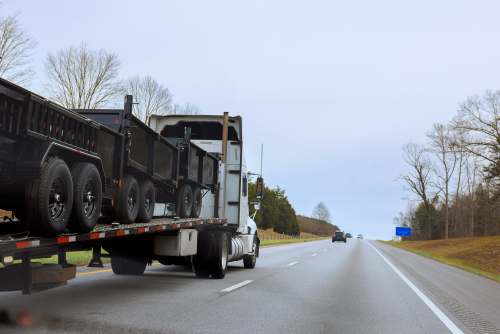
A flatbed truck accident can occur because of a collision between the truck and another vehicle, but some of the most dangerous crashes involve cargo that shifts, falls, rolls, or becomes detached from the trailer. A heavy object falling from a flatbed can strike another vehicle directly or force drivers to swerve into surrounding traffic. Improperly distributed cargo can also affect a truck’s stability, braking, and handling.
The Federal Motor Carrier Safety Administration (FMCSA) maintains extensive regulations governing cargo securement because improperly secured loads can create a substantial danger to everyone sharing the road. The agency explains that its cargo-securement standards are designed to prevent cargo from shifting on or within commercial motor vehicles or falling from them.
For people injured in Illinois flatbed truck accidents, determining who is responsible can require a detailed investigation into the truck driver, trucking company, cargo loader, shipping company, maintenance provider, and others involved in transporting the load.
“When a flatbed truck is involved in a serious crash, the investigation cannot stop with the vehicles. We need to determine what happened with the load, how it was secured, who was responsible for securing it, and whether safety rules were followed. Those details can be critical to protecting an injured person’s rights.” — John J. Malm, Naperville truck accident attorney
Flatbed Truck Accidents Are a Serious Safety Concern
Large commercial trucks are involved in thousands of crashes across the United States every year. FMCSA reported that in 2022 approximately 503,000 police-reported crashes involved large trucks. About 5,279 of those crashes were fatal crashes and approximately 114,000 involved injuries.
FMCSA also reported that 5,837 large trucks were involved in fatal crashes in 2022. Importantly, approximately 82% of people killed in fatal crashes involving large trucks were not occupants of the large truck.
More recent federal data also demonstrate the continuing significance of large-truck crashes. FMCSA’s 2023 FARS data show 168 fatal crashes involving large trucks in Illinois, resulting in 190 fatalities. These figures include large-truck crashes generally and are not limited specifically to flatbed trucks.
What Is a Flatbed Truck?
A flatbed truck or tractor-trailer uses an open trailer platform rather than an enclosed cargo box. The configuration allows large, wide, tall, or unusually shaped objects to be loaded from different directions. Flatbeds commonly transport:
- Steel beams and coils.
- Lumber and building materials.
- Construction equipment.
- Farm and agricultural equipment.
- Concrete products.
- Pipes and tubing.
- Machinery.
- Large industrial components.
- Vehicles and equipment.
- Logs and other forestry products.
The absence of enclosed trailer walls means the load generally must be secured using chains, straps, binders, blocking, bracing, stakes, or other appropriate securement equipment. That creates a critical safety obligation. If a load is improperly secured, a collision is not necessarily required for the cargo to become dangerous. A sudden stop, sharp turn, emergency maneuver, roadway vibration, or change in speed can cause cargo to shift or fall.
Cargo Falling From a Flatbed Can Cause Catastrophic Crashes
One of the most dangerous flatbed-truck scenarios occurs when cargo leaves the trailer. A heavy object can strike a vehicle traveling behind the truck. Even a relatively small object can create an emergency situation if a driver encounters it unexpectedly at highway speed. Drivers may attempt to:
- Brake suddenly.
- Swerve into another lane.
- Move onto the shoulder.
- Enter an adjacent lane occupied by another vehicle.
- Lose control while attempting to avoid the object.
Illinois law specifically addresses this danger. Under 625 ILCS 5/15-109, vehicles must be constructed or loaded so that cargo does not drop, shift, leak, or otherwise escape. The statute also requires loads and coverings to be securely fastened so they do not become loose, detached, or hazardous to other highway users. Illinois law specifically directs the Illinois Department of Transportation to adopt rules concerning the securing of steel rolls and other objects transported on flatbed trucks. A violation of a cargo-securement requirement can therefore become important evidence when investigating a flatbed truck accident.
Improper Cargo Securement
Federal cargo-securement regulations impose detailed requirements on commercial vehicles operating in interstate commerce. FMCSA’s general rule requires cargo to be firmly immobilized or secured by appropriate structures, dunnage, blocking, bracing, tiedowns, or combinations of these methods. Cargo securement systems must also satisfy specified performance requirements.
FMCSA explains that the aggregate working load limit of a cargo-securement system generally must be at least one-half the weight of the article or group of articles being secured. The regulations also establish minimum numbers of tiedowns depending on factors such as cargo length, weight, and whether the cargo is otherwise blocked or immobilized. Problems can arise when:
- Too few tiedowns are used.
- Tiedowns are damaged or worn.
- Chains or straps have inadequate working load limits.
- Tiedowns are improperly positioned.
- Cargo is not blocked or braced appropriately.
- Edge protection is not used where required.
- Anchor points are inadequate.
- Cargo is loaded unevenly.
- The load is not inspected during transit.
- The driver continues operating despite a known securement problem.
FMCSA’s regulations require tiedowns and other components of cargo-securement systems to be maintained in proper working order. The agency also requires cargo to be secured in a manner that prevents tiedowns from becoming loose, unfastening, opening, or releasing while the vehicle is in transit.
Cargo Can Shift Without Falling Off the Truck
A flatbed accident does not necessarily involve cargo falling onto the roadway. Cargo that shifts can change the distribution of weight across a trailer. That can affect handling, braking, and vehicle stability. A shifting load can contribute to:
- Loss of vehicle control.
- Jackknifing.
- Rollover crashes.
- Sudden lane departures.
- Longer stopping distances.
- Trailer instability.
- Collisions with nearby vehicles.
FMCSA notes that loaded vehicles with a high center of gravity can roll over at lower levels of lateral acceleration than vehicles with a lower center of gravity. The agency’s cargo-securement requirements are intended in part to prevent cargo from shifting and creating these types of hazards.
Flatbed Truck Rollovers
Rollovers can be particularly dangerous because of the height, weight, and configuration of commercial vehicles. A rollover may occur when a truck:
- Takes a curve too quickly.
- Swerves to avoid an obstacle.
- Has an improperly distributed load.
- Experiences a cargo shift.
- Has a tire failure.
- Encounters hazardous roadway conditions.
- Loses control because of excessive speed.
- Has a high center of gravity.
FMCSA reported that overturn or rollover was the first harmful event in approximately 4% of fatal large-truck crashes and 2% of nonfatal large-truck crashes in 2022. Although these percentages represent large trucks generally rather than flatbeds alone, they illustrate the seriousness of rollover events involving commercial vehicles.
Common Causes of Flatbed Truck Accidents
Cargo problems are only one potential cause of a flatbed crash. Like other commercial vehicles, flatbed trucks can be involved in collisions caused by driver behavior, mechanical defects, roadway conditions, or trucking-company practices. Common causes include:
- Speeding.
- Distracted driving.
- Fatigued driving.
- Following too closely.
- Unsafe lane changes.
- Failure to yield.
- Improper turns.
- Aggressive driving.
- Driving under the influence.
- Improper cargo loading.
- Improper cargo securement.
- Overloaded trailers.
- Uneven weight distribution.
- Brake defects.
- Tire failures.
- Steering or suspension problems.
- Inadequate vehicle maintenance.
- Unsafe roadway conditions.
- Poor visibility or weather.
FMCSA’s 2022 data indicate that at least one driver-related factor was recorded for approximately 33% of large-truck drivers involved in fatal crashes. “Speeding of any kind” was the most frequently identified driver-related factor for large-truck drivers, followed by careless, inattentive, improper, or otherwise unsafe driving.
Who May Be Responsible for a Flatbed Truck Accident?
Determining liability in a commercial-truck accident can be substantially more complicated than determining fault in an ordinary passenger-vehicle crash. Potentially responsible parties can include:
The Truck Driver
A driver may be responsible if the crash resulted from speeding, distracted driving, unsafe maneuvering, failure to inspect the load, or another negligent act.
The Trucking Company
A motor carrier may potentially bear responsibility for negligent hiring, training, supervision, scheduling, maintenance, or other company practices, depending on the facts of the case.
The Cargo Loader
The company or individual responsible for loading and securing the cargo may become an important part of the investigation if the load was improperly positioned or secured.
The Shipping or Contracting Company
Multiple companies can be involved in transporting a commercial load. Determining the contractual relationships between the parties may help identify who had responsibility for loading, securement, inspection, and transportation.
A Maintenance or Repair Company
If a mechanical defect contributed to the crash, the company responsible for inspecting or repairing the truck or trailer may need to be investigated.
A Manufacturer
In some cases, a defective component, tire, securement device, or other product may contribute to a truck accident.
Liability depends on the specific facts and applicable law. An accident investigation should therefore examine the entire chain of responsibility rather than assuming that the truck driver is automatically the only potentially responsible party.
Injuries in Flatbed Truck Accidents
Because of the size and weight of commercial vehicles and their cargo, collisions can produce severe injuries. Potential injuries include:
- Traumatic brain injuries.
- Concussions.
- Spinal cord injuries.
- Paralysis.
- Broken bones.
- Internal bleeding.
- Organ damage.
- Crush injuries.
- Amputations.
- Severe lacerations.
- Burns.
- Nerve damage.
- Soft-tissue injuries.
- Neck and back injuries.
- Permanent disabilities.
- Fatal injuries.
The long-term consequences can be substantial. A victim may require emergency treatment, hospitalization, surgery, rehabilitation, medication, assistive equipment, and continuing medical care. Some injuries may not become fully apparent immediately after a collision. This is one reason medical evaluation and documentation are important after a serious truck crash.
What Evidence Is Important After a Flatbed Truck Crash?
Commercial truck cases can involve evidence that is not normally available in an ordinary car accident. An investigation may involve:
- Police crash reports.
- Photographs and video.
- Dashcam footage.
- Traffic-camera footage.
- Witness statements.
- Truck and trailer inspection records.
- Driver logs.
- Electronic logging-device data.
- Cargo-loading records.
- Bills of lading.
- Shipping documents.
- Cargo-securement records.
- Maintenance records.
- Driver qualification records.
- Training records.
- Drug and alcohol testing records when applicable.
- GPS or telematics data.
- Electronic communications.
- Black-box or event-data information when available.
- Photographs of the cargo and securement devices.
Cargo evidence can be especially important. Chains, straps, binders, anchor points, blocking materials, and other securement equipment may help establish how the load was secured before the collision.
Why Truck Accident Investigations Can Be Complex
Evidence can disappear quickly after a commercial truck crash. The cargo may be removed, the truck may be repaired, and the trailer may be placed back into service. For that reason, a serious flatbed accident may require prompt preservation of evidence. Investigators may need to determine:
- What cargo was being transported?
- Who loaded it?
- Who secured it?
- What securement devices were used?
- Were the devices rated appropriately?
- Was the load properly distributed?
- Was the cargo inspected before departure?
- Were there prior complaints about the load?
- Did the driver perform required inspections?
- Did the cargo shift before the crash?
- Did a mechanical problem contribute?
- Was the driver complying with applicable hours-of-service requirements?
- Did the trucking company have prior safety violations?
- Were applicable federal and Illinois regulations followed?
The answers can make a significant difference in determining how an accident occurred and who may be legally responsible.
What Should You Do After a Flatbed Truck Accident?
If you have been injured in a collision involving a flatbed truck, seek medical attention and document the accident as thoroughly as possible. When it is safe to do so, consider:
- Calling 911 and reporting the crash.
- Obtaining medical treatment.
- Photographing the vehicles and roadway.
- Photographing any cargo that fell or shifted.
- Identifying witnesses.
- Obtaining the trucking company’s information.
- Preserving photographs and videos.
- Keeping medical records and bills.
- Avoiding statements about fault to an insurance company before obtaining legal advice.
- Avoiding social-media posts that could be misinterpreted.
- Contacting an experienced Illinois truck accident attorney promptly.
Do not assume that the trucking company’s insurer will conduct an investigation solely for your benefit. A commercial carrier and its insurer have their own interests in the claim.
Frequently Asked Questions About Flatbed Truck Accidents
What makes flatbed truck accidents different from other truck accidents?
Flatbed trucks transport cargo on an open trailer, which means cargo must generally be secured with appropriate equipment. Improperly secured cargo can shift, roll, or fall from the vehicle and create hazards for other motorists. Illinois and federal regulations specifically address cargo securement.
Can I sue if cargo falls off a flatbed truck and hits my vehicle?
Potentially. Liability will depend on the circumstances, including who was responsible for loading and securing the cargo and whether negligence or a violation of applicable safety requirements contributed to the accident.
What if the flatbed truck driver did not cause the accident?
A driver does not necessarily have to be the sole cause of a crash for another party to potentially be responsible. Depending on the evidence, liability could involve a trucking company, cargo loader, shipper, maintenance provider, manufacturer, or another party.
Does Illinois law address flatbed cargo?
Yes. Illinois law prohibits vehicles from being driven with loads that can drop, shift, leak, or otherwise escape. It also specifically directs the adoption of rules concerning steel rolls and other objects transported on flatbed trucks.
What if the cargo shifted but did not fall off the trailer?
A shifting load can still create a dangerous condition and may contribute to loss of control, rollover, braking problems, or a collision. The circumstances should be investigated to determine whether improper loading or securement contributed to the crash.
How long do I have to file a truck accident lawsuit in Illinois?
The applicable deadline depends on the circumstances of the claim, the parties involved, and other legal factors. Because statutes of limitation can restrict the ability to bring a lawsuit, it is important to speak with an Illinois truck accident attorney promptly rather than waiting until the deadline approaches.
What damages can I recover after a flatbed truck accident?
Depending on the circumstances, an injured person may be able to seek compensation for medical expenses, lost income, future medical care, pain and suffering, disability, disfigurement, and other losses caused by the accident. The damages available in a particular case depend on the evidence and applicable Illinois law.
Contact the Award-Winning Illinois Truck Accident Attorneys at John J. Malm & Associates
A flatbed truck accident can change your life in an instant. When a massive commercial vehicle collides with a passenger car, or when heavy cargo falls, shifts, or rolls from a flatbed, the resulting injuries can be catastrophic. The federal government has established detailed cargo-securement requirements precisely because shifting and falling cargo can create serious hazards on the roadway, while Illinois law independently prohibits vehicles from operating with loads that can become loose or hazardous to other highway users.
If you or a loved one has been injured in a flatbed truck accident, our Illinois truck accident attorneys can investigate the collision, examine cargo-loading and securement issues, identify potentially responsible parties, preserve critical evidence, and pursue the compensation you may be entitled to for your injuries and losses. Contact our firm today for a free consultation about your flatbed truck accident.