

EXPERIENCED PERSONAL INJURY ATTORNEYS




Illinois Tesla Car Accident Lawyers
Trial-Ready Injury Attorneys for Victims of Crashes with Teslas
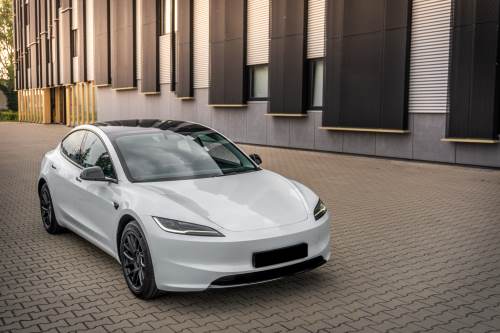
Tesla vehicles have become increasingly common on Illinois roads, including throughout DuPage, Kane, Cook, Will, and Kendall Counties. Tesla’s electric vehicles are equipped with advanced safety systems and driver-assistance technology, but a Tesla can still be involved in a serious car accident. When a Tesla crash occurs, determining who is responsible can sometimes require investigating more than the actions of the drivers involved.
A Tesla accident may involve ordinary driver negligence, distracted driving, speeding, impaired driving, or failure to yield. But some crashes may also raise questions about vehicle systems, software, advanced driver-assistance features, road conditions, maintenance, or a potentially defective component. When Autopilot or Full Self-Driving (FSD) technology is involved, investigators may need to determine what the system was designed to do, what it actually did, whether the driver was expected to intervene, and whether warnings or other safety systems functioned properly.
These issues can make Tesla accident claims more complicated than a conventional collision. An injured person may need evidence from the Tesla itself, including vehicle data, event records, photographs, surveillance video, witness statements, medical records, and information about the vehicle’s software and safety systems.
“A serious Tesla accident can involve much more than determining which driver received a traffic citation. When advanced driver-assistance technology, vehicle systems, or a potential defect may have contributed to a crash, we need to examine the evidence carefully and determine what actually happened. Our focus is on protecting the injured person and pursuing the compensation the evidence and law support.” — John J. Malm, Naperville car accident attorney
Tesla Accidents Are Still Motor Vehicle Accidents
Tesla’s technology does not eliminate the ordinary risks associated with driving. According to the CDC, motor vehicle crashes remain a leading cause of death in the United States. In 2023, more than 44,000 people died in motor vehicle crashes, and there were more than 2.8 million emergency-department visits for crash-related injuries. The CDC estimates that the deaths from crashes in 2023 resulted in more than $457 billion in total costs, including medical costs and the estimated value of lives lost.
Tesla drivers and other motorists can therefore suffer the same types of injuries found in other automobile crashes. Depending on the severity and mechanism of a collision, an injured person may experience:
- Traumatic brain injuries and concussions.
- Neck and back injuries.
- Herniated or bulging discs.
- Spinal cord injuries.
- Broken bones and fractures.
- Internal bleeding and organ damage.
- Shoulder and rotator-cuff injuries.
- Knee and leg injuries.
- Facial injuries and lacerations.
- Burns and other injuries associated with vehicle fires.
- Psychological trauma and emotional distress.
- Permanent disability or disfigurement.
The fact that a Tesla has sophisticated safety technology does not mean that occupants are immune from serious injuries. A high-speed collision can generate substantial forces even when the vehicle’s safety systems perform as intended.
Tesla Autopilot and Full Self-Driving Crash Issues
Tesla’s advanced driver-assistance systems have received significant regulatory scrutiny. NHTSA requires manufacturers and operators of vehicles equipped with certain advanced driver-assistance systems to report qualifying crashes. The agency issued its Standing General Order in 2021 to obtain information about crashes involving SAE Level 2 ADAS and higher-level automated driving systems.
Tesla’s Autopilot and FSD systems are particularly important in accident investigations because they are not equivalent to a human driver who has surrendered control of the vehicle. NHTSA has described Tesla FSD as a Level 2 partial-automation system that requires a fully attentive driver to remain engaged in the driving task and intervene when necessary. That distinction can become extremely important after a collision.
An injured person may hear that a Tesla was operating on “Autopilot” or “Full Self-Driving” and assume the technology automatically determines liability. It does not. The legal question requires a fact-specific investigation into what happened immediately before the crash. Investigators may examine:
- Whether Autopilot or FSD was engaged.
- What the system detected before the collision.
- Whether the driver received warnings.
- Whether the driver was expected to intervene.
- Whether the driver responded to warnings.
- Whether the vehicle recognized another vehicle, pedestrian, cyclist, or roadway hazard.
- Whether weather or visibility affected the system.
- Whether software updates changed system performance.
- Whether the vehicle experienced a mechanical or electrical malfunction.
- Whether another driver caused or contributed to the collision.
NHTSA Has Investigated Tesla Driver-Assistance Crashes
NHTSA’s investigation history demonstrates why evidence involving Tesla’s driver-assistance technology can matter. In 2024, NHTSA closed an Engineering Analysis concerning Tesla Autopilot after examining crashes involving approximately 2.03 million Tesla vehicles equipped with Autopilot. The agency’s investigation identified hundreds of reported incidents and examined whether the system’s controls were sufficient to prevent crashes associated with inadequate driver engagement. The agency reported 467 crashes in its failure-report summary, along with 54 injuries and 14 fatalities after accounting for duplicates in the data.
NHTSA has also investigated FSD performance in degraded visibility conditions. The agency identified Tesla crashes involving conditions such as sun glare, fog, and airborne dust. One of the crashes involved a fatal pedestrian collision, while another involved a reported injury.
In 2026, NHTSA upgraded that investigation to an Engineering Analysis. The agency stated that available incident data raised concerns about whether Tesla’s degradation-detection system appropriately identified impaired camera visibility and warned drivers with sufficient time to respond. NHTSA also stated that limitations in Tesla’s internal data and labeling could have contributed to under-reporting of some crashes.
These regulatory findings do not mean that every Tesla accident involving FSD was caused by the system. Instead, they demonstrate why a serious crash involving driver-assistance technology may require a deeper investigation.
Tesla Recalls Can Also Matter in Accident Investigations
Vehicle recalls may become important evidence after a crash. A recall does not automatically establish that a defective component caused an accident, but attorneys investigating a collision should determine whether the vehicle was subject to any relevant safety recall and whether the defect could have played a role.
For example, NHTSA recall 25V-002 affected certain 2024–2025 Model 3 vehicles, 2023–2025 Model Y vehicles, 2024–2025 Model S vehicles, and 2023–2025 Model X vehicles. The recall involved a computer-board issue that could cause loss of the rearview-camera display. NHTSA’s recall notice stated that loss of the rearview-camera display could affect rear visibility and increase the risk of a collision. After a Tesla accident, an investigation should therefore consider the vehicle’s:
- Vehicle identification number (VIN).
- Model year.
- Software version.
- Recall history.
- Repair history.
- Maintenance history.
- Crash history.
- Event-data information.
- Relevant diagnostic information.
What Causes Tesla Accidents?
A Tesla crash can occur for many of the same reasons as any other car accident. Common causes include:
Distracted Driving
A driver who is texting, looking at a phone, interacting with a touchscreen, eating, or otherwise diverting attention from the roadway may fail to recognize a developing hazard.
Speeding
Excessive speed can reduce reaction time and increase the severity of a collision. Higher speeds also increase the amount of energy involved in a crash.
Failure to Yield
Intersection crashes can occur when a Tesla driver or another motorist fails to yield the right-of-way.
Rear-End Collisions
A driver who follows too closely may be unable to stop when traffic slows. Rear-end crashes can cause significant neck, back, and head injuries.
Impaired Driving
Alcohol and drugs can substantially impair perception, judgment, coordination, and reaction time.
Driver-Assistance Technology
When Autopilot or FSD is involved, the investigation may need to examine the interaction between the human driver and the vehicle’s automated systems.
Vehicle Defects
A defect involving steering, braking, acceleration, visibility, restraint systems, tires, battery systems, or other components may potentially contribute to an accident.
Tesla Battery Fires and Post-Crash Risks
Electric vehicles introduce additional considerations after certain serious collisions. A crash involving the battery pack can potentially create hazards that require emergency responders to follow specialized procedures.
This does not mean that Tesla vehicles are inherently more dangerous than gasoline-powered vehicles. Instead, the battery system is one additional component that may need to be examined following a serious crash. If a vehicle fire occurs, investigators may need to determine whether the fire resulted from collision damage, a battery-related issue, another vehicle system, or another source.
Who May Be Liable for a Tesla Accident?
Liability depends on the evidence. In a conventional crash, the at-fault driver may be responsible for the injured person’s damages. But Tesla accident cases can potentially involve multiple parties. Depending on the circumstances, a claim may involve:
- Another negligent driver.
- A Tesla driver.
- Tesla or another vehicle manufacturer.
- A component manufacturer.
- A repair facility.
- A maintenance provider.
- A software or technology issue.
- A commercial vehicle operator or employer.
- A governmental entity responsible for roadway conditions.
Product liability and negligence claims have different legal requirements. Establishing that a vehicle contained sophisticated technology is not enough. The evidence must connect the alleged defect or negligent conduct to the accident and resulting injuries.
Evidence Can Be Critical in a Tesla Accident Case
Tesla accident investigations can involve evidence that is different from evidence used in an ordinary collision. Important evidence may include:
- Police crash reports.
- Photographs of the accident scene.
- Vehicle damage photographs.
- Surveillance footage.
- Traffic-camera footage.
- Dashcam recordings.
- Witness statements.
- Cellphone records.
- Medical records.
- Accident reconstruction.
- Vehicle diagnostic information.
- Event-data information.
- Autopilot or FSD engagement information.
- Software-version information.
- Recall records.
- Maintenance and repair records.
- Vehicle inspection information.
Preserving the vehicle can be particularly important. An insurer, repair facility, salvage yard, or other entity may eventually possess the vehicle, and relevant evidence may be lost if it is repaired, altered, or destroyed before it can be properly examined.
Tesla Dashcam and Sentry Mode Footage After an Accident
One of the most valuable sources of evidence in a Tesla accident may already be inside the vehicle. Tesla vehicles equipped with its Dashcam and Sentry Mode features can record video from the vehicle’s exterior cameras. Depending on the model, configuration, software version, and settings, this footage can provide a visual record of what happened before, during, and after a collision. Tesla states that Dashcam recordings are stored locally rather than transmitted to Tesla.
This footage can be particularly important in a disputed accident. A video recording may show another driver’s lane position, traffic-signal status, vehicle speed relative to surrounding traffic, a pedestrian or bicyclist entering the roadway, or what occurred immediately before impact. It can also help an accident-reconstruction expert evaluate the sequence of events.
Tesla’s Dashcam system can operate in different recording modes. Tesla’s owner’s manual describes an Auto setting that can automatically save footage when the vehicle detects a safety-critical event, such as a collision or airbag deployment. However, Tesla cautions that Dashcam may not automatically record every safety-critical event. Manual saving and other recording options are also available depending on the vehicle and software.
How Tesla Dashcam Footage Is Saved
Tesla Dashcam footage generally requires a properly configured USB storage device. Tesla’s current owner’s-manual information states that compatible vehicles generally require a USB drive with at least 64 GB of storage and appropriate sustained write speed. Depending on the model and production date, the vehicle may have a USB port in the glovebox or another front USB port capable of recording and viewing footage.
The vehicle stores recordings in a TeslaCam folder. Depending on the vehicle and recording configuration, the folder can contain different categories of footage, including:
- RecentClips — recent recordings that may be overwritten as new footage is recorded.
- SavedClips — recordings that have been specifically saved.
- SentryClips — recordings generated by Sentry Mode events.
- EncryptedClips — encrypted recordings on vehicles where dashcam encryption is enabled.
Tesla warns that older footage can be deleted or overwritten when storage space becomes limited. Once certain Sentry Mode footage has been deleted, it cannot be retrieved from the USB drive. For that reason, someone involved in a Tesla accident should preserve potentially relevant video as soon as possible. Continuing to drive the vehicle without saving the footage could result in important evidence being overwritten.
How to Save Tesla Accident Footage
If you have been involved in a collision and the Tesla is still accessible and safe to operate, the general process for preserving footage may include:
- Do not delete or format the USB drive. Formatting the drive can erase existing content.
- Save the relevant Dashcam clip using the vehicle’s touchscreen, if the system is functioning and the footage is available.
- Remove the USB drive only when it is safe to do so and preserve it in its existing condition.
- Make a forensic copy of the footage rather than relying on a single copy.
- Preserve the original files and folder structure.
- Do not edit, crop, enhance, or overwrite the original recordings.
- Save copies in more than one secure location.
- Give the footage to your attorney or other appropriate investigator so it can be preserved as potential evidence.
Tesla states that recorded footage can be viewed on the vehicle’s touchscreen or on a computer. When viewed on a computer, the TeslaCam folder contains the various recording folders described above. Some newer systems may also use encrypted recordings that require additional steps to view.
What If the Tesla Was Parked?
Sentry Mode can be especially useful when an accident occurs while the Tesla is parked. Tesla describes Sentry Mode as a security feature that uses the vehicle’s cameras and sensors to monitor the surrounding area when the vehicle is locked and in Park. When a qualifying event is detected, the system can save footage to the vehicle’s USB storage. For example, Sentry Mode footage may potentially document:
- A vehicle striking a parked Tesla and leaving the scene.
- A driver backing into the Tesla.
- A pedestrian or bicyclist collision occurring near the vehicle.
- Someone approaching or damaging the vehicle.
- The circumstances immediately before or after a collision.
Importantly, Tesla cautions that Sentry Mode does not detect every possible event. Therefore, the absence of a Sentry recording does not necessarily establish that an event did not occur.
What If You Do Not Have the USB Drive?
If the vehicle was involved in a serious crash and the USB drive is missing, inaccessible, damaged, or unavailable, an attorney should be consulted promptly about what other evidence may exist. Other potential sources of evidence can include:
- Vehicle diagnostic information.
- Event-related vehicle data.
- Police photographs and reports.
- Traffic-camera footage.
- Nearby business surveillance video.
- Witness cellphone recordings.
- Dashcam footage from other vehicles.
- Photographs taken at the accident scene.
- Tesla’s vehicle and software records, where legally obtainable.
- Data obtained through litigation or formal discovery.
It is important not to assume that Tesla video is the only potentially available source of evidence.
Why Tesla Video Can Matter in a Personal Injury Claim
Video can sometimes provide objective evidence when the drivers involved have conflicting accounts of an accident. For example, a driver might claim that a Tesla suddenly changed lanes, while the Tesla’s camera footage could potentially show that the other vehicle crossed the center line or entered the Tesla’s lane.
In a serious personal injury case, the footage may also help establish the circumstances surrounding the collision for purposes of an accident reconstruction. An attorney may work with an accident-reconstruction professional, engineer, or other expert to analyze the recording together with physical evidence, vehicle damage, roadway conditions, and other available information.
Tesla footage may be particularly important in cases involving Autopilot or Full Self-Driving technology. Video can potentially help investigators understand what the roadway looked like, what other vehicles were doing, and what occurred immediately before the crash. It is only one piece of evidence, however, and should be evaluated together with the vehicle’s other available information.
What Should You Do After a Tesla Accident?
After a Tesla accident, your first priority should be obtaining medical care and making sure everyone involved is safe. Once immediate medical needs have been addressed, consider taking steps to preserve evidence. You should:
- Report the crash to law enforcement when appropriate.
- Obtain medical treatment for your injuries.
- Photograph the vehicles and accident scene.
- Obtain contact information from witnesses.
- Preserve dashcam or other video recordings.
- Keep medical bills and treatment records.
- Avoid making speculative statements about fault.
- Preserve information about the Tesla’s software and driver-assistance features.
- Notify your insurer as appropriate.
- Avoid authorizing destruction or disposal of the vehicle before the evidence can be evaluated.
- Speak with an experienced Illinois car accident attorney about the circumstances of the crash.
FAQ About Tesla Accidents
Can I sue if another driver caused my Tesla accident?
Yes. A Tesla owner or passenger injured because another driver was negligent may have a personal injury claim against the responsible party. The fact that the injured person was driving a Tesla does not change the basic principles governing a negligence claim.
Can Tesla be held responsible for a crash?
Potentially. A claim against Tesla or another manufacturer requires evidence supporting a legally viable negligence, product-liability, or other claim. The investigation may focus on whether a defective component, software issue, inadequate warning, or other manufacturer-related issue contributed to the crash.
What if my Tesla was on Autopilot when the crash happened?
The fact that Autopilot was engaged does not automatically determine who is responsible. The investigation should examine what the system was doing, what the driver was doing, what warnings were provided, what the system detected, and what other factors contributed to the crash.
What if the Tesla had a recall?
A recall may be relevant to an accident investigation, but the existence of a recall does not automatically establish that the recalled defect caused the crash. The defect must be connected to the particular accident and injuries.
Can a Tesla passenger bring a personal injury claim?
Yes. Passengers injured in Tesla crashes may have claims depending on who caused the collision and the circumstances of the accident. A passenger may potentially pursue compensation even when the driver of the Tesla was partially or entirely responsible, depending on the applicable law and facts.
Contact the Award-Winning Illinois Car Accident Attorneys at John J. Malm & Associates
A Tesla accident can raise complicated questions about driver negligence, vehicle safety, software, advanced driver-assistance systems, recalls, and product liability. Strong crash-test performance does not prevent individual accidents, and the involvement of Autopilot or FSD does not automatically determine responsibility. The critical issue is what happened in the particular crash and what the available evidence shows.
John J. Malm & Associates represents people seriously injured in car accidents and other personal injury claims. Our attorneys can investigate the circumstances of the collision, identify potentially responsible parties, examine the available evidence, and pursue compensation for medical expenses, lost income, pain and suffering, disability, and other damages supported by the claim. If you have been injured in a Tesla accident, contact our firm for a free consultation about your potential personal injury claim.