

EXPERIENCED PERSONAL INJURY ATTORNEYS











Illinois Train Collision Accident Lawyers
Top Injury Attorneys for When Trains Collide
A collision between two trains can cause catastrophic injuries, derailments, fires, and loss of life. Unlike many motor vehicle accidents, train-to-train collisions can involve enormous vehicles carrying hundreds of passengers, railroad employees, freight, or hazardous materials. The forces generated during an impact can cause passengers to be thrown from their seats, railcars to telescope or overturn, and debris to injure people throughout the train.
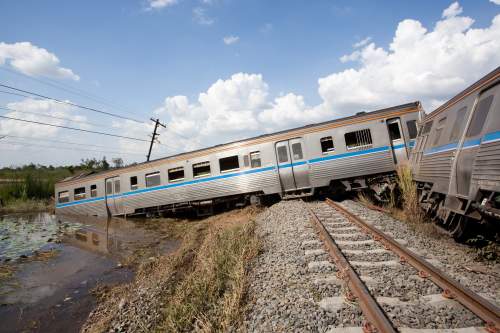
When a train accident occurs, injured passengers, railroad employees, contractors, and other affected individuals may have legal claims against the railroad companies or other parties responsible for the collision. Determining liability, however, often requires a detailed investigation into train operations, signal systems, braking equipment, track conditions, dispatching decisions, and compliance with federal railroad safety regulations.
At John J. Malm & Associates, we understand that serious transportation accidents can leave victims facing extensive medical treatment, lost income, and uncertainty about their future. Understanding how train collision injury claims work is an important first step toward protecting your legal rights.
“When two trains collide, the consequences for passengers and railroad workers can be devastating. A thorough investigation must look beyond the impact itself to determine whether failures in train operations, safety systems, equipment maintenance, or railroad procedures contributed to the crash. Injured people deserve answers and a fair opportunity to pursue accountability.” — John J. Malm, Naperville train accident attorney
How Common Are Railroad Accidents?
Train-to-train collisions are distinct from highway-rail crossing accidents, in which a train strikes a car, truck, bicycle, or pedestrian. Federal railroad statistics track these incidents separately, making it important to distinguish collision types when evaluating the risks associated with railroad operations. The Federal Railroad Administration (FRA), part of the U.S. Department of Transportation, collects information about railroad collisions, derailments, injuries, fatalities, and other safety incidents. Its reporting system includes accidents involving railroad equipment on main tracks, sidings, and in rail yards. Several statistics demonstrate why railroad safety remains an important public concern:
- 1,694 train accidents in fiscal year 2024: The U.S. Department of Transportation reported this preliminary total in its FY 2024 Annual Performance Report. The figure includes multiple types of train accidents, not only train-to-train collisions.
- 963 railroad-related fatalities and 6,535 injuries in 2024: A Congressional Research Service report on freight rail safety cited these totals for U.S. railroad incidents. They encompass a broad range of railroad-related events and should not be interpreted as casualties from train-to-train collisions alone.
- Long-term reductions in railroad accidents: The Congressional Research Service reported that derailments, collisions, and railroad injuries declined by approximately 80% to 90% following the establishment of the federal railroad safety regulatory framework, although serious incidents continue to occur.
The National Transportation Safety Board (NTSB) investigates selected major railroad accidents to identify their causes and recommend safety improvements. Its investigations demonstrate that collisions can result from a combination of operational mistakes, inadequate procedures, signal misinterpretation, and technological failures.
For example, on February 22, 2026, an Illinois Central freight train struck a stationary Amtrak passenger train near Memphis, Tennessee, while the freight train was performing switching operations. The Amtrak train had 118 passengers aboard. The NTSB’s preliminary report described the sequence of movements and noted that the investigation remained ongoing at the time of publication.
This incident illustrates why train collision investigations must examine the movements of every involved train, the instructions given to crews, and the safety systems intended to prevent conflicting movements. The ultimate cause and responsibility must be determined from the evidence rather than assumed from the fact that a collision occurred.
Common Causes of Train-to-Train Collisions
Train collisions may occur on mainline tracks, at rail yards, during switching operations, or in areas where multiple railroads share or connect to track infrastructure. In some cases, a collision results from a single operational error. In others, several failures combine to create a dangerous situation. Common causes include:
1. Operator error and signal violations
Train engineers and other operating employees must follow signal indications, speed restrictions, operating rules, and instructions from dispatchers. A missed signal, misinterpreted instruction, or failure to stop can put a moving train on a collision course with another train.
Fatigue, distraction, inadequate training, and ineffective communication may contribute to operational errors. An investigation may examine crew schedules, qualification records, event-recorder data, signal systems, and radio communications to determine what happened.
2. Dispatching and communication failures
Railroad dispatchers coordinate train movements and help ensure that trains use tracks safely. Errors in routing, unclear instructions, incomplete handoffs, or failures to communicate changes in operating conditions can contribute to collisions.
A railroad collision investigation may need to establish whether dispatchers issued appropriate instructions, whether train crews received and understood them, and whether established procedures were followed. Communication failures can be particularly dangerous where multiple trains operate on adjacent tracks or where switching movements take place near passenger services.
3. Signal system and positive train control failures
Railroad signaling systems communicate information about track occupancy, permissible movements, and operating restrictions. When signals malfunction or are improperly interpreted, train crews may receive incorrect information or fail to recognize a hazardous movement.
Positive train control (PTC) is designed to help prevent certain accidents by automatically intervening when a train is at risk of exceeding authorized speeds, passing a stop signal, entering an unauthorized track section, or violating other protected movement limits.
PTC is not a guarantee that every train collision will be prevented. Its capabilities depend on the system, the circumstances, and the type of hazard involved. Nevertheless, investigators may examine whether required safety systems were installed, maintained, operational, and properly used.
4. Brake and mechanical failures
A train’s braking system must function properly to permit safe stopping and controlled movement. Defective brakes, improperly maintained equipment, mechanical failures, or failures to identify equipment problems may increase the risk of a collision.
Investigators may examine inspection reports, maintenance histories, brake tests, equipment records, and post-accident mechanical evidence. If a defective component contributed to the crash, responsibility may extend beyond the railroad operator to a manufacturer, maintenance contractor, or other responsible entity, depending on the evidence.
5. Track, switching, and infrastructure problems
Railroad operations require careful coordination when trains enter sidings, change tracks, couple railcars, or move through busy rail yards. Incorrectly positioned switches, inadequate procedures, and failures to confirm track occupancy can create conflicting movements.
Track defects or infrastructure problems may also contribute to derailments that place railcars or locomotives in the path of another train. An investigation should distinguish the immediate cause of the impact from the underlying safety failures that allowed it to happen.
What Injuries Can Result From a Train Collision?
Train collisions can produce severe injuries because of the mass of railroad equipment, the forces generated during impact, and the possibility of derailment or structural damage. Passengers may be thrown against seats, windows, luggage racks, or other occupants. Railroad employees may be exposed to crushing forces, equipment movement, fires, and hazardous materials. Even when a train remains upright, sudden deceleration can cause significant injuries. Common injuries include:
- Traumatic brain injuries: A passenger or worker may strike their head during impact, causing a concussion or more severe brain injury.
- Spinal cord and back injuries: Sudden forces can damage vertebrae, discs, nerves, and the spinal cord, sometimes resulting in permanent disability.
- Broken bones and orthopedic injuries: Fractures of the arms, legs, ribs, pelvis, and other bones may require surgery and rehabilitation.
- Internal injuries: Blunt-force trauma can damage internal organs or cause internal bleeding.
- Burns and smoke inhalation: Fires, electrical hazards, and exposure to smoke can cause serious respiratory and skin injuries.
- Lacerations and crush injuries: Broken glass, damaged railcars, and shifting equipment can cause deep wounds or severe tissue damage.
- Psychological trauma: Survivors may experience anxiety, sleep disturbances, post-traumatic stress symptoms, and difficulty returning to normal activities.
Some injuries are not immediately apparent. Adrenaline and shock can temporarily mask symptoms, while certain internal injuries and brain injuries may worsen over time. Anyone involved in a train collision should obtain an appropriate medical evaluation and follow medical advice. The full impact of an injury may not be clear for weeks or months. Medical documentation and follow-up treatment can be important both for recovery and for evaluating a potential legal claim.
Who Can File a Train Collision Injury Claim?
The types of people who may have claims after a train collision include passengers, railroad employees, contractors, and, in some circumstances, people who suffer injuries while working near railroad operations. The legal framework depends on the injured person’s role, the parties involved, and the circumstances of the accident.
Injured passengers
Passengers injured in a collision may have negligence claims against a railroad or another responsible party when the evidence establishes a breach of an applicable legal duty that caused their injuries.
Potential issues may include unsafe train operation, inadequate equipment maintenance, failure to follow operating rules, or other preventable safety failures. The specific duties and available remedies depend on the circumstances and applicable law.
Injured railroad employees
Railroad employees may have claims under the Federal Employers’ Liability Act (FELA), a federal statute that provides a negligence-based remedy for qualifying railroad workers injured in the course of their employment.
FELA differs from ordinary workers’ compensation systems. An injured railroad employee generally must establish that the railroad’s negligence played a part in causing the injury. The statute provides a distinct legal framework for evaluating liability and damages.
A worker’s claim may involve train operations, defective equipment, unsafe work practices, inadequate training, or other alleged failures. An attorney should assess whether FELA applies and what evidence is necessary to support the claim.
Families pursuing wrongful death claims
When a train collision results in a fatality, surviving family members may have a wrongful death claim under the applicable law. Depending on the circumstances, a related estate claim may also be available.
These cases can involve substantial financial and personal losses, including lost financial support, loss of society, and other damages recognized by law. The identity of the proper claimant, available damages, and filing deadlines require careful legal analysis.
How Is Liability Determined After a Train Collision?
Determining fault requires more than identifying which train struck the other. A moving train may hit a stationary train because of an operational mistake, but the investigation must also determine why the mistake occurred and whether other failures contributed. Potentially responsible parties may include:
- Railroad companies responsible for train operations and safety procedures.
- Employers whose conduct contributed to an employee’s injury.
- Dispatching or operating entities responsible for unsafe instructions or coordination.
- Equipment manufacturers or maintenance contractors, where a defect or negligent service contributed to the accident.
- Other entities responsible for relevant track infrastructure or safety systems.
A lawyer investigating a collision may review the NTSB’s findings, FRA reports, train event-recorder data, signal records, dispatch communications, maintenance documents, inspection records, witness statements, and expert analysis.
Federal railroad safety regulations may help establish the applicable safety requirements, but a regulatory violation does not automatically resolve every question of civil liability. The connection between the alleged failure and the injury must be evaluated under the governing law.
Preserving evidence is especially important because event-recorder data, electronic communications, and physical evidence may be subject to collection, review, or alteration during routine operations and accident response.
What Compensation May Be Available?
A person who establishes a valid injury claim may be entitled to compensation for losses caused by the collision. Recoverable damages depend on the legal theory, the claimant’s status, the evidence, and applicable federal or state law. Potential damages may include:
- Past and future medical expenses.
- Lost wages and diminished earning capacity.
- Physical pain and suffering.
- Emotional distress where legally recoverable.
- Disability, disfigurement, and loss of normal activities.
- Other documented economic and non-economic losses permitted by law.
A severe injury may require surgery, rehabilitation, assistive devices, home modifications, or long-term care. Evaluating these losses may require medical records, expert opinions, vocational assessments, and evidence concerning future treatment needs.
What Should You Do After a Train Collision?
After a train collision, immediate safety and medical treatment take priority. Once it is safe to do so, injured people and their families can take steps to protect important information.
- Obtain medical care. Seek emergency treatment for serious injuries and arrange follow-up care for symptoms that develop later.
- Report the injury appropriately. Passengers should follow the railroad’s reporting procedures. Railroad employees should follow applicable workplace reporting requirements while preserving their legal rights.
- Preserve records. Keep medical records, receipts, photographs, travel documents, and information identifying the train and date of the collision.
- Identify witnesses. Record contact information for people who observed the collision or can describe the conditions before and after it.
- Preserve communications. Keep correspondence from railroad companies, insurers, employers, and investigators.
- Seek legal advice promptly. An Illinois train accident attorney can help identify applicable deadlines, determine which parties may be responsible, and assess the evidence needed to support a claim.
Avoid assuming that a railroad’s initial explanation establishes the final cause of the accident. Major investigations can take considerable time, and important findings may emerge only after technical evidence has been examined.
Frequently Asked Questions About Train Collision Injury Claims
Can I sue if I was injured as a passenger when two trains collided?
Potentially. An injured passenger may have a negligence claim if evidence establishes that a railroad or another responsible party breached an applicable duty and caused the injury. The available legal theories depend on the facts, the railroad’s role, and applicable federal and state law.
Can railroad employees sue their employer after a train collision?
Qualifying railroad employees may bring claims under FELA when employer negligence played a part in causing their injuries. These claims follow a different framework from ordinary workers’ compensation cases. An attorney familiar with railroad injury litigation can evaluate the applicable requirements.
Who is responsible if a signal failure causes two trains to collide?
Responsibility depends on the evidence. Potentially responsible parties may include the railroad operating the train, an entity responsible for signaling infrastructure, or a manufacturer or maintenance contractor if a defective component contributed to the failure. Investigators must determine the cause and whether a legally actionable failure contributed to the injuries.
What if the railroad says the collision was caused by operator error?
An operator’s mistake does not necessarily end the investigation into liability. Investigators may need to examine training, fatigue management, dispatch instructions, signal design, equipment condition, and safety procedures. Other parties may share responsibility if their conduct contributed to the collision.
What if I did not realize I was seriously injured until days after the collision?
Some injuries become apparent only after the initial shock subsides. Seek medical evaluation as soon as symptoms arise and tell the provider about the collision. Delayed symptoms do not automatically prevent a legal claim, but the timing of diagnosis and the evidence linking the injury to the collision may be important.
Can my family file a claim if a loved one died in a train collision?
A wrongful death claim may be available to eligible survivors when a death was caused by another party’s legally actionable conduct. The proper claimant, available damages, and filing deadline depend on the applicable law and circumstances. An attorney can explain the options available to the family.
How much is a train collision injury case worth?
There is no fixed value for these claims. Compensation depends on factors such as injury severity, medical expenses, lost income, future care needs, pain and suffering, liability evidence, and the legal framework governing the case. A reliable evaluation requires a review of the individual facts.
Contact the Top-Rated Illinois Train Collision Injury Attorneys at John J. Malm & Associates
A collision between two trains can change a person’s life in seconds. Serious injuries may lead to emergency surgery, lengthy rehabilitation, permanent disability, lost income, and significant emotional hardship. When a preventable railroad safety failure contributes to a collision, injured people and their families deserve answers about what happened and whether the responsible parties can be held accountable.
John J. Malm & Associates represents injured individuals and families throughout Naperville, St. Charles, and surrounding Illinois communities. If you or someone you love was injured in a train collision, our firm can review the circumstances, explain the potential legal options, and help you understand what evidence may be necessary to pursue a claim. Railroad injury cases can involve complicated federal regulations, multiple defendants, and technical accident investigations, making an early assessment of the facts especially important.
Contact John J. Malm & Associates today for a free consultation to discuss your potential train collision injury claim. Our goal is to help injured people understand their rights and pursue the compensation available under the law.