

EXPERIENCED PERSONAL INJURY ATTORNEYS














Illinois Unsafe Motorcycle Lane Change Accident Lawyers
Experienced Attorneys for Seriously Injured Bikers
Motorcycle lane-change accidents can happen in seconds. A driver checks a mirror, begins moving into another lane, and strikes a motorcycle that was already traveling alongside or approaching from behind. Because motorcycles are smaller than passenger vehicles, they can be more difficult to see in mirrors and blind spots. But a motorcycle’s smaller size does not give other drivers permission to change lanes without first making sure the maneuver can be completed safely.
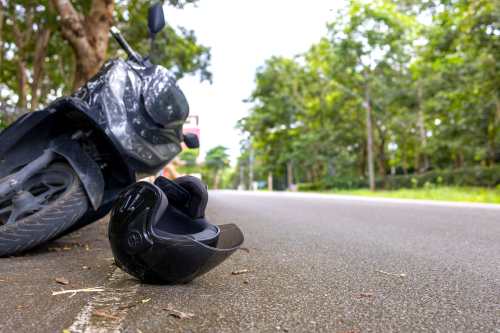
When a passenger vehicle or truck moves into a motorcycle’s lane, the consequences can be severe. A motorcyclist has substantially less physical protection than someone inside a passenger vehicle and may be thrown from the motorcycle, struck by another vehicle, or forced into a guardrail, median, barrier, or other object.
For a motorcyclist injured because another driver changed lanes unsafely, determining exactly what happened can be critical. Evidence from vehicle damage, photographs, witnesses, traffic cameras, electronic data, police reports, and other sources may help establish how the collision occurred and who was responsible.
“A motorcycle rider should not have to anticipate that another driver will suddenly enter an occupied lane. When an unsafe lane change causes a collision, preserving the evidence and determining exactly how the crash occurred can be critical to protecting an injured rider’s rights.” — John J. Malm, Naperville motorcycle accident attorney
What Is an Unsafe Motorcycle Lane Change Accident?
A lane-change accident occurs when a vehicle moves from one traffic lane into another and collides with a vehicle already occupying or traveling through that lane. In a motorcycle collision, the vehicle changing lanes may be a passenger car, SUV, pickup truck, commercial truck, or another motorcycle.
The most common scenario involves a driver attempting to move into an adjacent lane without adequately seeing the motorcycle. The driver may look in a side mirror but fail to identify the motorcycle in a blind spot. The driver then begins moving laterally into the motorcycle’s path. Other situations include:
- A driver changing lanes without using a turn signal.
- A driver signaling but failing to check whether the adjacent lane is clear.
- A driver accelerating or slowing unexpectedly during a lane change.
- A driver crossing multiple lanes at once.
- A driver drifting across lane markings.
- A driver changing lanes while distracted by a phone or navigation system.
- A truck driver failing to account for large blind spots.
- A driver changing lanes in heavy or congested traffic.
- A driver moving into a motorcycle’s lane at an intersection or highway entrance.
- A driver attempting to merge without yielding to traffic already occupying the lane.
The key issue is not simply whether a turn signal was activated. Under Illinois law, a driver generally may not move right or left on a highway unless the movement can be made with reasonable safety. Illinois law also requires an appropriate signal when changing lanes or otherwise moving from a direct course.
Illinois Motorcycle Crash Statistics
Illinois motorcycle crash data illustrates the seriousness of motorcycle collisions. According to the Illinois Department of Transportation’s 2024 Illinois Crash Facts & Statistics:
- There were 3,361 motorcycle crashes in Illinois.
- There were 142 fatal motorcycle crashes.
- There were 2,385 injury motorcycle crashes.
- 144 motorcyclists were killed.
- 2,556 motorcyclists were injured.
- 928 motorcyclists suffered A-injuries, which are the most serious injury classification used in Illinois crash reporting.
- Motorcycles were involved in 69 crashes while changing lanes.
- Motorcycles were involved in 17 crashes while merging.
- There were 140 motorcycle crashes involving passing or overtaking.
- There were 154 crashes involving motorcycles turning left and 104 involving motorcycles turning right.
These statistics demonstrate that lane changes and merging are meaningful motorcycle-crash scenarios, particularly when considered alongside the broader dangers of multi-vehicle collisions.
Why Lane Changes Are Especially Dangerous for Motorcyclists
A motorcycle occupies considerably less visual space than a passenger vehicle. This can make it harder for another driver to detect the motorcycle, particularly when the motorcycle is approaching from behind or traveling in an adjacent lane.
The motorcycle may be visible in a mirror for only a moment before entering a vehicle’s blind spot. If the driver fails to perform an adequate visual check before moving laterally, the motorcycle may be directly in the vehicle’s path. The consequences of a lane-change collision can also be substantially different for a motorcyclist than for the occupant of a passenger vehicle. A driver inside a car has the benefit of:
- A steel passenger compartment
- Seat belts
- Airbags
- Side-impact protection
- Crumple zones
- Other vehicle safety systems
A motorcyclist generally has none of those structural protections. Even when wearing a helmet and protective equipment, the rider remains physically exposed.
Motorcycle Blind-Spot Accidents
Blind spots are a major concern in motorcycle lane-change collisions. A motorcycle may be located beside the rear quarter of a vehicle where it is difficult or impossible for the driver to see it using a conventional mirror. The risk can be even greater when a driver is operating a large SUV, pickup truck, van, or commercial truck.
Drivers should not assume that because they cannot see a motorcycle in their mirror, the motorcycle is not there. A proper lane change requires more than simply activating a turn signal. The driver must determine whether the movement can be made safely. For motorcycle riders, the problem is that a rider may have little time to react after a vehicle begins moving into the motorcycle’s lane.
Commercial Trucks and Motorcycle Lane Changes
Lane changes involving tractor-trailers and other commercial vehicles can be particularly dangerous because of the size of the vehicles and their blind spots. A motorcycle traveling alongside a tractor-trailer may be difficult for the truck driver to see. If the truck begins moving into the motorcycle’s lane, the rider may have limited escape options.
A truck may also occupy substantially more roadway than a passenger vehicle. A motorcycle squeezed between a truck and another vehicle, median, barrier, or shoulder may have nowhere safe to go. Evidence in a commercial-vehicle motorcycle crash may include:
- Driver qualification records
- Hours-of-service records
- Electronic logging data
- Vehicle inspection records
- Event data
- Dash-camera footage
- Company policies
- GPS information
- Maintenance records
- Black-box or electronic-control-module data
Commercial vehicle cases can involve additional federal and state regulations, making early investigation particularly important.
Common Injuries in Motorcycle Lane-Change Accidents
Motorcycle lane-change collisions can produce injuries ranging from road rash and fractures to catastrophic brain and spinal cord injuries. Common injuries include:
- Traumatic brain injuries
- Concussions
- Spinal cord injuries
- Neck and back injuries
- Broken arms and legs
- Shoulder injuries
- Pelvic fractures
- Internal injuries
- Chest injuries
- Road rash and skin injuries
- Nerve damage
- Knee and ankle injuries
- Amputations
- Facial injuries
- Permanent scarring
- Wrongful death
Some injuries may not be immediately apparent after a crash. Adrenaline can temporarily mask pain, and certain injuries can take time to develop or become apparent. Anyone involved in a significant motorcycle collision should seek appropriate medical evaluation.
Severe Motorcycle Injuries Can Have Long-Term Consequences
A motorcycle crash may affect an injured person’s life long after the motorcycle and vehicle have been repaired or replaced. A broken bone may require surgery, physical therapy, and months of rehabilitation. A traumatic brain injury may affect memory, concentration, mood, balance, or the ability to work. A spinal cord injury may permanently affect mobility and independence.
The financial consequences can also extend well beyond the initial emergency room bill. Depending on the circumstances, an injured motorcyclist may face:
- Emergency medical expenses
- Hospitalization
- Surgery
- Rehabilitation
- Physical therapy
- Prescription medications
- Future medical treatment
- Lost wages
- Reduced earning capacity
- Motorcycle and property damage
- Transportation expenses
- Long-term care
- Pain and suffering
- Permanent disability
- Disfigurement
The full extent of these damages may not be known immediately after a collision.
How Illinois Law Applies to Unsafe Lane Changes
Illinois law addresses the safety requirements associated with changing lanes. Section 11-804 of the Illinois Vehicle Code provides that a person may not move right or left upon a highway unless the movement can be made with reasonable safety. The law also requires a signal when a driver intends to change lanes or otherwise move from a direct course.
The statute specifies that the signal generally must be given continuously for at least:
- 100 feet before the movement within a business or residence district.
- 200 feet before the movement outside a business or residence district.
Importantly, a turn signal by itself does not make an unsafe lane change lawful. A driver still must determine whether moving into the adjacent lane can be done with reasonable safety.
In a motorcycle collision, investigators may therefore examine more than whether the driver’s turn signal was activated. They may consider visibility, traffic conditions, speed, vehicle positioning, roadway markings, blind spots, witness statements, and other evidence.
Who Is Responsible for a Motorcycle Lane-Change Crash?
Responsibility depends on the facts of the individual collision. In many cases, the driver who moved into the motorcycle’s lane may be responsible if that driver failed to ensure that the lane change could be made safely.
But motorcycle collision investigations should not rely on assumptions. Insurance companies may dispute liability or attempt to argue that the motorcyclist was speeding, following too closely, passing improperly, or otherwise contributed to the crash. Relevant evidence may include:
- Police crash reports
- Photographs and video
- Traffic-camera recordings
- Motorcycle or vehicle dash-camera footage
- Surveillance footage from nearby businesses
- Eyewitness statements
- Accident-reconstruction evidence
- Vehicle damage patterns
- Skid marks and debris
- Cellphone records when distraction is suspected
- Vehicle electronic data
- Medical records
- Motorcycle maintenance records
The physical evidence can be particularly important when the drivers provide conflicting accounts.
What to Do After an Unsafe Motorcycle Lane-Change Crash
If you are involved in a motorcycle crash, your first priority should be safety and medical care. When reasonably possible:
- Call 911 and report the collision.
- Obtain medical attention.
- Do not assume that you are uninjured because you can walk away from the scene.
- Photograph the motorcycle, other vehicles, roadway, traffic signs, lane markings, and surrounding area.
- Obtain contact information from witnesses.
- Exchange insurance and identifying information with the other driver.
- Preserve helmet, riding gear, and damaged motorcycle equipment.
- Save photographs and videos.
- Avoid posting details about the accident on social media.
- Notify your insurance company as appropriate.
- Consider consulting an Illinois motorcycle accident attorney before giving a detailed recorded statement to an adverse insurance carrier.
Preserving evidence early can become especially important when a motorcycle collision involves disputed liability.
Motorcycle Lane Changes and Comparative Fault
Insurance companies sometimes attempt to shift some of the blame for a motorcycle accident to the injured rider. Illinois follows a modified comparative-fault system. Under Illinois law, a plaintiff generally may recover damages when the plaintiff’s fault is not greater than 50% of the proximate cause of the injury or damage, with the recoverable damages reduced according to the plaintiff’s percentage of fault. That makes evidence particularly important in disputed motorcycle cases.
For example, if a driver claims a motorcycle suddenly entered the driver’s lane, evidence showing that the automobile crossed into the motorcycle’s established lane could be significant. Similarly, photographs, video, witness testimony, and accident reconstruction may help establish the relative positions and movements of the vehicles.
Why Motorcycle Lane-Change Cases Require Careful Investigation
A motorcycle accident can occur quickly, and the physical evidence may disappear just as quickly. Vehicles are repaired, motorcycles are moved, surveillance footage can be overwritten, and witnesses may become difficult to locate. An investigation may therefore need to begin promptly. An attorney investigating an unsafe lane-change collision may examine:
- The location and condition of the vehicles
- Vehicle damage
- Motorcycle damage
- Roadway configuration
- Lane markings
- Traffic signals
- Sight lines
- Nearby surveillance cameras
- Witness accounts
- Police photographs
- Medical records
- Insurance coverage
- Available electronic vehicle data
In serious cases, accident reconstruction may also be used to evaluate the speed, direction, position, and movement of the vehicles before impact.
Frequently Asked Questions About Motorcycle Lane-Change Accidents
Who is usually at fault when a car changes lanes into a motorcycle?
If a driver moves into an occupied lane without first determining that the movement can be made safely, the driver may be responsible for the resulting collision. Illinois law expressly requires lane movements to be made with reasonable safety. However, liability depends on the specific facts and evidence.
Does a driver have to signal before changing lanes in Illinois?
Yes. Illinois law requires an appropriate signal when changing lanes or otherwise moving from a direct course, subject to the requirements established by the Illinois Vehicle Code.
Does using a turn signal automatically make a lane change legal?
No. A signal does not eliminate the driver’s obligation to make sure the movement can be completed safely. Illinois law specifically requires that a movement right or left be made with reasonable safety.
What if the driver says the motorcycle was in the driver’s blind spot?
A blind spot does not necessarily excuse an unsafe lane change. The circumstances must be investigated, including what the driver could see, whether mirrors were properly used, traffic conditions, vehicle positioning, and whether the driver took appropriate precautions before moving into the lane.
Can I recover compensation if I was partially at fault?
Potentially. Illinois’ modified comparative-fault rules can reduce an award according to an injured person’s percentage of fault, subject to the statutory limitations.
What if the driver hit me while changing lanes and then left the scene?
A hit-and-run motorcycle collision should be reported to law enforcement immediately. Depending on the circumstances and available insurance coverage, an injured motorcyclist may also have potential claims under an uninsured-motorist policy.
Should I talk to the other driver’s insurance company?
You should be cautious about providing a recorded statement or accepting a settlement before you understand the extent of your injuries and available insurance coverage. An early settlement may not account for future medical treatment or other long-term losses.
How long do I have to file a motorcycle accident lawsuit in Illinois?
Illinois generally has a two-year statute of limitations for personal injury actions, although exceptions can apply depending on the circumstances. Because deadlines can be complicated, an injured motorcyclist should consult an attorney promptly rather than assume there is unlimited time to pursue a claim.
Contact the Top Illinois Motorcycle Blind Spot Accident Lawyers at John J. Malm & Associates
An unsafe lane change can turn an ordinary motorcycle ride into a life-changing collision. If a driver moved into your lane without making sure the maneuver was safe, you may be dealing with serious injuries, extensive medical bills, lost income, motorcycle damage, and uncertainty about your future.
The top-rated injury lawyers at John J. Malm & Associates represent injured motorcyclists in Illinois and can investigate the crash, preserve critical evidence, determine how the collision occurred, deal with insurance companies, and pursue the compensation available under Illinois law. If you or a loved one has been injured in a motorcycle lane-change accident, contact our firm after the accident to discuss your case with an experienced Illinois personal injury attorney.