

EXPERIENCED PERSONAL INJURY ATTORNEYS


Illinois Autonomous and Self-Driving Vehicle Accident Lawyers
Attorneys for Victims Hit By Partially or Fully Automated Cars
Autonomous vehicles (AVs), from advanced driver assistance systems (ADAS) in new passenger cars to fully automated robotaxis, promise safer roads by removing driver error. But they also introduce new questions when car accidents occur: who bears responsibility, how do you preserve crucial sensor and software data, and what protections exist under Illinois law?
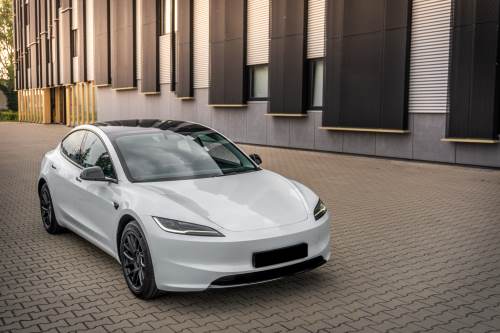
At John J. Malm & Associates, we are at the forefront of representing injured victims in Illinois whose cases involve emerging technologies, including autonomous and semi-autonomous vehicles. As self-driving systems become more common on Illinois roadways, and as the risks and legal questions surrounding them continue to grow, our firm provides the experienced, strategic advocacy that injury victims need. With decades of success in complex motor vehicle litigation, our award-winning Illinois car accident attorneys understand how to investigate advanced driver-assistance systems, uncover system failures, identify corporate negligence, and hold manufacturers and operators accountable. Families throughout Illinois trust our firm because we bring together cutting-edge knowledge, meticulous case preparation, and a client-centered approach aimed at achieving justice and full compensation after a serious accident. When a crash involves automation, confusion and uncertainty often follow, and our legal team is here to guide you through every step.
“Autonomous vehicles are changing how we travel, but when automation fails the consequences can be sudden and life-changing. Victims of self-driving vehicle collisions need lawyers who understand how to preserve fragile electronic evidence, work with technical experts, and hold the right parties accountable. At John J. Malm & Associates, we fight to ensure that innovation doesn’t come at the expense of victims’ rights.” — John J. Malm, Naperville car crash attorney
The Current Legal and Regulatory Landscape in Illinois
Illinois has taken cautious, incremental steps toward hosting autonomous vehicle testing and deployment. In 2018, the governor issued an executive order launching the Autonomous Illinois Testing Program and explicitly required a licensed driver to remain in the vehicle during testing, reflecting an early policy preference for supervised trials rather than fully driverless operations. More recently, the Illinois legislature has considered bills to create a formal Autonomous Vehicle Testing Program and to modernize state rules. For example, HB2974 (introduced in 2025) would create a registration system and a state-led testing program to coordinate safe pilots and infrastructure needs. Those bills reflect a broader national pattern: many states permit AV testing, but legal frameworks vary widely and frequently require human oversight or specific approvals for driverless operations.
Why this matters for crash victims: the law governing whether a vehicle can legally operate without a human behind the wheel affects both who can be sued and what defenses a company may raise. It also determines what kinds of records agencies and operators must keep and share after a crash. Illinois’s current mix of executive guidance, proposed legislation, and local interest means the legal picture is still changing, a critical reason to involve counsel quickly after a self-driving vehicle incident.
What the National Data Shows
At the federal level, the National Highway Traffic Safety Administration (NHTSA) requires many AV and ADAS manufacturers and operators to report certain crashes and other incidents under a Standing General Order. The reporting regime (amended and tightened since 2021) gives NHTSA timely access to crash data, sensor logs, software versions, and other materials necessary to evaluate potential safety defects and decide whether to pursue enforcement or recalls. That transparency tool has led to publicly disclosed datasets and to higher-profile investigations and software recalls by major AV operators. The NHTSA disclosures show that incidents involving vehicles equipped with automated driving systems have been increasing as testing and deployments expand.
Illinois-Specific Context
Illinois is not yet a hotbed of fully driverless commercial robotaxi operations like Phoenix or San Francisco, and some major operators have publicly treated Chicago cautiously because of legal and operational hurdles. Local reporting indicates companies such as Waymo have expressed interest in expanding to Chicago but face state-level requirements for a human operator and other regulatory barriers. At the same time, Illinois universities, municipalities, and technology partners have explored pilot programs, and proposed legislation (e.g., HB2974) signals the state’s interest in creating a clearer path for testing and limited deployments.
What the Data Says About Risk and Severity
Interpreting AV crash data requires context. Aggregated NHTSA reports and third-party compilations show that the number of reported incidents involving automated systems has risen, largely because deployments are expanding and reporting rules now capture more events. However:
- Many operators report fewer serious injury collisions per mile in their controlled operating areas compared with local human-driver baselines, although company-provided rates require independent verification.
- A meaningful minority of reported incidents involve near-misses with pedestrians or noncompliance with critical roadside safety devices (for example, school-bus interactions highlighted in recent reporting), which attract regulatory attention due to the vulnerability of involved parties.
- The raw incident counts should not be equated with the overall safety profile without exposure metrics (miles driven, number of trips, urban vs. suburban mix) and an understanding of reporting thresholds (Level 2 ADAS events are included alongside full ADS events in many disclosures).
For victims, the practical takeaway is that AV incidents are both real and complex: some AV systems may reduce certain kinds of human-caused crashes, but when automation fails in situations involving pedestrians, cyclists, or schoolchildren the consequences can be severe.
How Autonomous Vehicle Crashes Differ from Traditional Car Accidents
Accidents involving automated systems raise distinctive technical and legal questions:
- Data ownership and preservation: AV operators control sensor suites (camera, lidar, radar), log files, map versions, and software-change histories. That data is often the most important evidence and can be ephemeral if not preserved immediately.
- Multiple potential defendants: Liability can implicate the vehicle “driver” (if human supervision was required), the AV operator, the vehicle manufacturer, component suppliers (sensors, brakes), software developers, fleet managers, a mapping provider, and maintenance vendors.
- New causal chains: Causation may involve software decision logic, sensor occlusion, erroneous object classification, mapping errors, or delayed human intervention, rather than only traditional driver negligence.
- Regulatory disclosures and recalls: NHTSA’s reporting requirements and potential recalls can create documentary admissions that are central in civil cases. A voluntary recall or an agency investigation doesn’t automatically determine civil liability, but it often drives both settlement talks and discovery priorities.
- Insurance questions: Determining whether a personal policy, the operator’s commercial insurance, or product liability coverage applies can be complex and time-sensitive.
Because of these issues, self-driving vehicle collisions demand rapid legal action to preserve logs, obtain preservation letters/subpoenas, and coordinate expert analysis of software and sensor data.
Typical Causes of Self-Driving Vehicle Accidents
Investigations and filings to NHTSA point to some recurring categories of failure that lead to incidents:
- Perception failures: the sensor suite or software misclassifies or fails to detect a pedestrian, bicyclist, stopped vehicle, or roadway object.
- Decision or planning errors: the control software makes an unsafe choice about braking, lane changes, or yielding.
- Localization/mapping mismatches: outdated map data or GPS errors cause the vehicle to misjudge its position relative to road features.
- Software regressions: updates intended to fix a problem inadvertently create new behavior that causes unsafe outcomes.
- Human-machine interaction problems: confusion about handover protocols when a human supervisor is required to intervene, or ambiguous indicators about when human control is needed.
- Mechanical/maintenance failures: traditional failures such as brakes, tires, or steering that operate alongside automation can still precipitate crashes.
How Autonomous Vehicle Accident Investigations Work
If you are involved in a crash with an automated or semi-automated vehicle in Illinois, investigators and car accident injury attorneys will typically:
- Secure law enforcement and medical reports: the initial police report and medical records establish immediate facts and injuries.
- Send preservation demands to the operator: a written demand or subpoena for sensor logs, vehicle EDR/black-box data, software versioning history, and dispatch/ride records must be issued promptly to prevent data loss.
- Subpoena maintenance, training, and incident logs: fleet maintenance records, operator training files, human-operator interaction logs, and internal incident reports show whether the operator met reasonable safety practices.
- Retain technical experts: software engineers, lidar/radar experts, mapping specialists, and accident reconstructionists translate the data into usable evidence.
- Coordinate with regulators: where NHTSA or state agencies have opened inquiries, attorneys may seek agency reports or leverage regulatory findings during discovery.
- Preserve third-party video: traffic cameras, doorbell cameras, and dashcams often capture the critical moments and should be saved quickly.
What To Do If You’re Involved in an Autonomous Vehicle-Related Collision in Illinois
- Seek medical care immediately. Your health comes first; get documentation of injuries.
- Call police and insist on a crash report. Be certain the responding officer records the vehicle as an automated/ADS-equipped vehicle if known.
- Document the scene. Take photos and videos; note the vehicle’s operator, fleet branding, license plates, and time/location details.
- Preserve and demand data. Promptly request preservation of vehicle logs and EDR/black-box data; notify the operator in writing and contact an attorney to issue preservation subpoenas.
- Collect witnesses and video sources. Nearby surveillance cameras, school bus cameras, and dashcams may capture critical evidence.
- Contact an experienced Illinois car accident attorney. AV cases require technical discovery and expert analysis. Counsel experienced with product liability and transportation investigations can preserve evidence and coordinate experts.
How Our Firm Helps After an Autonomous Vehicle Collision
At John J. Malm & Associates, our team offers hands-on, technically informed representation for Illinois residents injured in collisions involving partially or fully automated vehicles:
- Immediate evidence preservation: We send preservation demands to operators and subpoena EDR, sensor logs, and software-version histories.
- Technical investigation: We work with software engineers, lidar/radar specialists, and accident reconstructionists to interpret the data and establish causation.
- Multi-party litigation: We pursue claims against operators, manufacturers, suppliers, and other responsible actors and coordinate discovery across jurisdictions when fleets are managed out-of-state.
- Insurance and regulatory coordination: We interface with insurers, NHTSA inquiries, and state agencies to gather regulatory findings and to use them effectively in your case.
- Compassionate client care: We guide families through medical documentation, future-care planning, and the legal process so they can focus on recovery.
Frequently Asked Questions After a Self-Driving Vehicle Collision in Illinois
Q: Who can be sued after a crash with a self-driving car?
A: Potential defendants include the AV operator, vehicle manufacturer, software developer, parts suppliers, fleet manager, and, in some cases, a human driver or supervisor. Which parties are legally responsible depends on who controlled the vehicle, what regulatory regime applied, and the causal facts.
Q: Does a federal investigation (NHTSA) mean I will automatically win a lawsuit?
A: No. NHTSA inquiries and recalls provide important evidence and can strengthen a case, but civil liability still requires proof that the defendant’s conduct caused your injuries. Regulatory findings often help plaintiffs but do not decide civil claims automatically.
Q: How long do I have to file a lawsuit in Illinois?
A: Statutes of limitation differ by claim (personal injury, wrongful death, product liability). Timelines are fact-specific, so contact an attorney quickly to preserve rights and evidence.
Q: Can I obtain the AV operator’s sensor logs and software history?
A: Yes, but only with legal processes. Preservation letters, subpoenas, and litigation discovery are typically needed to ensure the operator doesn’t delete or overwrite crucial logs. Acting quickly is essential.
Q: Will my own insurance cover an AV crash?
A: It depends. If a human was driving at the time and the AV system was only an assist, personal policies may apply; if an operator-controlled ADS was engaged, commercial insurance or product liability carriers may be involved. An attorney can help sort coverage avenues.
Contact the Top-Rated Illinois Autonomous Vehicle Accident Lawyers at John J. Malm & Associates
Autonomous vehicle technology is expanding quickly, and Illinois is actively working to shape how testing and deployment happen on our roads. If you or a loved one has been injured in an accident involving an automated or self-driving system in Illinois, immediate action matters. Our firm has the technical knowledge and litigation experience to pursue full compensation and to hold negligent operators and manufacturers accountable. Contact our office for a free, confidential consultation. We will evaluate your case, explain your options, and take prompt steps to protect your legal rights.