- Free Consultation: (630) 527-4177 Tap Here to Call Us










How Are Dram Shop Settlements Calculated in Illinois?


When a person is injured or killed because of an intoxicated driver, the driver may not be the only party legally responsible. Under Illinois law, a bar, restaurant, tavern, or other establishment that unlawfully sells or serves alcohol to an intoxicated person may also be held financially responsible for the resulting injuries and losses. These claims are commonly known as dram shop claims.
Dram shop lawsuits can provide an important source of compensation for victims of drunk driving accidents and their families. However, calculating a dram shop settlement is different from calculating an ordinary car accident settlement. Illinois has a specific statute governing alcohol-related liability, statutory limits on recoverable damages, and requirements that must be satisfied before an establishment can be held responsible.
Understanding how these settlements are calculated requires examining the severity of the injuries, the financial losses suffered by the victim, the establishment’s potential liability, available insurance coverage, and the statutory damages cap.
As Naperville drunk driving accident attorney John J. Malm explains: “When an establishment contributes to a person’s intoxication and that intoxication results in a devastating accident, injured victims and their families deserve a thorough investigation and an opportunity to hold every responsible party accountable.”
What Is a Dram Shop Claim?
Illinois’ Dram Shop Act, found at 235 ILCS 5/6-21, allows certain injured individuals to pursue compensation from establishments that sell or give alcohol to people who subsequently cause injuries or property damage.
The law recognizes that businesses that sell alcoholic beverages have responsibilities under Illinois law. When an establishment unlawfully sells or provides alcohol to an intoxicated person, and that person’s intoxication contributes to an accident, the establishment may be subject to liability. Potential defendants in an Illinois dram shop case include:
- Bars and taverns.
- Restaurants that serve alcoholic beverages.
- Nightclubs and entertainment venues.
- Liquor stores and other licensed alcohol retailers.
- Other businesses or individuals covered by the Dram Shop Act.
Importantly, Illinois dram shop liability is statutory. A business does not automatically become liable simply because an individual who caused an accident had been drinking there. The plaintiff must establish the statutory requirements for liability, including an unlawful sale or gift of alcohol and the required connection between the intoxication and the injuries.
How Much Are Dram Shop Settlements Worth in Illinois?
There is no standard settlement amount for an Illinois dram shop claim. The value depends on the circumstances of the accident, the nature and severity of the injuries, the victim’s economic losses, and the applicable statutory limits. A claim involving relatively minor injuries may have a substantially different value from a case involving permanent disability, traumatic brain injuries, spinal cord damage, or wrongful death. In evaluating a potential settlement, attorneys generally examine several categories of damages:
- Medical expenses, including emergency treatment, hospitalization, surgery, rehabilitation, and future medical care.
- Lost wages resulting from time away from work.
- Loss of future earning capacity when injuries prevent someone from returning to their previous occupation.
- Disability and permanent impairment.
- Disfigurement and other legally recoverable personal injuries.
- Pain and suffering, to the extent recoverable under the applicable law.
However, one of the most important distinctions in Illinois dram shop litigation is that the Dram Shop Act imposes a statutory ceiling on damages. This means that even when a victim’s actual losses are significantly greater, the amount recoverable from a liquor provider under the statute may be limited.
Illinois Dram Shop Act: Understanding the Statutory Damages Cap
Illinois law places a limit on the amount of damages that can be recovered from a liquor provider under the Dram Shop Act. Unlike an ordinary negligence lawsuit against a negligent driver, a dram shop claim is subject to a statutory maximum. The limit is adjusted periodically for inflation under the statute. Consequently, attorneys must identify the applicable statutory limit for the particular claim rather than assume that a figure reported in an older case remains current. This distinction is especially important in catastrophic injury and wrongful death cases.
For example, imagine that an intoxicated driver causes a collision after being served alcohol at a bar. The crash victim suffers a traumatic brain injury, requires multiple surgeries, and is unable to return to work. The victim’s total economic and noneconomic losses could be worth substantially more than the amount recoverable against the establishment under the Dram Shop Act.
The statutory cap does not necessarily limit the intoxicated driver’s separate liability. The victim may have claims against both the driver and the alcohol provider, with different rules governing the damages available from each defendant. An experienced Illinois dram shop attorney must therefore evaluate the claims separately and determine how the applicable limits affect the overall settlement strategy.
Five Major Factors Used to Calculate an Illinois Dram Shop Settlement
Although the statutory cap is an important consideration, it is not the only factor affecting settlement value. Other factors include:
1. Severity of the Victim’s Injuries
The seriousness of the injuries is one of the most important considerations in any personal injury settlement. A person who sustains fractures, internal injuries, spinal damage, or a traumatic brain injury may require extensive treatment and experience lasting physical limitations. These injuries can create substantial medical expenses, lost income, and long-term care needs.
Attorneys examine medical records, diagnostic imaging, physician opinions, surgical reports, and rehabilitation records to determine the full extent of the injuries. They also consider whether the victim has reached maximum medical improvement or will require additional treatment in the future.
2. Medical Expenses and Future Treatment
Medical expenses are a major component of an injury claim. Dram shop attorneys review both past medical bills and reasonably anticipated future expenses. These may include:
- Emergency transportation and ambulance services.
- Emergency room treatment.
- Hospitalization and intensive care.
- Surgical procedures.
- Physical and occupational therapy.
- Prescription medications.
- Follow-up appointments and diagnostic testing.
- Future surgeries and rehabilitation.
- In-home nursing or assistance.
- Long-term medical equipment and supportive care.
In catastrophic injury cases, a life care planner may be retained to calculate the anticipated cost of future medical and personal care needs.
3. Lost Income and Diminished Earning Capacity
A serious drunk driving accident can prevent a victim from returning to work for weeks, months, or even permanently. Settlement evaluations should account for past lost wages as well as the long-term financial consequences of an injury.
For example, a construction worker who suffers a spinal cord injury may never be able to return to physically demanding employment. A professional who sustains a brain injury may experience cognitive limitations that interfere with the ability to perform specialized job responsibilities. Economic experts may calculate the difference between the victim’s expected lifetime earnings before the accident and the income they can reasonably expect to earn afterward.
4. The Strength of the Dram Shop Liability Evidence
The evidence against the establishment is another major factor. A business may dispute whether it unlawfully served alcohol to the intoxicated individual or whether the person’s intoxication caused the accident. Evidence that can strengthen a dram shop claim includes:
- Surveillance footage showing the individual’s condition.
- Receipts and credit card transactions documenting alcohol purchases.
- Employee and bartender testimony.
- Witness accounts from other customers.
- Bar tabs and point-of-sale records.
- Social media posts and photographs.
- Police reports and accident reconstruction evidence.
- Toxicology results and blood alcohol concentration evidence.
The timing of alcohol service is particularly important. Investigators must examine what was served, when it was served, and the individual’s condition at the relevant times.
5. Available Insurance Coverage
Insurance coverage can significantly affect settlement negotiations. Bars, restaurants, and other alcohol-serving establishments may carry liquor liability insurance or other commercial policies that provide coverage for certain dram shop claims. Attorneys must investigate the applicable policies, coverage limits, exclusions, and potential disputes between the insurer and the business. Even when a claim appears strong, the available insurance coverage and the statutory damages cap can influence the practical settlement value.
How the 2026 Illinois Dram Shop Settlement Limits Work
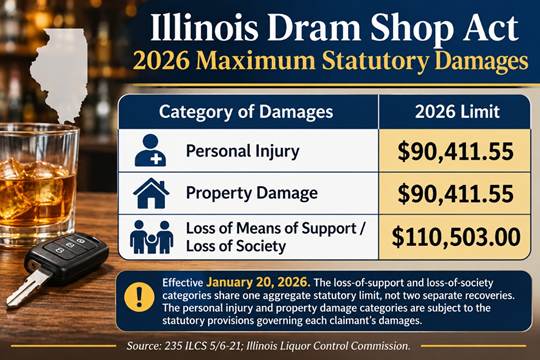
As of January 20, 2026, the Illinois dram shop liability limits are:
These figures are important when negotiating a settlement because they establish the maximum statutory recovery for the applicable categories of damages. They are not automatic settlement awards. A plaintiff must still prove liability and damages, and the actual settlement may be substantially lower. There are several additional considerations:
- Multiple establishments: If more than one bar or restaurant contributed to the intoxication, the applicable limit cannot simply be multiplied by the number of establishments. The statutory limits apply to the responsible liquor providers collectively.
- Different categories of damages: Illinois law permits separate claims for different types of compensable damages, including personal injury, property damage, and loss of support or society, subject to the statutory language and applicable limits.
- Wrongful death claims: Eligible family members may pursue damages for loss of means of support or loss of society, subject to the separate statutory ceiling.
- Annual adjustments: The limits change based on inflation. The applicable figures depend on when the final judgment or settlement is awarded, not simply the date of the accident.
These distinctions can make a significant difference in how an attorney structures and negotiates a dram shop settlement.
An Example of How a Dram Shop Settlement Is Calculated
Consider a hypothetical Illinois drunk driving accident involving a driver who was served alcohol at a neighborhood bar before getting behind the wheel. The driver runs a red light and strikes another vehicle, leaving the innocent motorist with multiple fractures, a traumatic brain injury, and permanent limitations. Suppose the injured person’s damages include:
- $125,000 in past and anticipated future medical expenses.
- $75,000 in lost wages and diminished earning capacity.
- Significant permanent impairment and pain.
- $25,000 in vehicle damage.
The total documented losses could exceed $225,000, even before considering the full value of the victim’s noneconomic injuries. The dram shop portion of the claim would be evaluated under the applicable statutory limits. For a settlement awarded on or after January 20, 2026, the $90,411.55 limit applies to the statutory category involving injury to the person or property, subject to the statute’s separate-claim provisions. A qualifying loss-of-support or loss-of-society claim would be evaluated under its separate $110,503 limit.
The injured motorist could also pursue a separate claim against the intoxicated driver. The driver’s liability is not automatically restricted by the Dram Shop Act’s damages cap. This example illustrates why attorneys must examine every potentially responsible party and source of insurance coverage before recommending a settlement.
Why Evidence Preservation Is Critical in Dram Shop Cases
One of the biggest challenges in dram shop litigation is establishing what happened before the intoxicated person caused the accident. Bars and restaurants may not retain surveillance footage indefinitely. Credit card records, receipts, employee schedules, and other evidence may also become more difficult to obtain as time passes. An investigation should begin as soon as possible. Important evidence may include:
- Surveillance footage from the establishment.
- Receipts showing the number and timing of alcoholic beverages purchased.
- Witness statements from bartenders, servers, and customers.
- Police reports and criminal investigation records.
- Breathalyzer results and blood alcohol testing.
- Accident reconstruction reports.
- Electronic payment and point-of-sale records.
A person does not necessarily need to have been visibly intoxicated when alcohol was served for a dram shop claim to exist. The critical statutory questions include whether the person was intoxicated when the accident occurred, whether alcohol provided by the defendant caused that intoxication, and whether the intoxication was at least a proximate cause of the injuries.
How Long Do You Have to File an Illinois Dram Shop Lawsuit?
Time is particularly important in Illinois dram shop cases because the Dram Shop Act generally imposes a one-year statute of limitations. This is shorter than the general two-year limitations period that applies to many Illinois personal injury claims.
Why You Need an Experienced Illinois Dram Shop Attorney
Dram shop cases require a different approach from ordinary car accident lawsuits. Attorneys must understand the Illinois Liquor Control Act, investigate alcohol service records, identify potentially responsible establishments, calculate damages under the statutory limits, and evaluate all available insurance coverage. The claim focuses on whether alcohol provided by the establishment caused the person’s intoxication and whether that intoxication contributed to the injuries. An experienced attorney can help by:
- Identifying every potentially responsible alcohol provider.
- Obtaining surveillance footage and alcohol purchase records.
- Interviewing bartenders, servers, and witnesses.
- Working with toxicology and accident reconstruction experts.
- Calculating economic and noneconomic losses.
- Identifying applicable statutory limits and insurance policies.
- Pursuing claims against the intoxicated driver and other responsible parties.
Because the one-year filing deadline can be especially challenging, victims should seek legal guidance promptly.
Frequently Asked Questions About Illinois Dram Shop Settlements
What is the average dram shop settlement in Illinois?
There is no reliable statewide average settlement amount. Each case depends on the injuries, available evidence, applicable statutory limits, and insurance coverage. The 2026 statutory limit for personal injury and property damage is $90,411.55, while the separate limit for loss of support or society is $110,503.
Can I sue a bar if it served alcohol to a drunk driver?
Yes. You may have a claim under the Illinois Dram Shop Act if you can establish that the establishment sold or gave alcohol that caused the driver’s intoxication and that the intoxication was at least a proximate cause of your injuries.
Can I sue both the drunk driver and the bar?
Yes. An injured person may pursue claims against the intoxicated driver and the establishment that provided the alcohol. The statutory damages limits applicable to the establishment do not automatically limit the driver’s separate liability.
Can multiple bars be held responsible for one drunk driving accident?
Yes. More than one alcohol provider may be liable if its sale or gift of alcohol contributed to the person’s intoxication. However, the statutory damages limits generally cannot be stacked simply by adding more establishments as defendants.
Can family members recover compensation if a drunk driver kills someone?
Potentially, yes. The Illinois Dram Shop Act permits qualifying claims for loss of means of support or loss of society resulting from a person’s death or injury. These claims are subject to the applicable statutory limit and must be evaluated separately from other available claims.
How long does it take to settle a dram shop claim?
The timeline varies. Some cases resolve through negotiations, while others require extensive discovery, depositions, expert testimony, and litigation. Complicated cases involving multiple defendants, disputed alcohol service, or catastrophic injuries can take considerably longer.
Does a criminal DUI conviction help my dram shop case?
A DUI conviction can provide important evidence concerning the driver’s intoxication, but it does not automatically establish the establishment’s liability. The plaintiff must still prove the required connection between the alcohol provided by the establishment, the intoxication, and the injuries.
Contact the Top Illinois Dram Shop Lawyers at John J. Malm & Associates
When a drunk driver causes a serious accident, innocent people and their families should not have to bear the financial consequences alone. Illinois law provides a way to hold alcohol providers accountable when their actions contribute to an intoxicated person’s conduct and resulting injuries.
At John J. Malm & Associates, our attorneys have over 95 years of combined litigation experience representing individuals and families throughout Illinois in serious personal injury and wrongful death cases. We understand the complexities of dram shop litigation, including the statutory damages limits, insurance coverage issues, and evidence needed to establish an alcohol provider’s responsibility.
If you or someone you love has been injured by an intoxicated driver, do not assume that the driver is the only party who may be responsible. A bar, restaurant, or other alcohol provider may also be liable under Illinois law. Contact our firm after an accident for a free consultation to discuss your legal options. We will evaluate your potential claims and help you pursue the compensation available under Illinois law.