- Free Consultation: (630) 527-4177 Tap Here to Call Us

















Can I Still File a Civil Lawsuit If the Driver Was Acquitted of a DUI in Illinois?


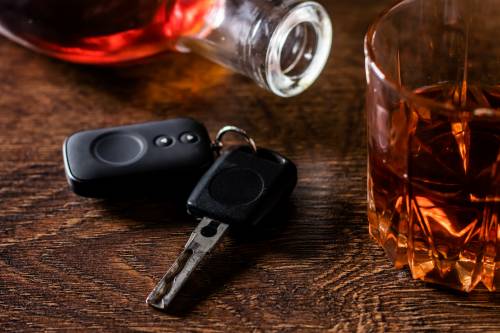
When someone is seriously injured in a car accident involving a suspected drunk driver, the criminal justice system may seem like the most important path to accountability. But what happens when the driver responsible for the crash is charged with driving under the influence (DUI) and subsequently acquitted? Does that mean the injured victim has no legal recourse? Can the victim still pursue compensation for medical bills, lost wages, pain and suffering, and other damages?
Yes. In Illinois, you can generally still file a civil personal injury lawsuit against a driver who was acquitted of DUI charges. A criminal acquittal does not automatically eliminate the driver’s potential civil liability for causing an accident. Criminal prosecutions and civil injury lawsuits are separate legal proceedings, involve different legal standards, and serve different purposes.
Even if prosecutors cannot prove beyond a reasonable doubt that a driver was legally intoxicated, an injured person may still be able to establish that the driver acted negligently and caused the collision. At John J. Malm & Associates, our Illinois car accident attorneys understand how complicated these cases can become, particularly when a criminal acquittal creates uncertainty for injured victims and their families.
Why a DUI Acquittal Does Not Automatically Prevent a Civil Lawsuit
One of the most important distinctions in the legal system is the difference between criminal liability and civil liability. A criminal DUI prosecution is brought by the government to determine whether a defendant violated Illinois criminal law. The prosecution must establish the defendant’s guilt beyond a reasonable doubt, which is the highest burden of proof used in American courts.
A civil personal injury lawsuit, on the other hand, is brought by an injured individual seeking financial compensation for harm caused by another person’s negligence. In most Illinois negligence cases, the plaintiff must prove the elements of the claim by a preponderance of the evidence. Preponderance of the evidence means that the plaintiff must demonstrate that the facts supporting the claim are more likely true than not true. It is a substantially lower burden of proof than the criminal standard. This difference can have a significant impact on a drunk driving accident case.
For example, imagine a driver causes a serious collision after leaving a bar. Police investigate and arrest the driver for DUI. However, the criminal prosecution encounters problems with the breathalyzer evidence, questions about the traffic stop, or conflicting witness testimony. The jury ultimately finds the driver not guilty.
That verdict does not necessarily mean the driver was sober, careful, or free from responsibility for the collision. It means the prosecution did not establish every element of the criminal offense beyond a reasonable doubt. An injured victim may still have sufficient evidence to establish that the driver was impaired, failed to operate the vehicle safely, and caused the accident under the lower civil burden of proof.
Illinois Drunk Driving Statistics Demonstrate the Seriousness of the Problem
Drunk driving remains a significant public safety concern throughout Illinois and the United States. The consequences of alcohol-impaired driving can be devastating for drivers, passengers, pedestrians, cyclists, and other innocent road users. According to the Illinois Department of Transportation’s 2024 Crash Facts and Statistics:
- Illinois experienced 1,085 fatal motor vehicle crashes in 2024.
- Approximately 20.4% of those fatal crashes involved alcohol.
- A total of 1,178 people were killed in motor vehicle crashes throughout the state.
- Of the 714 drivers killed, 34.7% of those tested had a blood alcohol concentration (BAC) of at least 0.01.
The Illinois Secretary of State’s 2025 DUI Factbook also reports that 288 people were killed in alcohol-related crashes in Illinois during 2024. These figures demonstrate that impaired driving continues to present a serious risk to Illinois motorists.
What Must I Prove in a Civil Lawsuit After a DUI Acquittal?
A civil lawsuit following a DUI acquittal generally focuses on whether the driver was negligent and whether that negligence caused the plaintiff’s injuries. In Illinois, a negligence claim generally requires proof of four elements:
- Duty of care: The defendant owed the injured person a legal duty to operate a vehicle with reasonable care.
- Breach of duty: The defendant failed to meet that duty by acting carelessly or unreasonably.
- Causation: The defendant’s conduct was a proximate cause of the accident and resulting injuries.
- Damages: The injured person suffered legally compensable losses.
Driving under the influence can be powerful evidence of negligent conduct. However, a plaintiff does not necessarily have to prove that the defendant violated the DUI statute to recover compensation.
For example, a driver might have consumed alcohol but have a BAC below the legal limit of 0.08. That does not automatically establish that the driver was safe to operate a vehicle. Alcohol can affect judgment, coordination, reaction time, and attention even at lower BAC levels.
Similarly, a driver might be acquitted because the prosecution cannot establish the driver’s BAC at the relevant time. The civil case may nevertheless establish negligence through evidence of erratic driving, excessive speed, failure to yield, or other unsafe behavior. The central question in the civil case is whether the driver’s conduct caused the accident and resulting injuries, not simply whether the driver was convicted of DUI.
What Evidence Can Help Prove a Civil Claim?
A criminal DUI acquittal may make a civil case more challenging, but it does not necessarily prevent an injured person from obtaining evidence supporting a negligence claim. An experienced Illinois car crash injury attorney can investigate the accident independently and identify evidence that may not have been fully developed during the criminal prosecution. Important evidence may include:
- Police accident reports: These reports may contain observations about the driver’s behavior, statements from witnesses, roadway conditions, and the investigating officer’s findings.
- Body camera and dash camera footage: Video may document the driver’s appearance, speech, coordination, statements, and behavior following the collision.
- Breathalyzer and blood test results: Even if certain results were excluded from the criminal trial, their potential use in a civil proceeding should be evaluated under applicable evidentiary rules.
- Witness testimony: Passengers, other motorists, pedestrians, and employees at nearby establishments may have observed the driver’s conduct before the collision.
- Surveillance footage: Bar, restaurant, business, residential, and traffic camera recordings may help establish the driver’s activities and movements before the accident.
- Accident reconstruction: Qualified experts may analyze vehicle damage, skid marks, impact angles, road conditions, and other physical evidence.
- Cellphone records: These records may help establish whether the driver was distracted or using a phone before the crash.
- Medical records: Treatment records may document the nature and extent of the injuries suffered by the accident victim.
An attorney may also review evidence from the criminal proceedings, including transcripts, motions, police testimony, and expert reports. Although evidence from the criminal case is not automatically admissible in the civil case, it may provide valuable investigative leads.
Can the DUI Acquittal Be Used Against Me in My Civil Case?
The defendant’s attorney or insurance company may argue that the DUI acquittal demonstrates that the driver did nothing wrong. However, that argument overlooks the different purposes and standards of criminal and civil litigation. An acquittal is not the same as an affirmative judicial finding that the driver was sober or that the driver did not cause the accident.
A DUI acquittal generally does not establish that a driver was not negligent. A not-guilty verdict may simply mean that the prosecution failed to meet its higher burden of proof. Because an acquittal does not necessarily establish a specific factual finding that resolves the elements of a civil negligence claim, it ordinarily does not automatically prevent the injured person from pursuing a lawsuit. Nevertheless, the precise criminal verdict, issues litigated, and circumstances of the proceeding should be reviewed by an attorney.
What Compensation Can I Recover After an Accident Involving a Driver Acquitted of DUI?
If you establish that the driver negligently caused your injuries, you may be entitled to recover compensation even though the driver was acquitted of DUI. Depending on the circumstances, recoverable damages may include:
- Past and future medical expenses.
- Emergency room visits and hospitalization.
- Surgery, rehabilitation, and physical therapy.
- Prescription medications and medical equipment.
- Lost wages and reduced earning capacity.
- Pain and suffering.
- Disability and permanent impairment.
- Disfigurement and scarring.
- Emotional distress and loss of normal life.
In particularly serious cases, an accident may result in permanent disabilities, traumatic brain injuries, spinal cord injuries, or wrongful death. Illinois law also permits punitive damages in certain circumstances involving particularly egregious misconduct. However, punitive damages are not automatic simply because a driver was suspected of drunk driving. The evidence must satisfy the applicable legal requirements for an award of punitive damages.
Can the Driver’s Insurance Company Deny My Claim Because of the Acquittal?
Insurance companies may attempt to use a DUI acquittal to challenge liability or reduce the value of a personal injury claim. An insurance adjuster may argue that the criminal verdict creates doubt about whether the driver was impaired or responsible for the collision. However, the insurance company’s position does not determine whether you have a valid civil claim.
The insurer must evaluate the available evidence and the applicable civil liability standards. A criminal acquittal does not automatically eliminate the driver’s legal responsibility or relieve the insurer of its contractual obligations. In some situations, insurance coverage issues may arise if the insurer alleges that a policy exclusion applies. Those disputes are separate from the question of whether the injured victim can establish negligence.
An experienced personal injury attorney can evaluate the available insurance coverage, investigate the accident, and challenge attempts to improperly rely on the criminal verdict to avoid paying a legitimate claim.
What Should I Do If the Driver Who Hit Me Was Acquitted of DUI?
If you were injured in an accident involving a suspected impaired driver who was later acquitted of DUI, there are several important steps you can take to protect your potential civil claim.
- Preserve all available evidence. Keep photographs, videos, police reports, medical records, insurance correspondence, and witness information.
- Continue receiving medical treatment. Follow your doctors’ recommendations and maintain records of your injuries, treatment, and recovery.
- Avoid discussing the case with the insurance company without understanding your rights. Statements made to an adjuster could potentially be used to challenge your claim.
- Obtain information about the criminal proceedings. The court records, hearing transcripts, and evidence presented during the DUI prosecution may help an attorney evaluate your civil case.
- Speak with an experienced Illinois car accident attorney. An attorney can investigate the accident independently, identify potential defendants, and determine whether you have a viable negligence claim.
The most important thing to remember is that the criminal prosecution and your civil injury claim are separate matters. You do not have to accept an insurance company’s assertion that an acquittal means you have no case.
Frequently Asked Questions About Civil Lawsuits For DUI Accidents
Can I sue someone for a car accident if they were found not guilty of DUI?
Yes. A DUI acquittal does not automatically prevent you from filing a personal injury lawsuit. You may still pursue compensation by proving that the driver acted negligently and caused your injuries under the civil preponderance-of-the-evidence standard.
Does a DUI acquittal mean the driver was proven sober?
No. A not-guilty verdict means the prosecution did not establish the required elements of the criminal offense beyond a reasonable doubt. It does not necessarily establish that the driver was sober or that alcohol played no role in the collision.
Do I need to prove the driver was drunk to win my personal injury case?
No. You generally need to prove that the driver was negligent and that the negligence caused your injuries. Evidence of intoxication may strengthen your claim, but a DUI conviction is not a prerequisite to recovering compensation.
Can I use evidence from the criminal DUI trial in my civil lawsuit?
Potentially. Police reports, witness testimony, video footage, test results, and other materials from the criminal proceedings may help support your civil case. However, admissibility depends on applicable evidence rules, and not everything presented in criminal court will automatically be admissible in a civil proceeding.
What if the driver was acquitted because of a failed breathalyzer test?
You may still have a civil claim. Your attorney can investigate other evidence, including witness accounts, driving behavior, video footage, accident reconstruction, and medical or toxicological evidence where appropriate.
How much is my civil lawsuit worth if the driver was acquitted of DUI?
The value of a claim depends on the severity of your injuries, medical expenses, lost income, future medical needs, pain and suffering, available insurance coverage, and the strength of the liability evidence. The acquittal alone does not determine the value of your claim.
Should I wait until the DUI case is finished before filing my civil lawsuit?
No. Your civil claim has its own filing deadline, and waiting for the criminal case to conclude could put your right to recover compensation at risk. An attorney can help determine the appropriate timing and strategy.
Contact the Top-Rated Illinois Car Accident Attorneys at John J. Malm & Associates After a DUI Crash
Being injured by a suspected drunk driver is traumatic enough without having to worry that a criminal acquittal will prevent you from obtaining justice. Fortunately, Illinois law recognizes that criminal and civil proceedings serve different purposes and apply different standards of proof. A driver who avoids a DUI conviction may still be held financially responsible for causing a preventable collision through negligent or reckless conduct.
At John J. Malm & Associates, our attorneys have over 95 years of combined litigation experience and understand how to investigate complicated motor vehicle accident claims, identify critical evidence, and pursue compensation for seriously injured victims. We understand that a criminal acquittal does not tell the entire story of what happened on the road. If you or someone you love was injured in an accident involving a driver who was acquitted of DUI, do not assume that you have no legal options. Contact our firm after an accident to discuss your rights and learn how we can help you pursue the compensation you deserve. Call John J. Malm & Associates at (630) 527-4177 for a free consultation.