- Free Consultation: (630) 527-4177 Tap Here to Call Us













Can a Car Accident Cause Spinal Stenosis?


Spinal stenosis is a condition in which the spaces inside the spine become narrower, potentially putting pressure on the spinal cord and the nerves that travel through the spine. It most commonly develops gradually because of aging, arthritis, degenerative disc disease, bone spurs, herniated discs, or thickened spinal ligaments. However, a car accident can cause or contribute to spinal canal narrowing in certain circumstances, particularly when trauma causes a fracture, dislocation, disc injury, swelling, or other structural damage to the spine.
For someone injured in an Illinois car accident, the distinction between degenerative spinal stenosis and accident-related spinal injury can be extremely important. An imaging study may reveal spinal stenosis after a crash even though the condition developed over many years. In other cases, the collision can aggravate previously asymptomatic stenosis or cause an acute injury that creates or worsens compression of the spinal cord or nerves. Understanding what caused the condition, and what the accident changed, is often critical when seeking compensation from an at-fault driver.
“When someone develops serious spinal symptoms after a car accident, it is important to look at the entire medical picture, not simply the words on an MRI report. A pre-existing condition does not necessarily explain away the harm caused by a collision. We need to understand what the person’s condition was before the crash and what changed afterward.” — John J. Malm, Naperville car accident attorney
Illinois Car Accidents Cause Thousands of Injuries
Car crashes are a significant source of traumatic injuries in Illinois. According to the Illinois Department of Transportation’s 2024 Illinois Crash Facts & Statistics, there were 303,913 motor vehicle crashes in Illinois in 2024. Of those, 63,109 were injury crashes, and 89,023 people were injured. There were also 1,085 fatal crashes.
IDOT reported that crashes involving speeding accounted for 31.1% of all Illinois crashes and 35.2% of injury crashes in 2024. Rear-end collisions, intersection crashes, head-on crashes, and other types of collisions can subject the spine to substantial forces.
These statistics help illustrate why spinal injuries are an important consideration after a serious collision. A person may initially believe that they suffered only a temporary neck or back strain, only to develop persistent pain, numbness, weakness, or other neurological symptoms later.
What Is Spinal Stenosis?
Spinal stenosis occurs when the spaces within the spine become too narrow. The narrowing can put pressure on the spinal cord or the nerve roots that extend from it. The condition most commonly affects the lumbar spine, or lower back, and the cervical spine, or neck.
Some people have spinal stenosis without experiencing any symptoms. Others may experience significant pain and neurological problems. Symptoms can include:
- Neck or back pain
- Numbness or tingling
- Weakness in the arms or legs
- Pain radiating into an arm or leg
- Difficulty walking
- Balance problems
- Leg cramping or pain while standing or walking
- Problems with coordination
- In serious cases, bowel or bladder problems
Cervical spinal stenosis can be particularly concerning because narrowing in the neck can affect the spinal cord itself. Mayo Clinic notes that cervical stenosis can produce weakness, numbness, balance problems, and difficulty walking.
Can a Car Accident Actually Cause Spinal Stenosis?
The answer is yes, but with an important qualification. Most spinal stenosis develops from degenerative changes rather than a single traumatic event. Mayo Clinic identifies arthritis-related wear and tear as the most common cause. Herniated discs, bone spurs, thickened ligaments, and other structural changes can progressively reduce the available space around the spinal cord and nerves.
However, trauma can also cause spinal structures to become displaced or damaged. Mayo Clinic specifically identifies spinal injuries as a potential cause of spinal stenosis and explains that car accidents and other trauma can cause vertebral fractures or dislocations. Displaced bone or other traumatic changes can affect the spinal canal.
A crash can also cause injuries that contribute to narrowing or neurological symptoms, including:
- Herniated or ruptured discs
- Vertebral fractures
- Dislocations
- Ligament injuries
- Swelling around the spinal cord
- Traumatic changes to existing spinal abnormalities
- Nerve-root compression
Therefore, it is important not to assume that every case of spinal stenosis diagnosed after an accident was caused entirely by the accident. The medical evidence must be evaluated carefully.
A Car Accident May Reveal Previously Silent Spinal Stenosis
One of the most complicated situations occurs when a person has spinal stenosis before a collision but does not know it. Spinal stenosis can exist without causing symptoms. Mayo Clinic explains that some people have no symptoms even when spinal narrowing is present.
A person may therefore be driving, working, exercising, and living normally when a collision occurs. Afterward, they may develop severe neck or back pain, numbness, weakness, or difficulty walking. An MRI may then reveal significant spinal stenosis. The MRI finding does not necessarily mean the accident created all of the narrowing.
Instead, the collision may have:
- Caused a new spinal injury.
- Aggravated previously asymptomatic spinal stenosis.
- Made an existing condition symptomatic.
- Caused a disc injury that further narrowed the available space.
- Triggered neurological symptoms in a spine that was already vulnerable.
That distinction can be crucial in a personal injury claim.
Can a Car Accident Make Existing Spinal Stenosis Worse?
Yes. Even when the underlying narrowing existed before the crash, trauma can potentially aggravate the condition. Consider someone with mild cervical spinal stenosis who has no significant neurological symptoms before an accident. A collision causes a sudden extension and flexion of the neck. The person subsequently develops persistent neck pain, arm numbness, weakness, and difficulty with balance.
The underlying narrowing may have existed before the collision. But the accident may have transformed an asymptomatic or minimally symptomatic condition into a serious medical problem. This is one reason a complete medical history is so important.
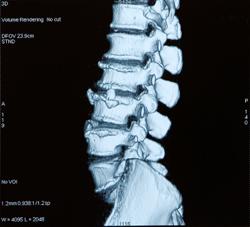
Doctors may compare:
- Your symptoms before the crash
- Your symptoms immediately after the crash
- Physical examinations
- Prior imaging
- Post-accident MRI or CT scans
- Treatment before the accident
- Treatment after the accident
- Your ability to work before and after the collision
- Your ability to perform ordinary activities before and after the crash
Why an MRI Can Be Important
MRI imaging is frequently important when doctors are investigating spinal injuries. Mayo Clinic explains that an MRI can provide detailed images of soft tissues and can identify damage to discs and ligaments. CT scans and X-rays may also help identify fractures, bone changes, and other structural abnormalities.
An MRI can potentially show:
- Spinal canal narrowing
- Herniated discs
- Disc degeneration
- Nerve compression
- Spinal cord abnormalities
- Ligament injuries
- Other structural changes
But an MRI is only one part of the medical evidence. A radiology report may identify degenerative changes that existed before the accident. That does not necessarily explain why a person’s symptoms suddenly became much worse after the crash. The physician’s clinical assessment and the patient’s medical history can be equally important.
What Does Degenerative Spinal Stenosis Mean?
Degenerative spinal stenosis develops gradually. As the spine ages, discs can deteriorate, joints can develop arthritis, bone spurs can form, and ligaments can become thicker. These changes can reduce the amount of space available for nerves and the spinal cord.
Mayo Clinic notes that most people with spinal stenosis are over age 50. However, younger people can also develop spinal stenosis, particularly when they have other spinal problems or certain underlying conditions.
This creates a common challenge in car accident cases: an imaging report may show a condition that clearly existed before the crash, while the person nevertheless suffered a genuine accident-related worsening of symptoms.
Symptoms of Spinal Stenosis You Should Not Ignore
If you develop symptoms after a collision, you should seek medical attention rather than assuming they will resolve on their own. Important symptoms can include:
- Persistent neck or back pain
- Numbness or tingling
- Weakness in an arm or leg
- Pain radiating into an extremity
- Difficulty walking
- Problems with balance
- Loss of coordination
- Increasing difficulty standing or walking
- Changes in bowel or bladder function
Serious neurological symptoms warrant prompt medical evaluation. Mayo Clinic notes that severe spinal stenosis can cause significant neurological complications, including weakness, balance problems, and in serious cases, problems involving bladder or bowel function.
How Is Spinal Stenosis Treated?
Treatment depends on the severity of the condition and the symptoms involved. Medical treatment may include conservative approaches such as physical therapy and medication. More serious cases may require injections or surgical intervention to relieve pressure on the spinal cord or nerves. Treatment can potentially include:
- Physical therapy
- Activity modification
- Medication
- Epidural or other injections
- Pain-management treatment
- Rehabilitation
- Surgery
A physician may recommend surgery when significant spinal cord or nerve compression produces serious symptoms or when conservative treatment does not provide sufficient relief.
How Spinal Stenosis Can Affect a Car Accident Claim
When spinal stenosis appears after a crash, an insurance company may argue that the condition is degenerative and unrelated to the accident. That argument may be incomplete.
The relevant question may instead be whether the collision caused a new injury or aggravated an existing condition, resulting in additional medical treatment, pain, disability, lost income, or other damages. Evidence that may be important includes:
- Pre-accident medical records
- Post-accident medical records
- MRI and CT imaging
- X-rays
- Physician opinions
- Physical therapy records
- Prescription records
- Employment records
- Accident photographs
- Police reports
- Witness statements
- Documentation of changes in daily activities
The strongest cases often have a clear timeline showing the person’s condition before the crash, the collision itself, the onset or worsening of symptoms, and the medical treatment that followed.
What Should You Do If You Develop Spinal Problems After a Crash?
If you believe a car accident caused or aggravated spinal stenosis, consider taking several practical steps.
- Get medical attention. Persistent pain, numbness, weakness, or balance problems should be evaluated.
- Explain your symptoms accurately. Tell your doctor when the symptoms began and how they changed after the accident.
- Discuss your medical history. Be honest about prior back or neck problems.
- Follow recommended treatment. Failure to follow medical recommendations can complicate an injury claim.
- Keep your medical records and bills.
- Document how the injury affects your daily life.
- Preserve accident evidence.
- Be cautious about giving recorded statements to an insurance company.
- Consider consulting an Illinois car accident attorney.
Frequently Asked Questions About Spinal Stenosis and Car Accidents
Can whiplash cause spinal stenosis?
Whiplash itself does not typically cause the gradual degenerative process responsible for most spinal stenosis. However, a collision can cause traumatic spinal injuries, including disc injuries or other structural damage, and trauma can aggravate existing narrowing.
Can a car accident cause cervical spinal stenosis?
A car accident can cause traumatic injuries that affect the cervical spine and may contribute to narrowing or neurological compression. However, most cervical spinal stenosis is associated with degenerative changes that develop over time.
Can a car accident aggravate pre-existing spinal stenosis?
Yes. A collision can potentially turn an asymptomatic or mildly symptomatic spinal condition into one that causes significant pain, numbness, weakness, or other neurological symptoms. The medical evidence must establish the relationship between the accident and the worsening condition.
Does spinal stenosis always require surgery?
No. Treatment depends on the severity of the condition and symptoms. Conservative treatments such as medication and physical therapy may help many patients, while surgery may be considered for more severe cases.
What if an MRI says my spinal stenosis is degenerative?
A degenerative finding does not necessarily mean the accident had no effect on your condition. Your physician may need to determine whether the collision caused a new injury or aggravated the symptoms associated with the underlying condition.
Can I receive compensation if the accident aggravated spinal stenosis?
Potentially. If another driver’s negligence caused the collision and the collision caused or aggravated your spinal condition, you may have a claim for accident-related damages. The evidence must establish causation and the extent of the harm attributable to the crash.
Contact the Top Illinois Serious Car Accident Attorneys at John J. Malm & Associates
Spinal stenosis is often a complicated medical condition because the narrowing may develop gradually while symptoms can appear or become dramatically worse after trauma. If you developed back or neck pain, numbness, weakness, difficulty walking, or other neurological symptoms after a car accident, it is important to understand whether the collision caused a new spinal injury or aggravated an underlying condition.
At John J. Malm & Associates, we understand that insurance companies may point to degenerative changes on an MRI and argue that your condition was unrelated to the accident. Our attorneys can investigate the crash, review the medical evidence, examine your condition before and after the collision, and work to determine the full extent of your accident-related losses.
If you or a loved one developed spinal stenosis or experienced a worsening of an existing spinal condition after a car accident, contact John J. Malm & Associates today. Do not let an insurance company minimize your injuries simply because an imaging report contains the word “degenerative.” Contact our firm for a free consultation and learn how we can help protect your rights and pursue the compensation you may deserve.