

EXPERIENCED PERSONAL INJURY ATTORNEYS










Illinois Blind Spot Truck Accident Lawyers
5-Star Rated Injury Attorneys for Side-Swipe Crashes Caused By a Trucker’s Blind Spot
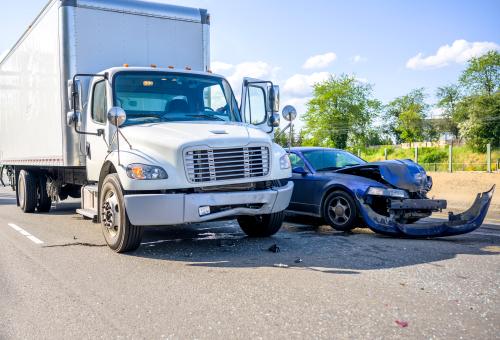
Large commercial trucks are vital to the U.S. economy, transporting goods across state lines and keeping supply chains moving. However, their immense size and weight create unique hazards on the road, particularly when it comes to truck accidents caused by a driver’s blind spot. A “blind spot” or “no-zone” refers to areas around a truck that the driver cannot see using mirrors or direct vision. When motorists or other road users enter these unseen zones, the risk of a devastating collision increases significantly.
Insurance companies and large corporations have teams of lawyers working to minimize payouts, and John J. Malm & Associates works to level the playing field. Our top-rated Illinois truck accident attorneys represent accident victims across Illinois in high-stakes personal injury and truck accident cases, combining meticulous investigation with aggressive litigation strategies. Known for our preparation and courtroom strength, we are not afraid to take cases to trial when necessary to secure the compensation our clients are entitled to under the law.
“A moment’s failure to see a smaller vehicle can change lives forever. That’s why careful attention to visibility and adherence to safety protocols isn’t just good practice, it’s a legal and moral obligation of every truck driver on every highway.” — Naperville truck accident lawyer John J. Malm
What Are Blind Spots Around Trucks?
Blind spots are areas around commercial trucks where the driver has limited or no visibility. Because a truck’s cab sits significantly higher than a typical passenger vehicle’s driver position, and because of the length of the trailer, many vehicles, pedestrians, bicyclists, and motorcycles may be present but unseen by the truck driver.
According to traffic safety sources, truck blind spots can extend:
- Up to 20 feet in front of the truck cab
- Directly behind the trailer, often for long distances
- Along both sides of the truck, but particularly the right side, where visibility is poorest
- One lane to the left and two lanes to the right of the truck’s path without direct visual confirmation by the driver
These areas are commonly referred to as “no-zones.” When a passenger vehicle enters a no-zone, the truck driver must rely entirely on mirrors, which still may not reveal vehicles alongside the truck. Because drivers must scan mirrors and physical space continuously, even momentary inattention can lead to blind spot collisions.
Why Blind Spot Truck Accidents Happen
Several key factors contribute to blind spot truck collisions, often compounding each other:
1. Size and Design of Trucks
Trucks are long and tall. Unlike passenger cars, their blind spots are large and extend far away from the immediate vicinity of the cab. The passenger side blind spot, in particular, can hide vehicles traveling alongside or overtaking the truck.
2. Failure to Check Mirrors
A truck driver’s failure to thoroughly check mirrors before changing lanes or making turns is a common cause of blind spot accidents. Even a trained professional may forget to scan systematically, especially during heavy traffic or complex maneuvers.
3. Driver Fatigue or Distraction
Long trips, tight delivery schedules, and fatigue can reduce a driver’s ability to monitor blind spots. Distracted driving, whether by phones, navigation systems, or other in-cab activities, further increases risk.
4. Improper Mirror Adjustment
Mirrors that are not correctly positioned can create larger blind spots than necessary. Without properly aligned mirrors, a driver’s field of view shrinks, elevating the chance of missing another vehicle in a no-zone.
5. Road and Weather Conditions
Rain, fog, night driving, and construction zones can further impair visibility, making blind spots more dangerous. In such conditions, even careful scanning may not detect nearby vehicles.
How Often Trucking Blind Spot Accidents Occur
Because truck accident reporting does not always isolate blind spot causes specifically, estimates vary. Nonetheless, several sources provide data indicating the scope of the issue:
National Collision Data
- Nearly 840,000 blind spot accidents occur each year in the United States, resulting in approximately 300 deaths annually.
- In a large sample of truck crashes, the failure to check blind spots was identified as a contributing factor in about 14% of cases.
- A report from federal transportation research indicates that blind spot factors contribute to 30,500 personal injuries annually related to truck blind spots and that blind spot identification errors cause about one-third of work zone truck crashes.
Crash Dynamics and Impact
While not confined only to blind spot zones, federal statistics show that:
- More than 503,000 police-reported crashes in 2022 involved large trucks, including over 114,000 injury crashes and 5,279 fatal crashes nationwide.
- Nearly 82–83% of people killed in large truck crashes are occupants of other vehicles or non-motorists.
Although not all these crashes are blind spot related, the size of these collisions and the prominent role of visibility errors highlight how dangerous such crashes can be.
Common Types of Blind Spot Truck Accidents
Because blind spots affect multiple sides of a truck, several crash types are common:
Rear-End Collisions
If a small vehicle is directly behind a truck and out of the driver’s view, sudden braking or slowdowns can result in the truck striking the vehicle in front.
Side-Swipe and Lane-Change Crashes
When a truck changes lanes without checking its blind spot, a car traveling beside the truck may be sideswiped or pushed into another lane or off the road.
Underride Collisions
Smaller vehicles that slide under a trailer during a collision can suffer catastrophic damage and fatalities. These wrecks often occur when the truck driver does not see the car directly in front during braking or maneuvering.
Cyclist and Pedestrian Strikes
Pedestrians and bicyclists riding adjacent to or behind a truck may enter blind zones undetected, leading to severe injury or death if the truck moves without awareness.
Frequently Asked Questions about Accidents Caused By a Truck’s Blind Spot
Q: What is a blind spot truck accident?
A: A blind spot truck accident occurs when a truck driver fails to see another vehicle or road user in the areas around their truck that are not visible through mirrors or direct sight. These are often called no-zones.
Q: Why are blind spots so dangerous around trucks?
A: Because trucks are longer and taller, their blind spots are significantly larger than those of passenger vehicles, meaning a car or motorcycle can be completely hidden from view.
Q: Are blind spot truck accidents common?
A: While exact figures vary, hundreds of thousands of blind spot-related crashes occur annually in the U.S., with truck drivers’ failures to check blind spots contributing to thousands of injuries and hundreds of deaths.
Q: Who can be held liable in a blind spot truck accident?
A: Typically, the truck driver and the trucking company may be liable for negligence if they failed to exercise reasonable care in monitoring blind spots. Other parties may also share liability depending on the circumstances.
Q: What types of injuries result from these crashes?
A: Victims may suffer severe injuries, including spinal cord injuries, traumatic brain injuries (TBIs), fractures, internal injuries, and in the worst cases, wrongful death.
Contact the Experienced Illinois Blind Spot Truck Accident Lawyers at John J. Malm & Associates
Blind spot truck accidents often result in catastrophic harm to passengers and other road users. The combination of massive vehicle size, complex blind zones, and split-second decision-making can turn a routine highway maneuver into a life-altering tragedy.
When you or a loved one has been injured in this type of crash, understanding your legal rights and options is essential. At John J. Malm & Associates, our knowledgeable Illinois semi-truck injury attorneys can investigate the accident, identify all liable parties, gather crucial evidence, and pursue maximum compensation for your medical expenses, lost income, pain and suffering, and future care needs.
If you have been injured in a blind spot truck accident, don’t wait to protect your rights. Contact our firm today for a free consultation. We’re here to help you navigate the legal process and hold negligent parties accountable while you focus on healing.