- Free Consultation: (630) 527-4177 Tap Here to Call Us















Why Aren’t Insurance Companies Paying on Car Accident Claims?


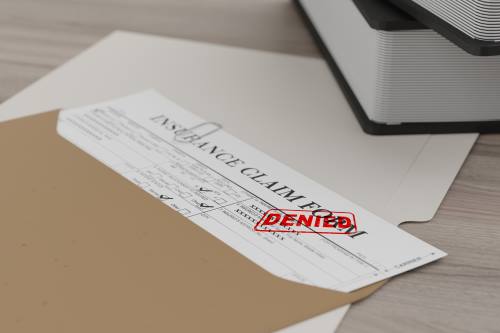
After a car accident, many people assume that insurance is supposed to make them financially whole. After all, drivers are required to carry auto insurance, and consumers pay premiums month after month for protection when something goes wrong. Yet many accident victims discover that getting an insurance company to actually pay a claim can be far more difficult than expected.
A recent Wall Street Journal investigation highlights just how significant this problem has become. According to the Journal’s analysis of thousands of insurance-company regulatory filings, auto insurers did not pay out on 45% of auto liability and medical claims they resolved in the year analyzed, compared with approximately 35% a decade earlier. The article notes that Americans were involved in more than six million traffic accidents during that period, meaning millions of people may face an insurance system that does not necessarily provide the financial protection they expected.
This does not mean that every denied claim is wrongful. Insurance companies have legitimate reasons to investigate, deny, or limit certain claims. But when an insurer delays a claim, disputes liability, minimizes injuries, questions medical treatment, or makes an inadequate settlement offer, accident victims can be left struggling to pay medical bills, repair costs, lost wages, and other expenses.
Why Are Insurance Companies Denying or Delaying Accident Claims?
Insurance companies are businesses. Their financial incentive is to collect premiums while controlling the amount they pay on claims. That does not mean insurers are automatically acting improperly when they investigate a claim, but it does mean that an accident victim should not assume the insurance company’s position is necessarily fair or final.
The Wall Street Journal reported that the percentage of auto liability and medical claims not resulting in an insurer payout had increased substantially over the prior decade. Several factors can contribute to disputes over whether and how much an insurer should pay.
Common reasons insurance companies give for denying or reducing accident claims include:
- The insurer disputes who was responsible for the accident.
- The insurance company claims the injuries were caused by something other than the crash.
- The insurer argues that medical treatment was unnecessary or excessive.
- The policy does not provide the coverage the claimant believes it provides.
- The insurer argues that damages are less serious than claimed.
- The company disputes the value of a totaled vehicle.
- The insurer claims the policyholder failed to satisfy a policy requirement.
- The insurance company believes another person or insurer should be responsible.
- The claimant’s documentation is considered incomplete.
- The insurer makes a settlement offer that does not account for all of the victim’s damages.
In some situations, an insurer’s position may be legitimate. In others, however, the denial or settlement offer deserves close scrutiny.
Insurance Companies May Use Delays to Their Advantage
One of the most frustrating experiences for accident victims is simply waiting for the insurance company to make a decision. A delay can be financially devastating. A person may be unable to work because of injuries while medical bills continue arriving. Their vehicle may be damaged or totaled, creating transportation problems. At the same time, the insurance company may continue requesting records, statements, photographs, estimates, or additional information.
Data from J.D. Power illustrates how long insurance claims can take to resolve. Its 2025 auto claims study found that overall satisfaction with the auto claims process remained relatively low, at 700 on a 1,000-point scale. The study also found that 27% of claims involved total losses, compared with 16% in 2022. Only 58% of consumers who experienced a total loss said the insurer’s valuation fully met their expectations.
Longer claim timelines can create pressure on accident victims to accept whatever money the insurer offers simply because they need cash. That can be a serious mistake.
Low Settlement Offers Can Leave Accident Victims Undercompensated
An insurance company does not necessarily have the final word on what an accident claim is worth. For example, an insurer may calculate a settlement based primarily on documented medical expenses incurred so far. But an accident victim may still require physical therapy, injections, surgery, future medical care, or other treatment. A settlement may also fail to adequately account for:
- Lost wages and diminished earning capacity
- Permanent disability
- Scarring or disfigurement
- Pain and suffering
- Emotional distress
- Future medical expenses
- Loss of normal life
- Out-of-pocket expenses
This is especially important because some injuries do not become fully apparent immediately after a crash. A victim who accepts a settlement before understanding the full extent of an injury may be unable to seek additional compensation later.
Why Are Insurance Companies Questioning Medical Treatment?
Another common source of disputes involves medical treatment. Insurance adjusters may question whether a particular treatment was necessary, whether the treatment was related to the accident, or whether a pre-existing condition contributed to the victim’s symptoms.
This can become particularly important when someone has a history of back pain, arthritis, a prior surgery, or another medical condition. The existence of a pre-existing condition does not necessarily eliminate an accident victim’s right to compensation. An accident can aggravate or worsen a condition that existed before the crash. Establishing that connection, however, may require medical records, physician opinions, diagnostic testing, and other evidence.
An insurance company may also focus on gaps in treatment. If someone waits weeks before seeing a doctor, the insurer may argue that the injury was not caused by the accident. For this reason, accident victims should take injuries seriously and follow appropriate medical advice after a crash.
Insurance Companies Are Facing Rising Claim Costs
There is another side to the insurance equation: claims have become more expensive. J.D. Power’s 2024 U.S. Auto Claims Satisfaction Study reported that average vehicle repair costs had increased 26% over the prior two years, while auto insurance premiums had risen approximately 15% during the preceding year.
The 2025 study found that total losses represented 27% of claims, up from 24% the previous year and 16% in 2022. These increasing costs can contribute to more aggressive claims handling. Insurers may scrutinize repair estimates, total-loss valuations, medical expenses, and liability more closely. That makes it particularly important for accident victims to understand what evidence supports their claim.
What Does Illinois Law Say About Improper Claims Practices?
Illinois law establishes standards governing insurance claims practices. 215 ILCS 5/154.5 establishes standards concerning the investigation and disposition of claims involving insurance policies issued to Illinois residents. Illinois insurance regulations also address prompt investigation and settlement practices. The Illinois Department of Insurance has taken regulatory action in cases involving failures to promptly investigate and settle claims and failures to attempt good-faith settlements when liability was reasonably clear.
This does not mean every delayed or denied claim constitutes bad faith or an illegal claims practice. Insurance disputes are fact-specific, and the applicable policy language matters. But an unexplained denial, inadequate investigation, prolonged delay, or unsupported settlement position should not necessarily be accepted without question.
What Should You Do If Your Insurance Claim Is Denied?
If an insurance company denies your accident claim, ask for the denial in writing and carefully review the explanation. You should also preserve documentation related to the accident and your damages. Important evidence may include:
- The police accident report
- Photographs and videos from the accident scene
- Vehicle damage photographs
- Medical records and bills
- Prescription and treatment records
- Employer records documenting lost wages
- Repair estimates
- Insurance correspondence
- Witness contact information
- Dash-camera footage
- Statements from treating physicians
- Documentation of permanent limitations or disability
Do not assume that an insurance company’s first decision is necessarily the last word. The Illinois Department of Insurance provides resources for consumers who believe an insurance claim has been unjustly denied and explains that the Department can review complaints to determine whether an insurer is complying with Illinois insurance laws and policy language.
Depending on the circumstances, however, an insurance department complaint may not provide the same remedy as pursuing a personal injury claim through an attorney and, when appropriate, litigation.
Should You Accept the Insurance Company’s First Settlement Offer?
Generally, accident victims should be cautious about accepting a settlement before they understand the full value of their claim. Once a settlement is accepted and the appropriate release is signed, the victim may give up the right to pursue additional compensation for the same accident. This is particularly concerning when someone is still undergoing treatment or does not yet know whether an injury will require future medical care.
An experienced personal injury attorney can evaluate the evidence, investigate the accident, calculate damages, communicate with insurance companies, and determine whether the settlement being offered reasonably reflects the client’s losses.
As Naperville car accident attorney John J. Malm explains: “Insurance companies have a financial interest in resolving claims for as little as possible. Our job is to make sure that our clients understand the full value of their claim and that the insurance company is held accountable when it refuses to pay what is fair.”
What Can a Personal Injury Lawyer Do When an Insurer Refuses to Pay?
An attorney can take the insurance company out of the driver’s direct line of communication and handle negotiations on the client’s behalf. Depending on the circumstances, an attorney may:
- Investigate how the accident occurred.
- Gather and preserve evidence.
- Identify all potentially responsible parties.
- Review applicable insurance policies.
- Analyze liability and comparative fault.
- Obtain medical records and bills.
- Consult medical and other experts when necessary.
- Calculate economic and non-economic damages.
- Negotiate with insurance adjusters and defense attorneys.
- Challenge an inadequate settlement offer.
- Prepare the case for litigation if a fair settlement cannot be reached.
The goal is not simply to get an insurance company to write a check. The goal is to pursue the compensation the law allows based on the actual injuries and damages suffered.
Frequently Asked Questions About Insurance Claim Denials
Why would an insurance company deny my accident claim?
An insurer may deny a claim because it disputes liability, coverage, causation, the severity of injuries, or compliance with policy requirements. A denial does not automatically mean the insurer is correct.
Can an insurance company refuse to pay for my medical bills?
An insurer may dispute medical expenses for various reasons, including causation, necessity, or coverage. Whether those disputes are valid depends on the facts, applicable insurance policy, and evidence supporting the treatment.
How long can an insurance company take to settle an accident claim?
The timeline varies depending on the circumstances, the insurer, the complexity of the accident, the injuries involved, and the available evidence.
Should I talk to the insurance adjuster after an accident?
You should be careful about providing statements or making admissions before understanding your legal rights. Statements can potentially be used by an insurer when evaluating liability or damages.
What if the insurance company says I was partially responsible?
Illinois follows a modified comparative negligence system. The amount of compensation available can depend on the percentage of fault attributed to each party. An attorney can evaluate the evidence and challenge an unfair allocation of fault.
Can I sue an insurance company for denying my claim?
Potentially, but the answer depends on the type of claim, the applicable policy, the facts surrounding the denial, and Illinois law. A lawyer can evaluate whether litigation, an insurance complaint, or another legal strategy is appropriate.
Contact the Top Illinois Car Accident Lawyers at John J. Malm & Associates
The growing difficulty of obtaining adequate insurance payments is a serious concern for accident victims. If your insurance company has denied your claim, delayed payment, disputed your injuries, blamed you for the crash, or offered substantially less than your claim is worth, you do not have to navigate the process alone.
The dedicated Illinois car accident attorneys at John J. Malm & Associates represent injured people throughout Illinois and fights to hold insurance companies accountable when they refuse to provide fair compensation. Contact our firm for a free consultation about your accident and your legal options. The sooner you understand your rights, the sooner you can make informed decisions about your claim.