- Free Consultation: (630) 527-4177 Tap Here to Call Us













Is a Motorcycle Helmet Safe to Use After an Accident?


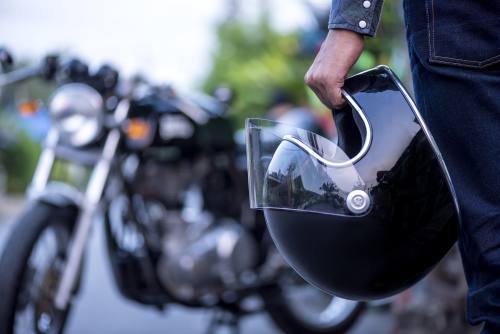
A motorcycle helmet can be one of the most important pieces of safety equipment a rider owns. But what happens to that helmet after a motorcycle accident? If the helmet looks fine from the outside, can you simply put it back on and continue riding?
Generally, no. A motorcycle helmet that has been involved in a crash or significant impact should be replaced. The reason is that a helmet is designed to absorb and manage impact energy. The damage to the protective liner may not be visible, even when the helmet has performed exactly as it was designed to do.
This is particularly important because motorcycle crashes can result in severe head and brain injuries. According to the National Highway Traffic Safety Administration (NHTSA), 6,228 motorcyclists were killed in traffic crashes in 2024, representing 16% of all traffic fatalities. NHTSA also reports that, per vehicle miles traveled, motorcyclists in 2024 were nearly 27 times more likely to die in a motor vehicle crash than passenger vehicle occupants.
A helmet that has already absorbed a significant impact should not be treated as though it is still new. Once a crash occurs, replacing the helmet can be an important part of protecting yourself if another crash happens.
“A motorcycle helmet is designed to protect a rider when the unexpected happens. After a crash, however, the helmet itself may become evidence of the forces involved. We encourage injured motorcyclists to preserve their helmets and other damaged equipment rather than assuming that visible damage tells the entire story.” — John J. Malm, Naperville motorcycle accident attorney
Why Should You Replace a Motorcycle Helmet After a Crash?
Motorcycle helmets are engineered to absorb energy during an impact. The outer shell distributes forces across the helmet, while the interior energy-absorbing liner is designed to reduce the amount of force transmitted toward the rider’s head and brain. During a crash, that liner can compress or otherwise sustain damage. Some of this damage may be difficult or impossible to see simply by examining the outside of the helmet.
The Snell Foundation, which develops independent helmet safety standards, advises riders to replace a helmet if it has been involved in an impact while being worn. The organization explains that even a helmet that appears intact may have compromised protective capability following an impact. This means that a helmet does not have to look shattered, cracked, or dramatically damaged before it should be replaced.
Important reasons to replace a helmet after an accident include:
- The energy-absorbing liner may have compressed.
- The shell may have sustained damage that is difficult to see.
- The helmet’s fit may have changed.
- Straps, buckles, or other retention components may have been damaged.
- The helmet may not provide the same level of impact protection during another crash.
- Internal damage may not be detectable through an ordinary visual inspection.
The safest approach after a crash is therefore straightforward: if the helmet was involved in an impact while you were wearing it, replace it.
A Helmet Can Look Fine and Still Be Damaged
One of the most common misconceptions about motorcycle helmets is that visible damage is necessary before replacement is appropriate. That is not necessarily true. A helmet’s purpose is to absorb and manage energy before that energy reaches the rider’s head. In doing so, components of the helmet may deform or compress. That can happen without producing an obvious crack or other dramatic external defect.
Consider what happens during a crash. A rider may be thrown from a motorcycle and strike the pavement, another vehicle, a curb, a road sign, or another object. Even if the rider’s head does not experience a direct, obvious blow, the helmet could contact the ground or another surface. The helmet may have protected the rider precisely because it absorbed some of that force. The problem is that the helmet may no longer have the same protective capacity afterward.
The Snell Foundation explains that without a thorough inspection by someone qualified to evaluate helmets, it can be difficult to determine whether a helmet has been compromised. It specifically recommends replacement when a helmet has been involved in an impact while in use.
How Motorcycle Helmets Protect Riders
The importance of replacing a crash-involved helmet becomes clearer when considering how effective motorcycle helmets can be. NHTSA reports that research has found motorcycle helmets reduce rider fatalities by approximately 22% to 42% and brain injuries by approximately 41% to 69%. A systematic review of 61 studies found protective effects toward the higher end of those ranges. NHTSA also emphasizes that riders involved in serious crashes should wear a helmet that meets the federal Federal Motor Vehicle Safety Standard (FMVSS) No. 218.
The CDC likewise states that motorcycle crashes result in thousands of deaths and injuries every year. Its 2026 motorcycle safety information notes that approximately 6,000 motorcyclists died and more than 218,000 were treated in emergency departments for crash injuries in 2022.
These statistics illustrate why helmet condition matters. A helmet can substantially reduce the risk of serious head injury, but riders should not assume that a helmet that has already absorbed crash forces will provide the same protection during another impact.
What If the Helmet Was Dropped?
Not every contact with the ground automatically means a helmet must be discarded. For example, dropping an unoccupied helmet from a motorcycle seat or from your hands is different from wearing the helmet during a motorcycle crash.
The Snell Foundation explains that a simple low-height drop while the helmet is unoccupied generally does not automatically require replacement. However, repeated drops or impacts can potentially degrade the helmet’s performance. The organization recommends replacement when the helmet has been involved in an impact while being worn. If there is any question about whether a helmet sustained meaningful damage, replacing it is the safer course.
What Should You Look for When Buying a Replacement Helmet?
After a motorcycle accident, replacing the helmet is only part of the process. Riders should also make sure the replacement helmet is appropriate, properly fitted, and compliant with applicable safety standards.
NHTSA advises riders to look for a helmet meeting FMVSS No. 218. Certified motorcycle helmets sold in the United States are required to display the appropriate DOT certification labeling. NHTSA also warns consumers about novelty helmets and counterfeit DOT labels.
When selecting a replacement helmet, consider:
- Proper certification: Look for a helmet that complies with FMVSS No. 218.
- Correct fit: A helmet should fit securely and snugly without causing excessive discomfort.
- Retention system: Make sure the chin strap and buckle function properly.
- Condition: Do not purchase a helmet with signs of damage or deterioration.
- Age and wear: Follow the manufacturer’s replacement recommendations.
- Reputable manufacturer: Purchase from a reputable retailer or manufacturer.
The Snell Foundation recommends replacing helmets after approximately five years of normal use because materials, padding, and fit can deteriorate over time.
Illinois Motorcycle Crashes and Helmet Safety
Illinois presents an important distinction for motorcycle riders. Unlike some states, Illinois does not have a universal motorcycle helmet law. NHTSA identifies Illinois among the states without a motorcycle helmet law. Regardless of the applicable state law, wearing appropriate protective equipment can be an important safety measure.
For an Illinois motorcyclist involved in a crash, the condition of the helmet can also become relevant to understanding the circumstances of the accident and the nature of the rider’s injuries. A damaged helmet should be preserved rather than immediately thrown away, particularly if there may be an insurance claim or personal injury lawsuit.
Should You Keep the Damaged Helmet After a Motorcycle Accident?
Yes. If you were involved in a motorcycle accident and your helmet sustained an impact, do not throw it away immediately. Instead, consider preserving the helmet as potential evidence.
The helmet may help demonstrate that an impact occurred and can potentially provide useful information about the mechanics of the crash. Photographs of the helmet, motorcycle, roadway, clothing, and other damaged equipment may also be important. A motorcycle accident investigation may involve evidence such as:
- Photographs and videos from the crash scene.
- Police reports.
- Witness statements.
- Motorcycle damage.
- Helmet damage.
- Damage to protective clothing.
- Surveillance or traffic-camera footage.
- Vehicle event data, when available.
- Accident reconstruction evidence.
- Medical records and diagnostic imaging.
- Photographs documenting injuries.
The helmet should be stored in a safe location and not modified, repaired, or discarded until the potential claim has been evaluated.
Can Insurance Companies Use the Helmet as Evidence?
Potentially. In a motorcycle injury claim, insurers may investigate virtually every aspect of the accident, including the rider’s protective equipment. A damaged helmet may help document the severity and mechanics of an impact. At the same time, the existence of helmet damage does not by itself establish who was responsible for causing the accident.
Liability generally depends on the facts of the crash, including whether another driver was negligent, whether traffic laws were violated, road conditions, visibility, vehicle positioning, and other evidence.
Motorcycle accident claims can also involve disputes concerning comparative fault, insurance coverage, medical expenses, lost income, and the long-term effects of injuries. For that reason, an injured motorcyclist should consider preserving potentially relevant evidence rather than discarding it.
What Should You Do After a Motorcycle Accident?
A motorcycle accident can be overwhelming. If you have been injured, your immediate priority should be getting appropriate medical care. Once immediate medical needs have been addressed, consider taking steps to preserve evidence and protect your legal rights. Important steps can include:
- Seek medical attention promptly.
- Report the crash to the appropriate authorities.
- Photograph the motorcycle, helmet, clothing, roadway, and surrounding area.
- Obtain contact information for witnesses.
- Preserve your helmet and other protective equipment.
- Do not repair or discard damaged equipment before it has been evaluated.
- Keep medical bills and other accident-related records.
- Notify your insurance company as appropriate.
- Avoid giving recorded statements about disputed facts without understanding your rights.
- Consult an experienced Illinois motorcycle accident attorney if another person’s negligence caused your injuries.
Frequently Asked Questions About Motorcycle Helmets After an Accident
Can I use my motorcycle helmet again after a crash if there are no visible cracks?
Generally, you should replace a motorcycle helmet after it has been involved in an impact while being worn. Internal damage to the energy-absorbing materials may not be visible. The Snell Foundation specifically recommends replacing a helmet after an impact while in use.
Does dropping my helmet mean I need to replace it?
Not necessarily. A simple drop while the helmet is unoccupied does not automatically mean the helmet must be replaced. However, significant, repeated, or otherwise questionable impacts can compromise a helmet. When in doubt, have it evaluated or replace it.
How long does a motorcycle helmet last?
Helmet manufacturers may provide specific replacement recommendations. The Snell Foundation recommends replacing a helmet after approximately five years of normal use because wear can affect padding, fit, and other components.
What type of motorcycle helmet should I buy?
Look for a helmet that complies with FMVSS No. 218 and has the appropriate DOT certification labeling. NHTSA also warns consumers about novelty helmets and counterfeit certification labels.
Should I throw away my helmet after a motorcycle accident?
Not immediately. If the helmet was involved in the crash, preserve it. It may be relevant evidence in an insurance claim or personal injury case.
Can wearing a helmet affect my motorcycle accident claim?
The facts surrounding helmet use can become relevant in a motorcycle injury claim, but each case depends on its specific circumstances. Issues involving helmet use, the severity of injuries, comparative fault, insurance coverage, and the conduct of other drivers should be evaluated based on the available evidence.
What if another driver caused my motorcycle accident?
If another driver’s negligence caused your crash, you may have a claim for compensation for medical expenses, lost income, pain and suffering, property damage, and other legally recoverable losses. The available damages depend on the facts of the case and applicable Illinois law.
Contact the Top-Rated Illinois Motorcycle Accident Attorneys at John J. Malm & Associates
A motorcycle helmet can be remarkably effective at protecting a rider’s head, but once that helmet has been involved in a crash, it should generally be replaced. Just as importantly, do not discard the damaged helmet if another person’s negligence caused your accident. It may provide valuable evidence when investigating what happened.
If you or a loved one has been injured in a motorcycle accident, the attorneys at John J. Malm & Associates can investigate the crash, preserve important evidence, deal with insurance companies, and pursue the compensation available under Illinois law. Our attorneys have more than 95 years of combined litigation experience and represent injured clients in communities throughout the Chicago suburbs and across Illinois. Contact John J. Malm & Associates for a free consultation to discuss your motorcycle accident and your legal options.