

EXPERIENCED PERSONAL INJURY ATTORNEYS













Elmhurst, IL Premises Liability Lawyers
5-Star Rated Attorneys for Slip, Trip, and Fall Accident Attorneys
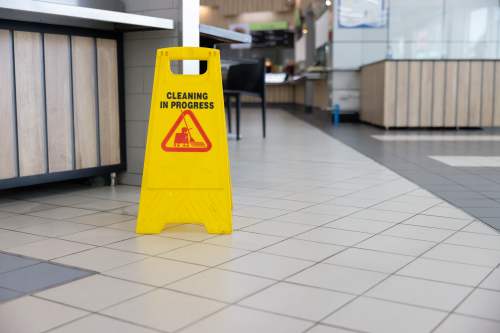
Every day, residents and visitors in Elmhurst, Illinois, walk into grocery stores, restaurants, office buildings, apartment complexes, and parking garages without giving a second thought to whether the floor beneath them is safe. Most of the time, that trust is well placed. But when a property owner cuts corners on maintenance, ignores a known hazard, or fails to warn visitors of a dangerous condition, the result can be a life-altering injury. These situations fall under a legal category known as premises liability, and understanding how these claims work in Illinois is the first step toward protecting your rights after an accident.
Elmhurst, a DuPage County suburb of roughly 46,000 residents, is a walkable, densely built community with a historic downtown, busy retail corridors along York Street and Route 83, and a steady flow of commuters through its Metra station. That density means more foot traffic across sidewalks, parking lots, and commercial properties and more opportunities for dangerous conditions to cause serious harm.
“In nearly every premises liability case we handle, the outcome comes down to one thing: evidence preserved early. Property owners and their insurers move quickly to fix hazards, review surveillance footage, and build their defense the moment they learn of a claim. Injured victims need to move just as quickly to protect their right to compensation.” — John J. Malm, Elmhurst slip and fall accident attorney
What Is Premises Liability?
Premises liability is the legal principle that holds property owners and occupiers responsible for injuries that occur on their property because of unsafe or hazardous conditions. It applies to commercial properties like grocery stores and restaurants, as well as residential properties, government-owned land, and public sidewalks. The underlying legal theory is negligence: a property owner who knew, or reasonably should have known, about a dangerous condition has a duty to fix it or warn visitors, and failing to do so can create liability for any resulting injuries.
In Illinois, this duty is codified under the Illinois Premises Liability Act, which requires property owners and possessors to exercise reasonable care toward people lawfully on their property. Historically, Illinois law distinguished between “invitees” and “licensees,” but that distinction has largely been eliminated for lawful visitors, who are now owed a consistent duty of reasonable care. Trespassers, by contrast, are generally owed a lesser duty, except in cases involving children and the “attractive nuisance” doctrine, which can apply to hazards like unfenced pools or unsecured machinery that might draw in a child who cannot appreciate the risk.
Common Types of Elmhurst Premises Liability Claims
Premises liability is a broad category that covers many kinds of accidents. Some of the most common claims local attorneys see include:
- Slip and fall accidents caused by wet floors, spilled liquids, freshly mopped surfaces without warning signs, or loose mats and rugs
- Trip and fall accidents involving cracked sidewalks, potholes, uneven pavement, or unmarked obstacles in walkways
- Snow and ice accidents, particularly relevant in Illinois winters, involving unshoveled walkways or negligent snow removal that creates an unnatural accumulation of ice
- Stairway and handrail accidents from broken steps, missing handrails, or poor lighting in stairwells
- Negligent security claims, where inadequate lighting, broken locks, or absent security personnel contribute to a criminal assault on the property
- Swimming pool accidents and drownings, especially involving apartment complexes or private pools without proper fencing
- Dog bites and animal attacks, which in Illinois fall under strict liability rather than ordinary negligence
- Falling object and structural collapse injuries in poorly maintained retail or commercial buildings
- Elevator and escalator accidents caused by mechanical failure or inadequate maintenance
Each of these categories requires different evidence and legal strategies, but they all hinge on the same basic question: Did the property owner fail to maintain a reasonably safe environment?
The Scope of the Problem: Key Statistics
Premises liability claims are not a niche legal issue; they represent a significant share of personal injury litigation and a major public health concern, particularly for older adults. Consider the following data points:
- Premises liability cases make up roughly 17% of all personal injury claims filed in the United States each year.
- More than 14 million older adults experience a fall each year nationwide, and falls caused 47,026 deaths in 2023 alone.
- Wet or slippery floors are linked to an estimated 55% of all slip and fall incidents on residential and commercial properties.
- Fall-related injuries cost the U.S. healthcare system more than $50 billion annually, up dramatically from roughly $16 billion in 2000, largely due to the aging population.
- The CDC reports that more than one in four Americans aged 65 or older experiences a fall each year, though fewer than half report it, and roughly 3 million older adults visit emergency departments annually for fall-related injuries such as hip fractures and head trauma.
- Slip, trip, and fall incidents remain one of the leading causes of workplace injury, accounting for a large share of nonfatal injuries requiring time away from work each year.
- Litigation trends show the stakes climbing: general liability claim severity on commercial properties has risen 57% over the past decade, and premises liability or negligence verdicts exceeding $10 million rose by 52% in 2024 compared to 2023.
- Insurance industry data indicates that even modest injuries are resulting in far larger payouts than in past years, with some professionals noting that claims once resolved for tens of thousands of dollars now regularly reach into seven figures.
For Elmhurst residents specifically, the local risk factors are familiar ones: heavy pedestrian traffic in the downtown shopping and dining district, older sidewalks and building stock (the city’s median home construction year is 1964), a large senior population, and harsh Midwestern winters that create ongoing snow and ice hazards from November through March.
Proving a Premises Liability Claim in Illinois
Winning a premises liability case requires more than simply showing that an injury occurred on someone else’s property. Illinois law requires an injured person to establish four core elements:
- Duty: The property owner owed the injured person a duty of reasonable care.
- Breach: A dangerous or hazardous condition existed on the property.
- Notice: The property owner knew about the condition (actual notice) or should have discovered it through reasonable inspection (constructive notice).
- Causation: The dangerous condition directly caused the injury.
Notice is typically the most difficult element to prove. Attorneys often rely on maintenance logs, inspection records, surveillance footage, employee statements, and evidence of prior similar incidents at the same property to demonstrate that the property owner either knew about the hazard or had enough time to discover and fix it before the accident occurred.
Defenses Property Owners Commonly Raise
Property owners and their insurers rarely concede liability outright. Some of the most frequently raised defenses in Illinois premises liability cases include:
- The open and obvious doctrine, which argues that a hazard was so apparent that a reasonable person should have seen and avoided it, relieving the owner of a duty to warn
- The natural accumulation rule, which generally shields property owners from liability for injuries caused by natural accumulations of snow and ice — though owners can still be liable if their own negligence (such as improper plowing or a leaking gutter) created an unnatural accumulation
- Comparative negligence, arguing that the injured person’s own carelessness contributed to the accident
- Lack of notice, arguing the hazard existed too briefly for the owner to have reasonably discovered it
Importantly, the open and obvious doctrine is not absolute. Illinois courts recognize exceptions, including the “distraction exception” (where a visitor is reasonably distracted by something on the property, such as a store display, and fails to notice an otherwise obvious hazard) and the “deliberate encounter exception” (where a visitor has no reasonable alternative but to encounter the hazard, such as an icy patch blocking the only entrance to a building).
Comparative Fault and Damages
Illinois follows a modified comparative negligence rule under 735 ILCS 5/2-1116. This means an injured person can still recover compensation even if they were partially at fault for the accident, as long as they were 50% or less responsible. If a jury finds the injured party more than 50% at fault, they recover nothing. For those found 50% or less at fault, their damages award is reduced by their percentage of fault. For example, a jury verdict of $200,000 reduced by a 20% comparative fault finding would result in a net recovery of $160,000.
Damages in a successful premises liability claim can include:
- Past and future medical expenses
- Lost wages and diminished future earning capacity
- Pain and suffering
- Permanent disability or disfigurement
- Loss of normal life
- In cases involving especially egregious conduct, punitive damages
Statute of Limitations in Illinois
Timing matters enormously in premises liability cases. Under Illinois law, injury victims generally have two years from the date of the accident to file a personal injury lawsuit. Claims against a government entity, such as the City of Elmhurst, for a defective public sidewalk, often carry a shortened notice period and filing deadline, sometimes as little as one year, making prompt legal consultation critical. For claims involving a minor, the statute of limitations is generally tolled until the child turns 18, though exceptions exist. Missing these deadlines, regardless of how strong the underlying facts are, will typically bar recovery entirely.
Frequently Asked Questions about Elmhurst Slip and Fall Accidents
What should I do immediately after a slip and fall or other premises liability accident?
Seek medical attention first, even if your injuries seem minor. Then report the incident to the property owner or manager, take photos of the hazard and the surrounding area, get contact information from any witnesses, and avoid giving a recorded statement to an insurance adjuster before speaking with an attorney.
How long do I have to file a premises liability claim in Illinois?
Generally, two years from the date of the accident, though claims against government entities may have shorter notice requirements. It’s best to consult an attorney as soon as possible to avoid missing critical deadlines.
Will my own carelessness prevent me from recovering compensation?
Not necessarily. Illinois follows a modified comparative negligence rule, meaning you can still recover damages as long as you are found 50% or less at fault. Your award will simply be reduced by your percentage of fault.
What if the hazard that caused my injury was “open and obvious”?
The open and obvious doctrine is a common defense, but it is not automatic or absolute. Exceptions like the distraction exception and deliberate encounter exception may still allow you to recover compensation, depending on the specific facts of your case.
Can I still file a claim if I was injured on someone else’s property while working?
Possibly. In addition to a workers’ compensation claim through your employer, you may also have a separate premises liability claim against a negligent property owner who was not your employer, particularly in cases involving third-party contractors or delivery workers.
How much does it cost to hire a premises liability attorney?
Most premises liability and personal injury attorneys work on a contingency fee basis, meaning you pay nothing upfront and owe no attorney’s fees unless a recovery is obtained on your behalf.
What kind of evidence helps prove a premises liability claim?
Surveillance video, incident reports, maintenance and inspection logs, photographs of the hazard, witness statements, weather records for snow and ice cases, and expert testimony on issues like lighting, flooring, or building codes can all strengthen a claim.
Contact the Seasoned Elmhurst Slip and Fall Accident Attorneys at John J. Malm & Associates
A serious fall or injury on someone else’s property can upend your life in an instant, physically, financially, and emotionally. Illinois law gives injured victims a path to recover compensation, but that path is narrower than most people realize, guarded by strict notice requirements, aggressive insurance defenses, and unforgiving filing deadlines. You don’t have to navigate it alone.
If you or a loved one has been injured due to a hazardous condition on a property in Elmhurst or anywhere in DuPage County, don’t wait to protect your rights. Contact John J. Malm & Associates today for a free, no-obligation consultation. We work on a contingency fee basis, so you pay nothing unless we win your case. Let us handle the insurance companies and the legal complexities while you focus on your recovery.