- Free Consultation: (630) 527-4177 Tap Here to Call Us





How Do I Prove the Other Driver Ran a Stop Sign?


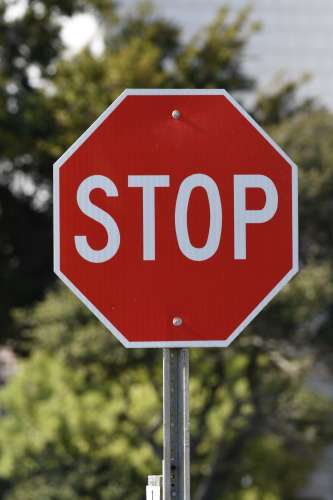
Stop signs are one of the most common traffic control devices at intersections, designed to regulate traffic flow and prevent collisions. When a driver ignores a stop sign or fails to yield the right of way, the result can be a devastating crash, often a side-impact or “T-bone” collision. Unfortunately, proving that another driver ran a stop sign is not always straightforward after an accident. Insurance companies frequently dispute fault, and drivers may deny that they violated the sign.
If you were injured in a crash caused by a driver who failed to stop, building strong evidence is critical. Police reports, witness statements, physical evidence, and modern technology such as dash cameras can all play an important role in demonstrating what actually happened. Understanding how to prove a stop sign violation can help protect your legal rights and strengthen your injury claim.
“Stop sign accidents are often devastating because they happen suddenly and without warning,” says John J. Malm, a Chicago-area car accident attorney. “When drivers ignore traffic signals or fail to yield the right of way, innocent people can suffer serious injuries. Investigating these crashes quickly and preserving evidence is critical to proving what really happened.”
How Common Are Stop Sign Accidents?
Intersections controlled by stop signs are common locations for serious crashes across the United States. When drivers fail to stop or fail to yield, the risk of an angle collision increases significantly.
Statistics show how widespread these crashes are:
- Approximately 700,000 police-reported crashes occur each year at stop-sign-controlled intersections in the United States.
- Roughly one-third of those crashes involve injuries.
- Stop sign violations contribute to around 125,000 injuries annually.
- Studies of intersection crashes show stop sign violations account for about 70% of accidents at two-way stop intersections.
- Drivers failing to come to a complete stop is a factor in nearly 40% of fatal intersection crashes.
Because these crashes often involve vehicles traveling perpendicular to one another, the impact frequently occurs on the side of a vehicle where occupants have less protection. As a result, injuries can be severe.
Why Stop Sign Violations Cause Serious Accidents
When a driver ignores a stop sign, other motorists entering the intersection expect them to stop. This creates a dangerous situation where one driver proceeds legally while the other driver enters the intersection unexpectedly.
Common causes of stop sign violations include:
- Distracted driving
- Rolling stops instead of complete stops
- Speeding through intersections
- Obstructed visibility
- Driver impatience
- Failure to yield to the right of way
Research indicates driver inattention contributes to about 65% of stop-sign-related accidents. These crashes most commonly result in angle collisions, which occur when the front of one vehicle strikes the side of another.
Evidence Used to Prove the Other Driver Ran a Stop Sign
To recover compensation after an accident, an injured victim must prove that the other driver was negligent. In stop sign cases, that typically means showing the driver failed to stop or failed to yield the right of way.
Several types of evidence can help establish fault:
1. The Police Accident Report
One of the most important pieces of evidence after a crash is the official police report.
When officers respond to an accident, they typically:
- Interview drivers and witnesses
- Document the location of vehicles
- Identify traffic control devices such as stop signs
- Note any citations issued
If the officer determines that one driver ran a stop sign, the report may indicate that the driver violated a traffic law. While the police report is not always definitive proof, insurance companies and courts often rely heavily on it. For example, if a driver receives a citation for failure to stop at a stop sign, that can significantly strengthen an injury claim.
2. Eyewitness Testimony
Independent witnesses can be extremely valuable in proving fault after a crash.
Witnesses may include:
- Other motorists
- Pedestrians
- Nearby residents
- Passengers in the vehicles
Witness testimony can confirm important details such as:
- Whether the driver stopped at the sign
- The speed of the vehicles
- Which driver entered the intersection first
Insurance companies often give significant weight to neutral third-party witnesses because they have no financial interest in the outcome of the claim.
3. Traffic Camera or Surveillance Footage
Video evidence can be some of the strongest proof in a stop sign case.
Possible sources of footage include:
- Traffic cameras
- Red-light or intersection cameras
- Business security cameras
- Residential doorbell cameras
- Dash cameras
Video recordings may clearly show the other driver:
- Failing to stop
- Rolling through the intersection
- Entering the intersection without yielding
Because many surveillance systems overwrite footage quickly, obtaining this evidence as soon as possible after the crash is crucial.
4. Dash Camera Footage
Dash cameras are becoming increasingly common and can provide direct evidence of what happened in an accident.
Dash cam footage may show:
- The stop sign itself
- The other vehicle entering the intersection
- The speed of the vehicles
- The timing of the collision
If either driver had a dash camera operating at the time of the crash, that video could become key evidence.
5. Physical Evidence at the Scene
Physical evidence from the crash scene can help accident reconstruction experts determine how the collision occurred.
Examples include:
- Skid marks
- Vehicle damage patterns
- Debris in the roadway
- The resting positions of the vehicles
For example, a vehicle that was struck on the side typically indicates a T-bone collision, which is common in stop sign violation crashes.
Accident reconstruction specialists may analyze this evidence to determine:
- The speed of the vehicles
- The point of impact
- Whether one driver failed to yield the right of way
6. Statements by the Other Driver
In some cases, the driver who ran the stop sign may inadvertently admit fault.
Statements that can help prove liability include:
- Apologizing for running the stop sign
- Admitting they “didn’t see the sign”
- Saying they “thought they had enough time”
These statements may appear in:
- The police report
- Witness accounts
- Recorded insurance statements
Because statements can be used as evidence, drivers should be cautious about discussing the accident with insurance companies without legal guidance.
7. Accident Reconstruction Experts
In more complicated cases, attorneys may hire accident reconstruction experts to analyze the crash.
These experts use:
- Physics calculations
- Vehicle damage analysis
- Scene measurements
- Computer simulations
Their analysis can help determine whether a driver likely ran a stop sign or failed to yield. Expert testimony can be particularly valuable if there are conflicting statements between drivers.
What If the Other Driver Claims They Stopped?
It is common for drivers to deny running a stop sign after a crash. In fact, research shows many drivers involved in intersection accidents claim they stopped before entering the intersection, even when evidence suggests otherwise.
Insurance companies may use these conflicting statements to dispute liability.
When this happens, the case often depends on:
- Physical evidence
- Witness statements
- Video footage
- Expert analysis
An experienced Illinois car accident attorney can gather and analyze these forms of evidence to establish fault.
Common Injuries in Stop Sign Accidents
Because stop sign crashes frequently involve side-impact collisions, the injuries can be severe.
Common injuries include:
- Traumatic brain injuries
- Spinal cord injuries
- Broken ribs
- Internal organ damage
- Neck and back injuries
- Whiplash
Side-impact collisions provide less structural protection for occupants, making serious injuries more likely.
Steps to Take After a Stop Sign Accident
If you believe another driver ran a stop sign and caused your accident, taking the right steps can help protect your claim.
Important steps include:
- Call the police immediately
- Seek medical treatment
- Take photos of the crash scene
- Obtain contact information from witnesses
- Document traffic signs and signals
- Avoid admitting fault
- Contact a personal injury attorney
Preserving evidence early can make a significant difference in proving fault later.
FAQs on Stop Sign Accident Claims
Q: How do I prove the other driver ran a stop sign?
A: Evidence such as police reports, witness testimony, traffic camera footage, dash camera recordings, and accident reconstruction analysis can help prove the other driver failed to stop or yield.
Q: What if there are no witnesses?
A: Even without witnesses, other evidence may still prove fault, including vehicle damage patterns, skid marks, surveillance footage, and expert accident reconstruction.
Q: Can a driver still be partially at fault?
A: Yes. In some cases, both drivers may share responsibility for a crash. For example, if one driver ran a stop sign but the other driver was speeding, fault may be divided between the parties.
Q: Will the police report determine who is at fault?
A: The police report can be very influential, but it is not the final determination of liability. Insurance companies and courts will consider all available evidence.
Q: How long do I have to file a claim after a stop sign accident in Illinois?
A: In most cases, Illinois law allows two years from the date of the accident to file a personal injury lawsuit. However, it is important to speak with an attorney as soon as possible to preserve evidence.
Contact John J. Malm & Associates After a Stop Sign Accident
If you were injured in a crash caused by a driver who ran a stop sign, you should not have to deal with the financial and physical consequences alone. Medical bills, lost wages, and long-term injuries can quickly overwhelm victims and their families. An experienced car crash attorney can investigate the accident, gather critical evidence, and fight to hold negligent drivers accountable.
The injury attorneys at John J. Malm & Associates have extensive experience representing accident victims throughout Illinois. We understand how to prove fault in intersection collisions and work aggressively to pursue the full compensation our clients deserve. If you or a loved one was injured in a stop sign accident, contact our office today for a free consultation to discuss your legal rights and options.