

EXPERIENCED PERSONAL INJURY ATTORNEYS













Lombard, IL Personal Injury Lawyers
Injury Attorneys for Car Crashes, Dog Bites, and Fatal Accidents
Lombard sits in the heart of DuPage County, one of the busiest and most densely populated corridors in the Chicago suburbs. Between the Roosevelt Road and Butterfield Road commercial strips, heavy traffic on I-355 and I-88, and a growing residential population, Lombard residents face no shortage of ways to be injured through no fault of their own. Whether it’s a rear-end collision on Highland Avenue, a slip and fall at Yorktown Center, or a loved one who was neglected in a local nursing facility, Illinois law gives injury victims the right to pursue compensation from the people and companies responsible.
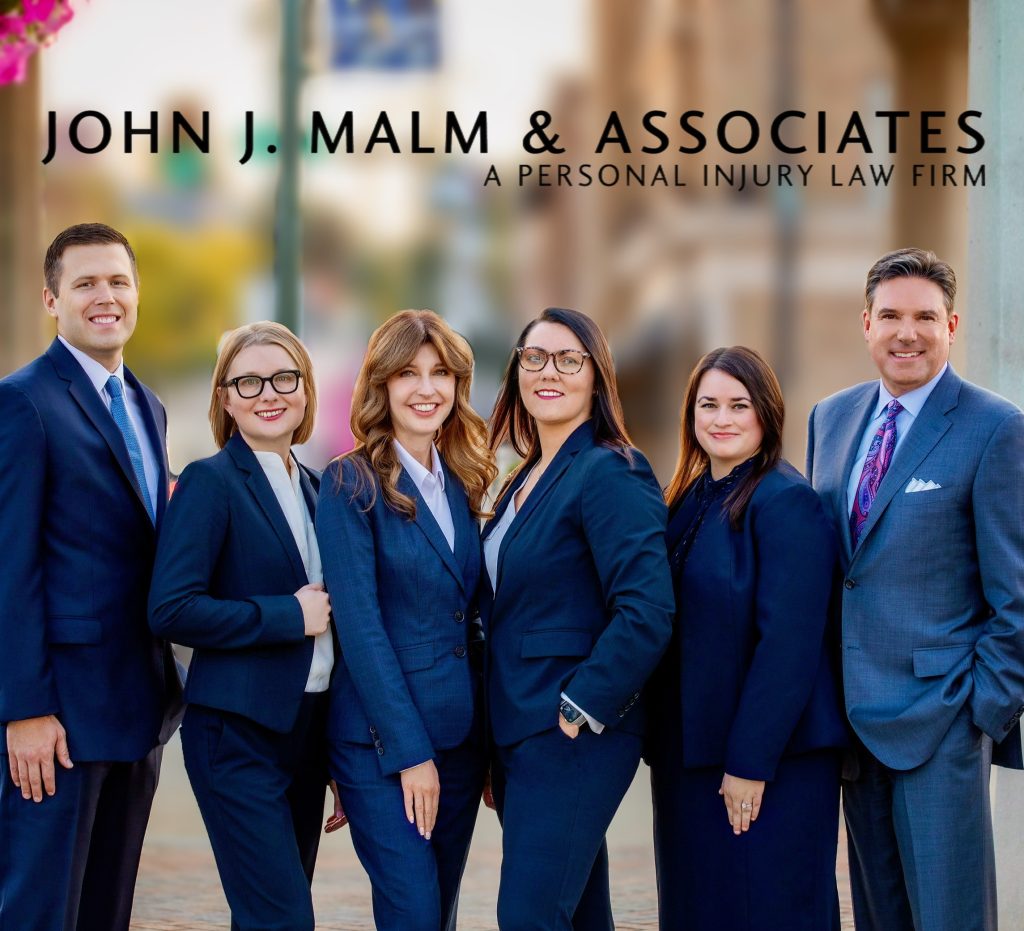
Lombard residents dealing with the aftermath of a serious accident don’t have to face insurance companies alone. John J. Malm & Associates has spent years representing injured clients throughout DuPage County and the greater Chicago suburbs, with offices in Naperville and St. Charles dedicated to helping families recover after car accidents, premises liability incidents, nursing home neglect, and other personal injury matters. We know the local courts, the tactics insurance adjusters use to minimize payouts, and, most importantly, what it takes to get Lombard families the compensation they deserve.
“Every one of these cases, whether it’s a car crash on Roosevelt Road or a fall at a local shopping center, comes down to the same basic principle: when someone else’s carelessness causes an injury, the law gives victims a path to hold them accountable. Our job is to make sure Lombard families don’t have to navigate that path alone, and that insurance companies don’t get to decide what a family’s loss is worth.” — John J. Malm, Lombard injury attorney
Car Accidents
Car accidents remain the most common source of personal injury claims in Illinois. Statewide, there were 303,913 total crashes in 2024, including 63,109 injury crashes and 1,085 fatal crashes, according to the Illinois Department of Transportation’s Crash Facts & Statistics. The total estimated cost of these crashes to the state was $8.3 billion.
Key statistics Lombard drivers should know:
- Speed was a factor in 31.1% of all crashes and 45.3% of fatal crashes statewide.
- Distracted driving, such as texting, GPS use, and adjusting the radio, continues to be identified by IDOT as a leading contributor to rear-end collisions, lane departures, and intersection crashes.
- Alcohol was involved in roughly one-fifth of fatal crashes in recent years.
- Drivers accounted for 63.7% of serious (“A-level”) injuries statewide in 2024, with passengers making up another 20.3%.
- Friday is statistically the most dangerous day to drive in Illinois, with the highest total crash volume of any day of the week.
Illinois is a modified comparative negligence state, meaning an injured driver can still recover compensation as long as they are found to be 50% or less at fault for the crash, though their award is reduced by their percentage of responsibility. Anyone found 51% or more at fault is barred from recovery entirely.
Motorcycle Accidents
Motorcyclists face a disproportionate risk of serious injury or death compared to passenger vehicle occupants, simply because they lack the protection of a metal frame, airbags, and seatbelts. Statewide, motorcycle-related deaths fell from 162 in 2023 to 147 in 2024, a 9.3% decrease, though motorcyclists still accounted for a significant share of Illinois traffic fatalities.
Illinois does not require adult riders to wear a helmet, but that doesn’t mean helmet use is irrelevant to a claim. Insurance companies frequently attempt to use a rider’s choice not to wear a helmet to argue for reduced compensation, even in cases where the helmet had no bearing on how the crash occurred. An experienced attorney can push back on these tactics and make sure liability is assessed based on how the crash actually happened, not on unrelated factors insurers use to minimize payouts.
Truck Accidents
Commercial truck crashes tend to produce far more catastrophic injuries than typical passenger vehicle collisions, largely due to the sheer size and weight difference between an 80,000-pound tractor-trailer and a standard car. In 2024, Illinois recorded approximately 7,171 truck accidents, resulting in 147 fatalities and roughly 3,190 injuries, according to FMCSA Motor Carrier Management Information System data. That places Illinois among the top states in the nation for truck accident volume.
Notable facts about truck crashes in Illinois:
- Truck crashes account for a disproportionate share of fatal crashes relative to how often trucks are on the road. Nationally, large trucks make up only about 4% of registered vehicles but are involved in roughly 9% of all fatal crashes.
- Speeding over 55 mph has been identified as a contributing factor in over 40% of fatal truck crashes.
- A fully loaded semi-truck can take 40% longer to come to a complete stop than a passenger vehicle.
- Truck accident cases are often more complex than standard car accident claims because liability can extend beyond the driver to the trucking company, cargo loaders, or even a parts manufacturer.
Bicycle Accidents
Cyclists in Lombard and throughout DuPage County share the road with fast-moving traffic on corridors like Roosevelt Road and St. Charles Road, where painted bike lanes offer little real protection. Statewide, pedalcyclist crashes accounted for roughly 1.1% of total crashes but a disproportionate 4.7% of injury crashes and 3.4% of fatal crashes in 2024. Cyclist fatalities dropped from 41 in 2023 to 35 in 2024, though that figure remains above the seven-year average.
Common causes of bicycle accidents include drivers failing to yield at intersections, dooring incidents in commercial parking areas, and drivers misjudging a cyclist’s speed when turning. Because cyclists have virtually no physical protection, even a relatively low-speed collision can result in fractures, road rash requiring skin grafts, or traumatic brain injury.
Pedestrian Accidents
Pedestrian safety has become one of the most urgent traffic safety issues in the Chicago suburbs. Pedestrian fatalities made up 18.4% of all Illinois traffic deaths in 2024, an 11.3% increase from 2023, even as overall fatal crashes declined statewide. In the six-county region that includes DuPage, Cook, Kane, Lake, McHenry, and Will counties, pedestrian fatalities rose 6.7% year-over-year, climbing to 144 deaths in 2024.
Researchers point to the growing popularity of taller SUVs and pickup trucks as a contributing factor: vehicles with higher front ends are more likely to strike a pedestrian’s torso or head rather than their legs, which tends to produce more severe and fatal injuries. Pedestrian accident claims in Lombard often center on failure-to-yield violations at crosswalks, left-turn collisions, and drivers failing to see pedestrians in shopping center parking lots like those surrounding Yorktown or Oakbrook.
Dog Bites and Attacks
Illinois is a strict liability state for dog bites under the Animal Control Act (510 ILCS 5/16). Unlike “one-bite rule” states, an Illinois dog owner can be held liable for a first-time attack; the victim does not need to prove the owner had any prior knowledge that the dog was dangerous. Liability applies broadly to any situation where a dog “attacks, attempts to attack, or injures” a person who is lawfully present and did not provoke the animal.
Key points for Lombard dog bite victims:
- The claim must be filed within two years of the incident under Illinois’s general personal injury statute of limitations.
- The main defense available to a dog owner is provocation; if the victim is found to have provoked the dog, strict liability does not apply.
- Property owners, including landlords, can sometimes share liability if they knew about a dangerous dog on the premises and failed to act.
Nursing Home Neglect and Abuse
With an aging population throughout DuPage County, nursing home neglect has become an increasingly common source of personal injury and wrongful death claims. According to the Illinois Department on Aging, there were 22,178 reported cases of elder abuse statewide in 2024, a 6% increase from the prior year and part of a 49% rise in reported cases since 2015.
The scope of the problem in Illinois facilities specifically is significant:
- Illinois nursing homes were cited for 959 serious care-related deficiencies in 2023, with 515 additional serious violations recorded in just the first half of 2024.
- Roughly 38% of Illinois nursing homes have had serious deficiencies cited within the last three years.
- Bedsores (pressure ulcers), a largely preventable condition, affect an estimated 11% of nursing home residents nationally, according to the CDC, and are often a red flag for understaffing or neglect.
- Nursing home neglect and abuse are widely believed to be underreported, with some advocacy estimates suggesting only 1 in 24 incidents is ever formally reported.
Families who suspect neglect or abuse have the right to pursue a civil claim against a facility for damages including medical costs, pain and suffering, and, in cases involving a resident’s death, a wrongful death claim.
Wrongful Death Claims
When a Lombard resident dies because of another party’s negligence, recklessness, or intentional act, whether in a car crash, at a negligently maintained property, or due to nursing home neglect, surviving family members may have grounds for a wrongful death claim under the Illinois Wrongful Death Act (740 ILCS 180/1).
Important elements of Illinois wrongful death law:
- The claim must generally be filed within two years of the date of death, not the date of the underlying negligent act.
- Only the personal representative of the deceased’s estate can file the lawsuit, though damages are recovered for the benefit of the surviving spouse and next of kin.
- Recoverable damages can include loss of financial support, loss of companionship, grief and sorrow, funeral and burial expenses, and medical bills incurred before death.
- As of a recent amendment to the Wrongful Death Act, Illinois now allows punitive damages in wrongful death cases involving willful and wanton conduct, a significant change after 130 years without that option.
- A related claim, the Survival Act (755 ILCS 5/27-6), allows the estate to separately recover for the pain and suffering the deceased endured between the injury and death.
Premises Liability Claims (Slip and Fall Accidents)
Property owners in Illinois, including retail stores, restaurants, apartment complexes, and homeowners, have a legal duty under the Illinois Premises Liability Act (740 ILCS 130/1) to keep their property reasonably safe for lawful visitors. When they fail to do so, injured visitors may have grounds for a claim.
Some relevant figures:
- The National Floor Safety Institute reports that falls account for over 8 million emergency room visits annually nationwide, making them one of the leading causes of premises liability claims.
- The CDC reports that more than 800,000 people are hospitalized every year due to fall-related injuries, most commonly involving head trauma or hip fractures.
- Roughly 1 in 5 falls results in a serious injury, such as a broken bone or traumatic brain injury.
- Illinois generally follows the “natural accumulation rule,” meaning property owners typically aren’t liable for injuries caused by naturally accumulated snow or ice, though exceptions exist when a hazard is created or worsened by the owner’s own actions, such as improper snow removal.
To succeed in a premises liability claim, an injured person generally must show that a dangerous condition existed, that the property owner knew or reasonably should have known about it, that the owner failed to fix or warn about it, and that the condition directly caused the injury.
Frequently Asked Questions about Lombard Personal Injury Cases
How long do I have to file a personal injury claim in Illinois?
Most personal injury claims, including car accidents, dog bites, and premises liability cases, must be filed within two years of the date of the injury. Claims against government entities often have much shorter notice deadlines, sometimes as little as one year.
What if I was partially at fault for my accident?
Illinois follows a modified comparative negligence rule. You can still recover compensation as long as you are found to be 50% or less at fault, though your award will be reduced by your percentage of responsibility. If you’re found 51% or more at fault, you cannot recover damages.
How much is my claim worth?
Every case is different, and value depends on factors like the severity of your injuries, medical expenses (past and future), lost wages, and pain and suffering. An attorney can give you a realistic evaluation after reviewing the specifics of your case.
Do I need a lawyer if the insurance company already offered me a settlement?
Initial settlement offers from insurance companies are frequently far lower than what a claim is actually worth, particularly before the full extent of injuries and future medical needs are known. It’s almost always worth having an attorney review an offer before you accept it or sign anything.
What does it cost to hire a personal injury attorney?
We work on a contingency fee basis, meaning you pay nothing upfront, and legal fees are only collected if we recover compensation on your behalf.
Contact the 5-Star Rated Lombard Personal Injury Attorneys at John J. Malm & Associates
No two personal injury cases are the same, but every one of them involves the same reality: a Lombard family or individual dealing with medical bills, lost income, and pain that someone else caused. Illinois law gives you the right to pursue accountability, but insurance companies rarely make that process easy, and the deadlines to act are shorter than most people expect.
If you or a loved one has been injured in a car accident, motorcycle or truck crash, dog attack, nursing home neglect situation, or any other type of accident in Lombard or the surrounding DuPage County area, don’t wait to find out where you stand. Contact our firm today for a free, no-obligation consultation. We’ll listen to what happened, explain your options in plain language, and help you understand what your case may be worth, with no fees unless we win.