- Free Consultation: (630) 527-4177 Tap Here to Call Us












The Dangers of Jackknife Truck Accidents on Icy and Snowy Roads


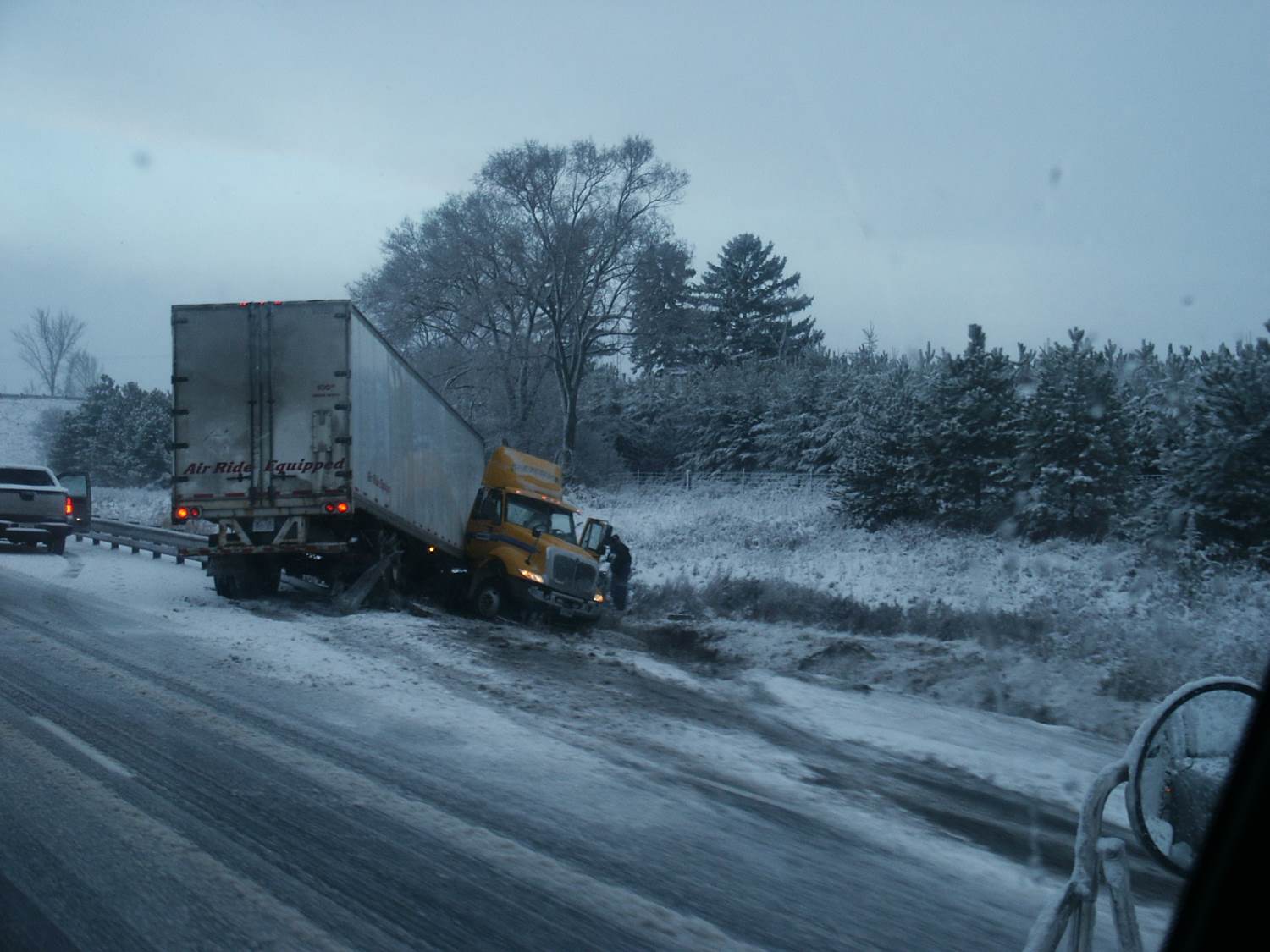
Winter weather turns ordinary drives into risky trips, and for large commercial trucks, snow and ice create conditions that can quickly escalate into catastrophic crashes. One particularly dangerous outcome on slick roads is the jackknife: when a tractor and its trailer fold toward each other, forming a sharp angle like a folding pocket knife. In this blog, we explain why jackknifes happen on icy and snowy roads, how common and deadly they are, what drivers and fleets can do to reduce risk, and what victims should do after a crash. It also answers frequently asked questions and closes with what to do if you or a loved one has been harmed in a truck accident.
“Jackknife crashes on snow and ice destroy lives in seconds. We’ve seen how a single avoidable decision, like an overloaded trailer, an ignored weather advisory, or faulty brakes, can change a family forever. Our job is to hold negligent drivers and carriers accountable and help families rebuild after an accident.” — John J. Malm, Naperville trucking accident attorney
What is a Jackknife and Why Winter Makes it More Likely
A jackknife occurs when the trailer of an articulated truck swings out and the tractor pivots, creating a V- or L-shaped configuration. On dry pavement, a jackknife may begin from sudden hard braking, evasive steering, or trailer instability. On snow, ice, or slush the same loss of traction that causes a passenger car to skid is amplified for heavy trucks because of their size, high center of gravity, long trailers, and complex braking systems. Reduced traction, black ice, ruts in packed snow, and uneven braking between tractor and trailer all increase the chance that a truck will swing out of alignment and jackknife.
How Common and Deadly are Winter-Related Truck Accidents?
Winter weather is a major factor in many crashes nationwide. The Federal Highway Administration estimates that about 24% of weather-related vehicle crashes occur on snowy, slushy, or icy pavement, and that each year over 1,300 people are killed and more than 116,800 are injured in crashes on snowy/slushy/icy surfaces. Those numbers include passenger vehicles and large trucks, and crashes involving large trucks are particularly likely to cause severe injuries and fatalities because of vehicle mass and momentum.
Looking specifically at jackknife occurrences in large-truck crash data, FMCSA tables show that while jackknifes are a minority of all truck crash first-events, they are recorded across fatal, injury, and property-damage categories (for example, data summaries indicate jackknife occurrences in fatal crash datasets). This underscores that jackknifes, although not the majority of crash types, frequently appear in severe crash statistics and can produce multi-vehicle pileups on interstates and highways in winter storms.
Common Causes of Jackknife Crashes on Ice and Snow
- Loss of traction from packed snow, ice, or black ice
- Sudden braking that causes trailer to decelerate differently from tractor (brake imbalance)
- Improperly adjusted or malfunctioning anti-lock braking systems (ABS) on tractor or trailer
- Overloaded or improperly loaded trailers that shift weight
- Excessive speed for conditions (even if under the posted limit)
- Inadequate winter maintenance (tires, chains, brakes) or poor route planning
- Wind gusts combined with slippery surfaces that push a trailer sideways
Because multiple mechanical, human, and environmental factors can combine, jackknifes are often the result of a chain of failures rather than a single mistake.
Typical Crash Scenarios and Why They Become Multi-Vehicle Disasters
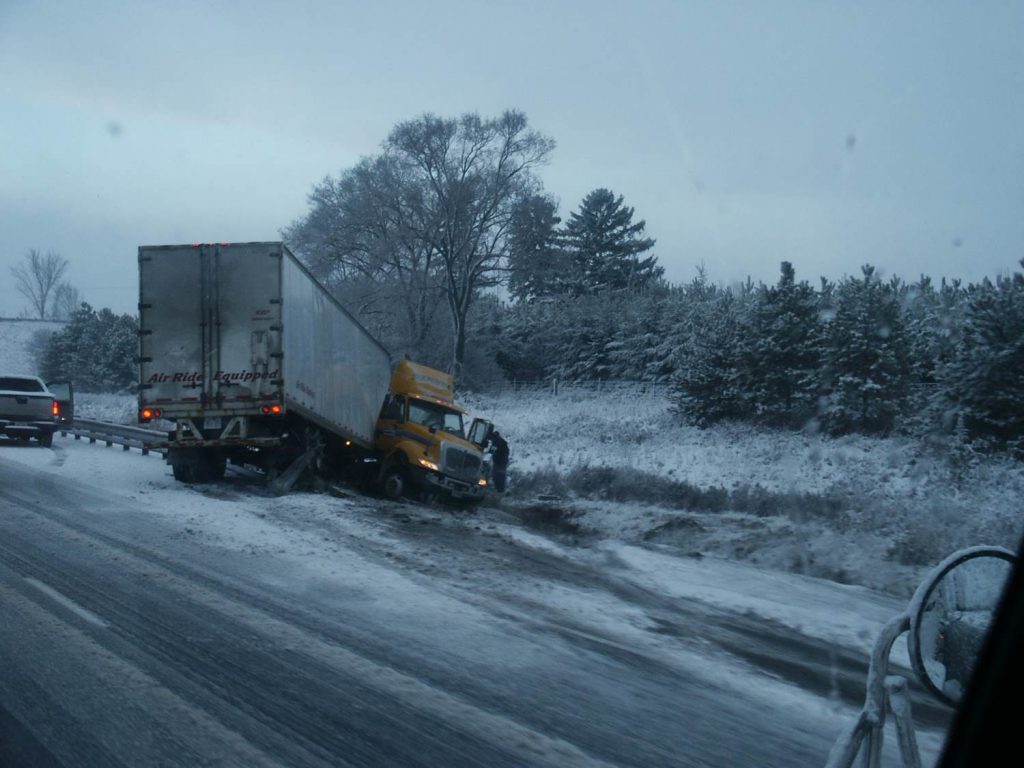
On highways in bad winter weather, a jackknifed semi can block multiple lanes, sometimes stretching across the entire roadway, creating immediate secondary collisions. Common scenarios include:
- A truck loses traction while braking for congestion, jackknifes, and becomes a immovable barrier that other drivers cannot avoid on ice.
- A trailer swings into adjacent lanes and clips smaller vehicles, causing rollovers or crushing impacts.
- Poor visibility in blowing snow hides a jackknifed rig until other vehicles are upon it, causing chain-reaction pileups.
These secondary collisions often involve high speeds for following vehicles (because drivers may not reduce speed adequately for conditions) and can produce catastrophic outcomes for passenger cars.
Preventing Jackknife Crashes
For truck drivers, fleets, and safety managers, preventing jackknifes in winter requires training, equipment, and culture:
- Pre-trip inspections focused on brakes, ABS, tire tread, and tire pressure.
- Use of winter-rated tires and, where appropriate, tire chains in snowy/icy conditions.
- Strict adherence to speed reductions and increased following distance in winter weather.
- Proper cargo loading and frequent checks to ensure weight is secure.
- Training on skid control and how to manage trailer swing.
- Conservative dispatch decisions: avoid sending drivers on routes likely to be treacherous during storms.
- Real-time weather monitoring and route adjustments; avoid high-exposure corridors when advisories or closures are in effect.
These measures reduce the chance a truck will lose control and help limit harm if loss-of-control events occur.
What To Do Immediately After a Jackknife Crash
If you are in a vehicle involved in or threatened by a jackknife crash on icy roads:
- Stop in a safe place if you can, but on high-speed roads, turning off the roadway is preferable if it’s safe to do so.
- Turn on your hazard lights to warn other drivers.
- Call 911 for emergency help. Report injuries, fire risk, and exact location (mile markers or GPS).
- If you can move vehicles to the shoulder without making injuries worse, do so, but avoid creating more danger for yourself or first responders.
- Avoid walking on the roadway. Visibility can be poor and other vehicles may still be sliding.
- If you are able, document the scene with photos and videos (vehicle positions, road surface, weather conditions, skid marks).
- Exchange insurance and contact information with the truck driver. Record the truck’s carrier, DOT number, license plate, and any identifying marks.
- Seek medical attention even if injuries seem minor, as some crash injuries (whiplash, internal injuries) may appear later.
- Preserve evidence: keep clothing and damaged items in a safe place and avoid washing until a forensic exam (if requested by counsel/medical provider).
Documenting and preserving evidence is essential if you later need to pursue an insurance or legal claim. Prompt medical care also creates a clear record linking injuries to the crash.
Liability and Legal Issues After a Jackknife Accident
Liability in jackknife crashes can involve multiple parties:
- The truck driver (speeding, reckless operation, failure to adjust to conditions)
- The motor carrier (improper maintenance, unrealistic dispatch pressure, inadequate training)
- Equipment manufacturers or maintenance providers (defective brakes, tires, or ABS)
- Weather events themselves (which complicate responsibility but do not automatically absolve negligent behavior)
Federal and state rules govern commercial carrier safety, and a carrier that ignored weather advisories, failed to maintain brakes, or pressured a driver to meet an unsafe schedule can be held responsible for injuries and losses. Collecting evidence at the scene, preserving maintenance and inspection records, and seeking experienced legal counsel are key steps when liability is contested.
Frequently Asked Questions About Jackknife Truck Accidents
Q: What causes a jackknife the most often in winter?
A: A combination of reduced traction (ice/slush), braking imbalance between tractor and trailer, sudden braking or steering, and improper trailer loading. Mechanical failures (brakes, ABS) or driver decisions (speeding for conditions) also contribute.
Q: Can a driver be criminally charged after a jackknife crash?
A: In cases involving gross negligence, impaired driving, or criminally reckless conduct, criminal charges are possible in addition to civil liability. Each case depends on facts (intoxication, extreme speeding, or intentional wrongdoing).
Q: If ice caused the crash, does that mean no one is at fault?
A: No. Bad weather makes crashes more likely, but drivers and carriers still have a duty to operate safely. If a trucker failed to slow down, ignored road closure orders, or the carrier failed to maintain equipment, they can still be held responsible.
Q: What evidence helps an injury claim after a jackknife?
A: Photos/videos of the scene, police and incident reports, witness statements, truck driver logs, maintenance and inspection records for the truck, GPS/telematics data, and medical records linking injuries to the crash.
Q: How soon should I speak to an Illinois truck accident lawyer?
A: As soon as possible. Evidence can be lost or destroyed (vehicles repaired, maintenance logs overwritten, witnesses dispersed). Early counsel can help preserve critical records and investigate liability effectively.
Contact the Dedicated Illinois Jackknife Accident Lawyers at John J. Malm & Associates
Jackknife collisions in winter are uniquely dangerous: they can create multiple impact points, block emergency access, and lead to devastating injuries. If you or someone you love was injured in a crash with a commercial truck on icy or snowy roads, you deserve experienced legal guidance that understands both the human and technical sides of these cases. At John J. Malm & Associates, our top-rated Illinois truck accident attorneys can help preserve evidence, identify responsible parties (driver, carrier, or equipment suppliers), and fight for compensation for medical bills, lost income, pain and suffering, and other damages.
Don’t navigate this alone. Contact our firm for a free consultation. We’ll review the facts, explain your legal options, and launch an immediate investigation to preserve crucial evidence. Time matters after a serious truck crash, we’re ready to help you now.