- Free Consultation: (630) 527-4177 Tap Here to Call Us














Do Trucks Carry Enough Liability Insurance?


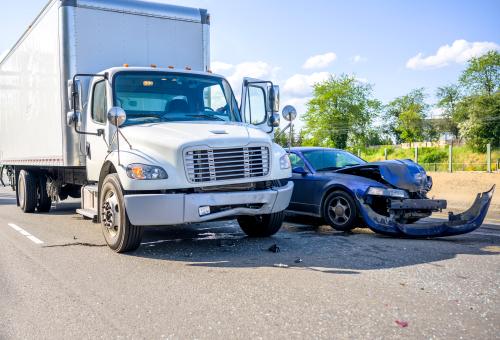
Large commercial trucks play a critical role in the American economy, moving more than 70% of the nation’s freight each year. However, when these massive vehicles are involved in crashes, the consequences can be catastrophic. Victims often suffer severe injuries, long-term disabilities, or death.
One question that frequently arises after a serious trucking crash is whether the trucking company has enough liability insurance to compensate victims. Federal law requires commercial motor carriers to carry a minimum amount of liability insurance, but critics argue that the minimum requirement is outdated and often insufficient to cover the real costs of modern truck accidents.
“Truck accidents often involve catastrophic injuries and multiple victims,” says Naperville truck accident attorney John J. Malm. “Unfortunately, the minimum insurance required by federal law hasn’t kept up with the true cost of these crashes. That’s why it’s essential for victims to work with experienced attorneys who know how to identify every potential source of compensation.”
Federal Trucking Liability Insurance Requirements
The trucking industry is regulated by the Federal Motor Carrier Safety Administration (FMCSA). Under federal regulations, most interstate trucking companies must carry a minimum of $750,000 in liability insurance for bodily injury and property damage when hauling non-hazardous freight.
However, the required minimum depends on what the truck is hauling:
- $750,000 – Interstate trucking companies hauling general freight
- $1,000,000 – Trucks transporting certain oil or hazardous substances
- $5,000,000 – Trucks transporting hazardous materials requiring federal permits
- $300,000 – Smaller commercial vehicles under 10,001 pounds carrying property
These limits are meant to ensure that victims of truck crashes have some financial recourse if they are injured by a negligent truck driver or trucking company. But there’s an important catch: the $750,000 minimum was established more than four decades ago and it has never been adjusted for inflation.
As medical costs, vehicle prices, and litigation expenses have risen dramatically since the 1980s, the adequacy of this minimum coverage has become a major point of debate.
Why the $750,000 Minimum Is Controversial
Many safety advocates and legal experts believe that the federal insurance minimum is far too low for modern trucking crashes. When the $750,000 requirement was first enacted in 1980, it represented far greater purchasing power. Adjusted for inflation and rising medical costs, that same amount would equal several million dollars today.
In fact:
- Adjusted for general inflation, $750,000 in 1980 would equal roughly $2.5 million today.
- Adjusted for medical inflation, the equivalent value could exceed $5 million.
Despite this massive change in economic conditions, the legal minimum has remained unchanged for more than 40 years. This creates a gap between what trucking companies are required to carry and the actual costs of serious crashes.
The Real Cost of Truck Accidents
Truck crashes are often much more severe than typical passenger vehicle accidents. A fully loaded tractor-trailer can weigh up to 80,000 pounds, compared to about 4,000 pounds for a typical passenger car.
As a result, the injuries and financial damages in trucking crashes are often catastrophic.
Consider these statistics:
- More than 4,000 people die each year in crashes involving large trucks in the United States.
- Approximately 80,000 people suffer serious injuries in truck accidents annually.
- Occupants of passenger vehicles are four times more likely to die in a crash with a large truck than the truck driver.
The financial costs are also staggering. A fatal truck crash has been estimated to cost about $4.9 million in direct damages, including medical expenses, lost income, and other losses. In many cases, multiple victims are injured in the same crash. When several people suffer catastrophic injuries, the damages can quickly exceed the $750,000 policy limit.
Many Truck Accidents Exceed Insurance Limits
Research and government studies suggest that a significant percentage of truck crash claims exceed the federal insurance minimum.
For example:
- A study analyzing thousands of truck crash settlements found that 42% of trucking company exposure would have exceeded the $750,000 minimum coverage.
- Severe or fatal crashes often produce damages well above $1 million.
- Average payouts for serious truck accidents can exceed $4 million or more.
When insurance coverage is insufficient, victims may face major financial challenges, especially if medical bills and long-term care costs continue for years.
Why the FMCSA Has Not Raised the Minimum
Given the evidence that many trucking crashes exceed the minimum insurance limits, you might wonder why the federal government has not increased the requirement. In a recent report to Congress, the FMCSA stated that it does not currently have sufficient data to determine whether the minimum insurance levels should be increased.
According to the agency, a major problem is the lack of available information about truck crash settlements. Many lawsuits are resolved through confidential settlements, and insurance claims data is often proprietary.
Without access to this information, the agency said its ability to evaluate the adequacy of insurance requirements is limited. However, the report acknowledged that serious truck crashes can easily exceed the current minimum coverage levels.
Industry Practice: Many Carriers Carry More Coverage
While the legal minimum is $750,000, many trucking companies carry more insurance than required. In fact, market realities often push companies to obtain higher coverage limits.
Common industry practices include:
- $1 million in primary liability coverage is common for many trucking companies.
- Many brokers and shippers require $1 million or more before allowing a carrier to haul freight.
- Some fleets purchase excess or umbrella policies totaling $2 million or more.
Larger trucking companies typically carry higher limits because they face greater financial risk and are more likely to be targeted in lawsuits. However, smaller carriers, especially those with only a few trucks, often carry only the minimum required coverage.
Why Insurance Limits Matter for Crash Victims
The amount of insurance available after a trucking crash can dramatically affect the compensation available to victims. If a trucking company only carries the minimum policy limit and the damages exceed that amount, victims may have limited options for recovering full compensation.
Possible outcomes include:
- The insurance policy paying only its maximum limit
- Victims competing with other injured parties for the same coverage
- Lawsuits against multiple parties involved in the crash
- Claims against additional insurance policies (such as umbrella policies)
In many trucking accidents, several different parties may share responsibility.
These parties may include:
- The truck driver
- The trucking company
- The company that loaded the cargo
- Maintenance contractors
- Truck manufacturers or parts manufacturers
- Freight brokers or logistics companies
Identifying all responsible parties can be critical to ensuring that victims receive full compensation.
Why Legal Representation Matters After a Truck Accident
Truck accident claims are among the most complex personal injury cases. They often involve federal regulations, multiple corporate defendants, and layers of insurance coverage.
Insurance companies representing trucking companies will often aggressively defend these cases to minimize payouts.
An experienced Illinois trucking accident attorney can:
- Investigate the crash and gather critical evidence
- Identify all responsible parties
- Determine the total available insurance coverage
- Work with experts to calculate full damages
- Negotiate with insurers or take the case to trial if necessary
These steps are crucial to ensuring that injured victims receive the compensation they deserve.
Frequently Asked Questions About Truck Insurance
Q: What is the minimum liability insurance required for trucks?
A: Most interstate trucking companies hauling general freight must carry at least $750,000 in liability insurance under federal law.
Q: Has the federal trucking insurance minimum increased over time?
A: No. The $750,000 minimum was established in 1980 and has never been adjusted for inflation.
Q: Do trucking companies carry more than the minimum?
A: Many do. While the legal minimum is $750,000, many carriers carry $1 million or more in liability coverage because shippers and brokers require it.
Q: What happens if damages exceed the insurance coverage?
A: If damages exceed available insurance coverage, victims may need to pursue claims against multiple responsible parties or additional insurance policies.
Q: Why are truck accident claims often so expensive?
A: Truck crashes frequently involve severe injuries, multiple victims, and extensive property damage, which can easily push damages into the millions of dollars.
Contact a Top Illinois Truck Accident Lawyer at John J. Malm & Associates
Truck accidents can cause devastating injuries, overwhelming medical bills, and long-term financial hardship. Unfortunately, the insurance coverage available after a crash may not always be enough to fully compensate victims.
If you or a loved one has been injured in a truck accident, it is critical to speak with an experienced attorney as soon as possible. The experienced Illinois truck accident lawyers at John J. Malm & Associates investigate trucking crashes, identify all liable parties, and pursue the maximum compensation available under the law.
Contact our firm today for a free consultation to learn about your legal rights and how we can help you move forward after a serious trucking accident.